




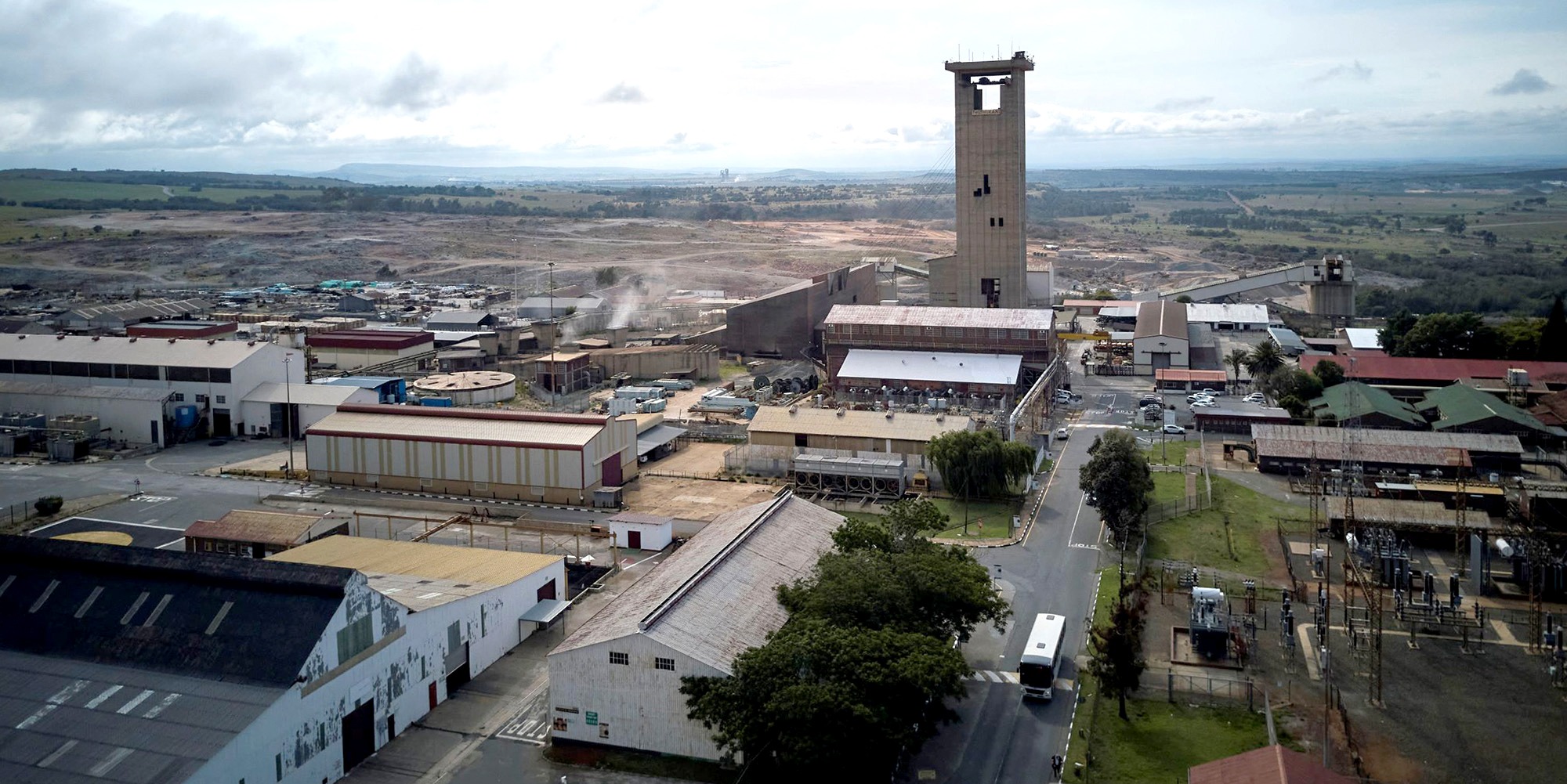
 Sibanye-Stillwater's Kloof gold mine. (Photo: sibanyestillwater.com)
In one quarter in 2021, when the prices for palladium and rhodium were reaching for the stars, Sibanye-Stillwater made more money from its Marikana operations than it paid for them during its acquisition of Lonmin in 2019.
The former Lonmin board may have had seller’s remorse at that time, but the operations were on the brink of closure at the time of the deal. Marikana would have been burning rather than spinning cash in 2021 because the mines were idling on care and maintenance.
But while the price rebound certainly helped, it was not the only factor that pulled Marikana from the abyss. Platinum group metals (PGM) prices have since tanked and rebounded, and will do so again — commodity prices are fickle and cyclical.
Two words help to explain why the operations are making money and have a life expectancy of decades: consolidation and contiguous.
It is a model that is elegant in its simplicity.
Sibanye, under its founding and former deal-making CEO Neal Froneman, began a diversification drive into platinum group metals (PGMs) in 2015.
/file/dailymaverick/wp-content/uploads/2022/01/GettyImages-1177991238.jpg "Sibanye-Stillwater's founding CEO, Neal Froneman, who retired on 30 September 2025. (Photo: Waldo Swiegers / Bloomberg via Getty Images)")
Froneman recognised early on that Sibanye needed to diversify. Founded in 2013 as a Gold Fields spin-off focused on older, deep-level gold mines, the company would have reached the end of its lifespan by now without his foresight.
Sibanye’s PGM drive saw it acquire Anglo American Platinum (now Valterra Platinum), Aquarius Platinum and Lonmin assets around Rustenburg — a restive area at the time on the social and labour front. That was completed in 2023 when it took 100% control of Kroondal Platinum Mines, which had been a 50/50 joint venture with Amplats.
The Marikana operations played a critical and often overlooked part in this history, which would ultimately make them the profitable assets they are today.
The Marikana massacre in August 2012, when police shot dead 34 miners taking part in a wildcat strike against Lonmin, was a turning point in South African mining history — one that is still unfolding.
/file/dailymaverick/wp-content/uploads/2021/12/Tribute-Gentle-LehulereTW1.jpg "SAPS officers advance after shooting striking workers with live ammunition in Marikana on 16 August 2012. (Photo: Felix Dlangamandla / Gallo Images / Foto24)")
Labour unrest rippled from there into the gold shafts, and Gold Fields — not coincidentally — made a strategic pivot at that time into mechanised and global (read: non-South African) operations, giving rise to Sibanye, which was initially named Sibanye Gold.
Amplats was also alarmed by this turn of events and made its own move into mechanisation, happy to offload its mostly conventional mines around Rustenburg to Sibanye. Lonmin, running short of cash and investor confidence, was swallowed by the Froneman juggernaut in 2019.
The results can be seen on a map: contiguous PGM mines under the consolidated roof of a single company.
/file/attachments/orphans/1782195092-ssw-SA-operations-capital-markets-day-23Jun2026-1_592227.jpg "(Source: Sibanye Stillwater)")
Cost savings
As Sibanye explained during a capital markets day presentation this week, the synergies unlocked as a result have delivered annual cost savings of around R3-billion per year, “... restoring profitability through the [price] cycle”.
And since 2016, its PGM acquisitions in the area have produced 15.4 million ounces and R161-billion in earnings value — a 7.5-fold return on the original investment.
This is not just about consolidation. Having contiguous operations also massively boosts margins.
“It seems like an obvious thing to do, but if you have two different companies that own the two different dies, how do you mine it? There were a couple of ways to do it in the past. You either end up selling a piece of the ground to the other side, which is always difficult because you can’t agree on the value,” Sibanye CEO Richard Stewart told Daily Maverick in an interview.
“Or you end up ‘contract mining’, so you will allow someone on the other side to mine your piece of ground for some sort of payment. So why not put it all together?”
/file/dailymaverick/wp-content/uploads/2025/10/Dr-Richard-Stewart-e1739451814226.jpg "Richard Stewart, chief executive at Sibanye-Stillwater. (Photo: Sibanyestillwater.com)")
One upshot of this has been the transformation of Marikana from a toxic into a profitable asset and a key part of Sibanye’s R20-billion pipeline of investments in PGM projects to extend its domestic operations of the precious metals to 2050.
Unions are also on board with this strategy - which is also key to its success.
“After Sibanye acquired the Lonmin operations they could extend the lifespan because the boundaries have been dropped. Before you could maybe only mine south but not north,” July Radibe, the NUM Rustenburg Regional Chairperson, told Daily Maverick.
“It was a wise move by Sibanye to acquire these operations the way they did to secure employment for our members by extending the lifespan of the mines.”
The return of profitability at Marikana has also come pointedly against the backdrop of surging costs, including for wages.
As this correspondent noted in a related story, in 2019 when Sibanye acquired Lonmin, the basic pay of entry-level miners at Marikana was R12,713 a month. From 1 July this year it will be R20,813 – an increase of 64% over the past seven years that is well above the cumulative inflation rate of about 46% over that timeframe.
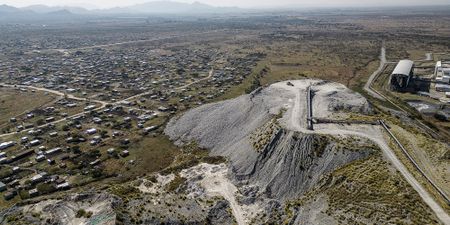
The dousing of the flames of labour unrest - and the enmity between NUM and Amcu - that once threatened to engulf the operation have also contributed in no small way to its turnaround into a viable commercial entity.
“As trade unions we realised we are not enemies and that is why we have secured these good, multi-year wage agreements,” said Radibe.
Bruce Williamson, a mining analyst at Integral Asset Management, drilled into some of the finer details of the model.
“Sibanye now has 70kms of contiguous operations along the western limb of the platinum belt. This has allowed management to take down the ‘farm fences’ and remove all the statutory, underground boundary pillars that separated the three mining companies,” he told Daily Maverick.
“This has created significant options to better use the collective surface processing facilities and underground surface shaft systems. For example, instead of the cost of a new shaft system, Sibanye can now mine certain blocks of ground via what was the neighbour’s shaft.”
Consolidation certainly has its critics and has often been an ugly feature of capitalism and mining. It is the root of the critical acronym WMC, which targets white monopoly capital.
But sometimes, the power of one is sensible, simple and required to get the job done. And in this case, thousands of jobs have been saved while South Africa can earn more export dollars — and Treasury taxes and royalties — from its PGM endowment.
One could also add the term “compassion” to the other two C-words. Sibanye has strived to reach out to the communities scarred by the Marikana massacre in ways that Lonmin pointedly did not.
This plugs into the ESG — environmental, social and governance — zeitgeist of current corporate culture, which was largely absent in 2012. Such overtures can also spin dividends and bring wider benefits. DM
Comments
Scroll down to load comments...