



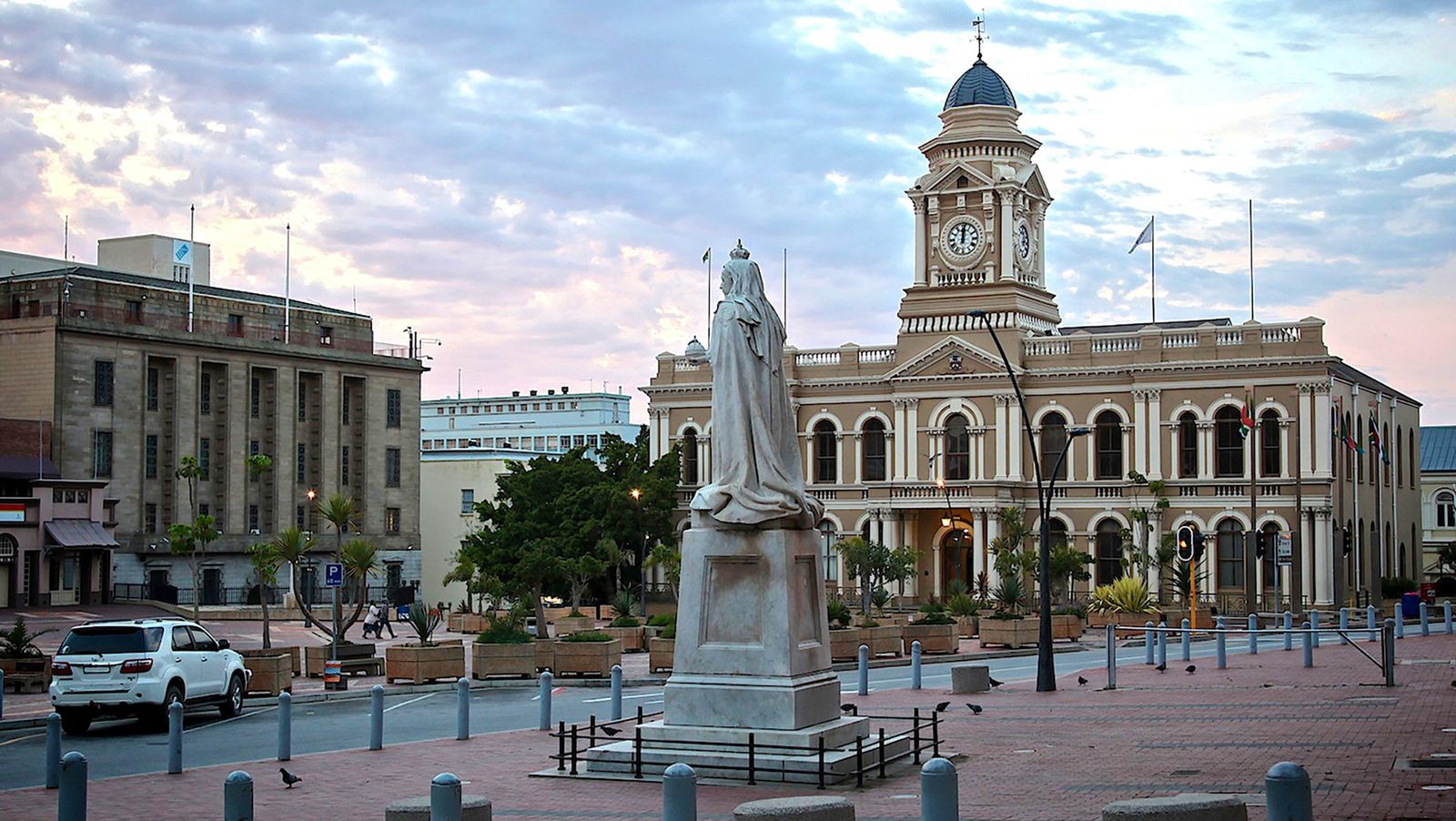
 The Gqeberha City Hall, the headquarters and administrative hub of the Nelson Mandela Bay Metropolitan Municipality. (Photo: Rute Martins / Wikipedia)
Two damning reports released last week on Nelson Mandela Bay’s finances have painted a dark picture of a metro in crisis, with the Auditor-General also highlighting that the metro’s lack of environmental controls may cause active harm to citizens.
A presentation from the National Treasury highlighted several ongoing crises in the metro:
- Institutional and governance instability characterised by frequent changes in the municipal manager post and vacancies in senior management;
- Weak internal capacity;
- A high risk of non-compliance with Metro Trading Services Reform (MTSR), even though strides were made in compliance;
- Ongoing non-compliance with the Municipal Standard Chart of Accounts and poor data credibility undermine the credibility of the metro’s reported figures and, by implication, those of the National Treasury.
The report stated that the metro’s financial position was concerning, citing declining revenue collection, especially on water service charges.
This was confirmed by the metro’s Chief Financial Officer Jackson Ngcelwane, speaking at a city council meeting at the end of May, when he described the collection rate as the city’s “Achilles’ heel”.
The Treasury said it was also concerned that the electricity function was running at a structural deficit, as the tariffs collected were less than the bulk cost. The metro’s budget report also confirms that the electricity department is now being subsidised by collected rates and taxes.
Infrastructure is at risk – the high water and electricity losses have an impact on revenue and sustainability.
The Treasury report noted that the budget also indicated under-investment in repairs and maintenance, as it was lower than the 8% benchmark.
/file/attachments/orphans/WhatsApp-Image-2026-01-18-at-1330_737822_228396.jpg "A water leak reported in Nelson Mandela Bay in November 2025 was fixed only on 6 January. (Photo: Facebook)")
The report further flagged that the city suffered from a continued bucket system backlog and reliance on water tankers rather than fixing pipes for a reliable water supply.
The Treasury has advised that the metro focuses immediately on financial stabilisation, governance strengthening, revenue recovery and infrastructure maintenance to restore sustainability and service delivery credibility.
The presentation added that the metro’s draft budget was assessed to be unfunded and financially unsustainable over the 2026/27 Medium-Term Revenue and Expenditure Framework due to poor technical budgeting. The adopted budget was assessed to be funded after correcting for technical issues.
While no decision had yet been taken, the presentation noted that spending on conditional grants stood at just 28% by the end of the third quarter, raising concerns about the metro’s ability to fully use available funding. Nelson Mandela Bay has lost millions of rands in conditional grants in recent years due to underspending.
The outcome of the annual audit also shows the metro regressing since the 2022/2023 financial year, from an unqualified audit with findings to a second year of a qualified audit.
‘Ineffective oversight committees’
The presentation also highlighted that the metro is characterised by weak financial governance as it has the highest levels of Unauthorised, Irregular, Fruitless and Wasteful (UIFW) expenditure nationally, which Treasury viewed as a sign of weakening accountability.
The metro’s UIFW expenditure is the highest in the country, and according to the Treasury presentation, this amount has been increasing since the 2022/23 financial year, from R21-billion to R28-billion.
“The oversight committees (MPAC) are ineffective,” the presentation continued.
“The rising trend points to ongoing weaknesses in UIFW expenditure internal controls, supply chain management and compliance monitoring,” the presentation reads.
“In practical terms, the upward trend means the metro faces increasing exposure to repeat audit findings and reduced public accountability.”
The presentation also said that the metro had failed in its promised intention to reduce UIFW by 50% of its total balance. The deadline is Tuesday this week.
“So far, there has been no reported progress towards achieving this target,” the presentation stated.
Water and electricity losses at all-time high
The presentation also points out that electricity and water losses are at an all-time high in the metro, with 26.8% of electricity distributed lost to illegal connections or other faults and 52.7% of water lost. Water losses are up from 39% in the 2020/2021 financial year.
/file/dailymaverick/wp-content/uploads/2024/08/IMG_4001-1.jpeg "Disaster teams at work after four high-voltage pylons collapsed near Sardinia Bay, Nelson Mandela Bay. (Photo: Supplied)")
/file/attachments/2989/Photo-3-1_7360531_315037.jpg "A 132kV transmission tower that collapsed in January 2026. (Photo: Facebook / Nelson Mandela Bay Municipality)")
The presentation said the city faced compliance difficulties with the Metro Trading Services Reform (MTSR), which included appointing a single point of management accountability for each trading service.
It said the metro’s advertisement for the recruitment of the head of water and sanitation did not comply with the requirements of the Treasury’s MTSR guidelines.
However, there had been “significant progress” since the initial implementation period of the Metro Trading Services Reform, the presentation said.
This includes the submission of the strategy documents, institutional road map and business and investment plans, which are critical for the improvement of the services.
The report said the metro was working on finalising the financial model for water and sanitation and for energy and electricity, which were among the “minimum commitments” to be filed by 30 June.
Auditor-General report
The metro received several mentions in the latest Local Government Audit Report presented to the parliamentary cooperative governance and traditional affairs committee last week.
The metro was among a group of municipalities issued with “material irregularity” findings by the Auditor-General for failing to obtain the required wastewater treatment licences.
The report said that this non-compliance “with environmental management and neglect of infrastructure at metros often also results in harm to the public”.
/file/attachments/orphans/Motherwell_818843.jpg "A Motherwell, Nelson Mandela Bay street flooded by a leaking sewage manhole that had been blocked for months, with health concerns from residents and the councillor unanswered. (Photo: Supplied / Thanduxolo Doda)")
The report continues: “We have issued 28 material irregularities notifications to five metros (Buffalo City, City of Tshwane, eThekwini, Mangaung and Nelson Mandela Bay) and three municipal entities (Johannesburg Water, East Rand Water Care Company and Pikitup Johannesburg) relating to the poor management of wastewater treatment works and landfill sites, unhygienic ablution facilities, delays in completing a housing project and non-compliances with national standards on water quality.”
Nelson Mandela Bay metro managed to complete only 59% of its planned target of 2000 new sewer connections, meeting minimum standards.
Delayed creditor payments
The Auditor-General also highlighted the metro’s failure to pay its creditors on time - Nelson Mandela Bay takes the longest of all metros to pay, at an average of 189 days.
“Among the metros, the three with the highest number of creditor payment days are Nelson Mandela Bay (189 days), Mangaung (165 days) and City of Ekurhuleni (175 days). In contrast, the metro with the lowest number of creditor payment days is City of Cape Town, at 45 days,” the report states.
The Nelson Mandela Bay metro was also singled out in the report as having the highest senior management vacancy rate at 67%.
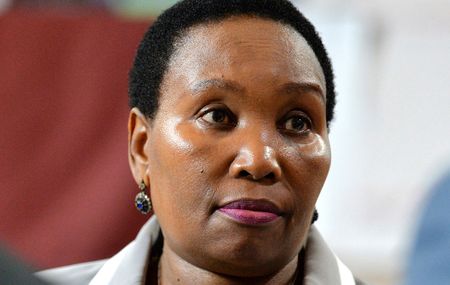
The Auditor-General report lamented some metros’ lack of accountability measures.
“The lack of institutionalised integrity and accountability at some metros increased the opportunity for fraud. In 2023-24, we reported findings to accounting officers on indicators of fraud or improper conduct in procurement and contract management processes at six metros for follow-up.
“Mangaung and Nelson Mandela Bay did not investigate any of these reported findings. eThekwini investigated the reported findings, but did not resolve any of the findings, while the City of Johannesburg investigated and resolved some of the findings,” the report said. DM
Comments
Scroll down to load comments...