



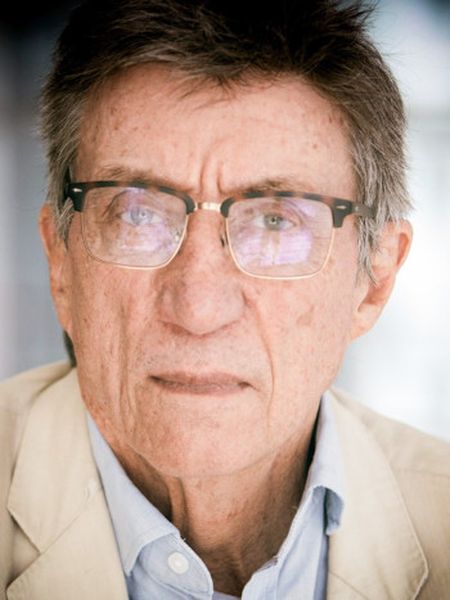
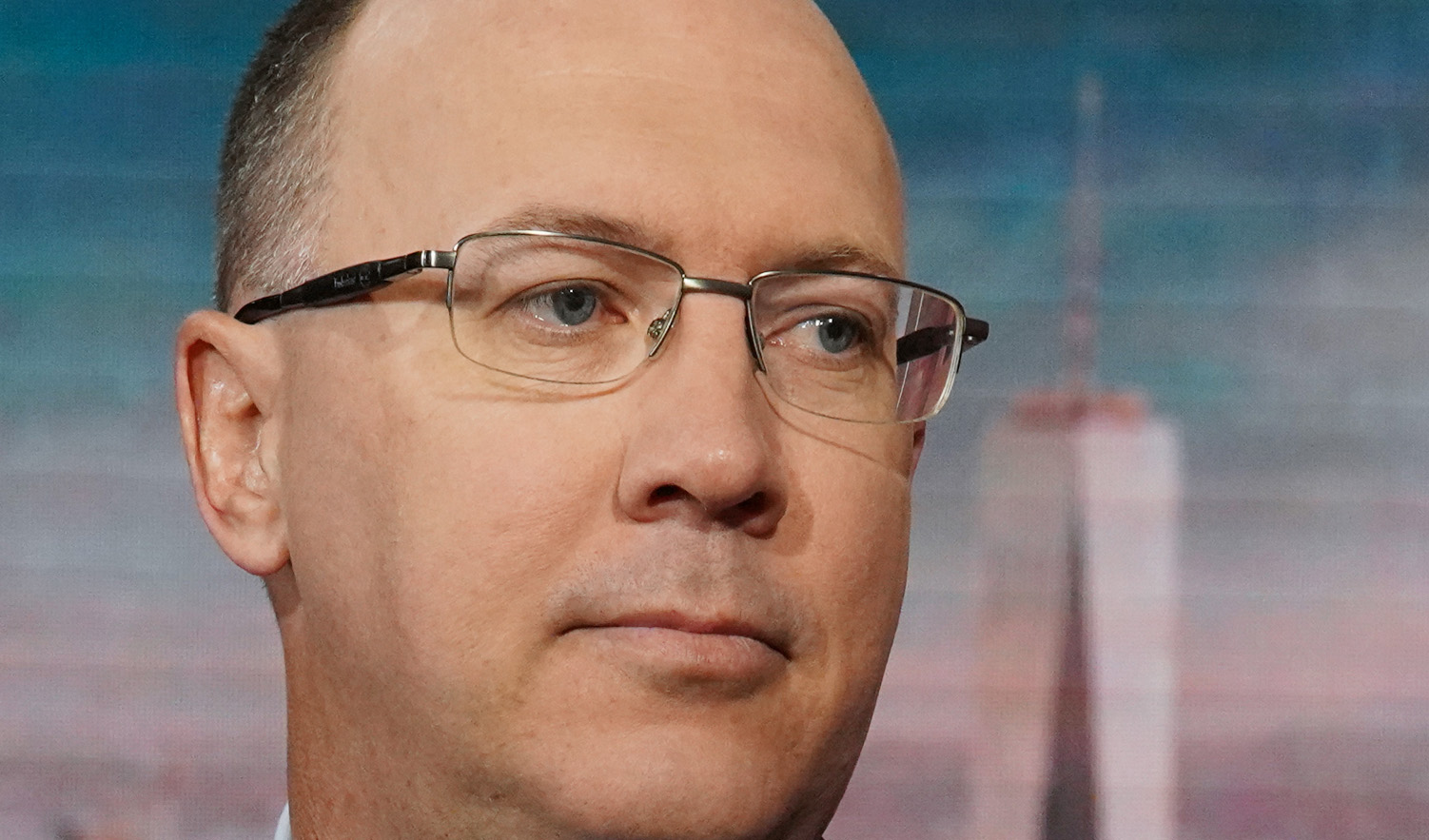
 The outgoing British high commissioner to South Africa, Antony Phillipson. (Photo: Christopher Goodney / Bloomberg via Getty Images)
A broad “living bridge” joins South Africa to the UK, says the outgoing British high commissioner to South Africa, Antony Phillipson. Last year, 403,714 tourists from Britain, more than from any other country, visited SA, while about 174,000 SA tourists visited the UK.
Adding businesspeople, students and other travellers probably creates a bigger volume of people travelling both ways than between SA and any other country, he said.
And many high-level official visits swelled the flow during his five years in the post, which ends in a few weeks. That included President Cyril Ramaphosa’s state visit to the UK in 2024, the first state visit of King Charles’ reign, as well as visits to South Africa by the British Prime Minister Keir Starmer, 15 Cabinet ministers and three royals: Prince William, Princess Anne and Prince Edward, the Duke of Edinburgh.
/file/dailymaverick/wp-content/uploads/2022/11/GettyImages-1244998841.jpg "President Cyril Ramaphosa and King Charles inspect a Guard of Honour during a ceremonial welcome on Horse Guards Parade in London on 22 November 2022. (Photo: Paul Grover / WPA Pool /Getty Images)")
South Africa’s G20 presidency was a high point, accounting for most of the visits by government ministers, Phillipson noted in an interview in Cape Town.
That made up for a previous dearth. For more than six years, between the visit of Prime Minister Theresa May in August 2018 and that of Foreign Secretary David Lammy in November 2024 for the SA-UK bilateral forum, no British government minister had visited. Covid-19 partly explained that, but it was still surprising, he said.
The momentum has been sustained with several recent visits to the UK by SA Cabinet ministers, and International Relations and Cooperation Minister Ronald Lamola is due to co-chair the next UK-SA bilateral forum in London in a few weeks, Phillipson’s last official engagement.
British Prime Minister Keir Starmer recently resigned making way for what will be the country’s seventh prime minister in 10 years. And Nigel Farage’s far-right populist Reform UK party has been rising. Some South African government officials worry that instability in British politics and an apparent drift to the right could harm SA-UK relations.
But Phillipson is confident that whoever is elected will see the merits of the relationship. He reminded those anxious about a rightward drift that in the 2024 elections, the Labour Party defeated the incumbent Conservative Party in a landslide.
Conversely, he said Britain was not overly concerned that Ramaphosa could be succeeded by a less sympathetic leader. “But it’s for them to determine that, not us,” he stressed.
“And we do obviously make sure that we have relationships that will sustain through any political changes,” he said, adding that he would follow elections such as that of the next ANC leader next year, “with interest from afar”.
Asked to define the essence of SA-UK relations, Phillipson cited King Charles from his state banquet speech during Ramaphosa’s state visit. The king said: “We must acknowledge the wrongs which have shaped our past if we are to unlock the power of our common future.”
“The footprints that my country has left in this one … are still a source of contention and I recognise that and accept it,” said Phillipson, a seasoned diplomat who has served as Britain’s high commissioner in Singapore and its consul-general in New York.
Trade and investment
But the modern-day partnership between SA and the UK was being built on inclusive economic growth, climate, health, science and innovation and ending gender-based violence; it was increasingly a partnership of trade and investment, rather than aid.
He noted that the UK is the largest cumulative investor in South Africa. It is usually ranked among SA’s top five trading partners.
Trade is governed by the Southern African Customs Union-Mozambique UK Economic Partnership Agreement (EPA), which allows almost all exports from these countries into the UK duty- and quota-free.
Partly as a result, SA now enjoys a substantial trade surplus, which last year reached about £2.5-billion. The UK is, for instance, the biggest market for SA citrus and wine.
/file/dailymaverick/wp-content/uploads/2025/04/A-hyper-realistic-image-of-an-orange-packing-shed-with-one-worker-busy-packing-oranges-with-her-backside-to-the-camera.jpg "The UK is the biggest overseas market for SA citrus. (Photo: Unknown)")
Most countries don’t like trade deficits, yet the high commission advised the SA government on how to take even greater advantage of the free trade agreement, informing it that SA had paid unnecessary tariffs on R3.8-billion worth of exports in 2024.
That seems to be because, as Phillipson said, the EPA is “essentially a development instrument” explicitly designed to support African exports of goods to the UK.
He believed the UK and a relatively sophisticated economy like SA’s should go beyond this, deepening relations with more reciprocal trade and investment and entering new fields such as digital trade.
Meanwhile, the UK is supporting SA’s efforts to improve investment conditions by addressing energy, transport and other infrastructure deficits and corruption, all of which Phillipson said Ramaphosa was very open about and was addressing through, for instance, Operation Vulindlela.
Energy security
Britain’s main focus in supporting investment is helping fund energy security, especially through the Just Energy Transition Partnership (Jet-P). The UK and other international partners have pledged $10.5-billion to help SA transition from its largely coal-fired economy to renewable energy, while leaving no one behind, including coal miners and communities.
These partners had so far committed more than $5-billion, “with the UK contributing $391-million and exceeding its grant pledge while scaling up guarantee-backed investment”, including guaranteeing $1-billion worth of loans from the African Development Bank.
The UK government-backed British firm Globeleq was, for instance, developing the battery energy storage system at Red Sands near Upington, Africa’s largest such facility.
Some donors think the SA government has been slow in presenting investable Jet-P projects and worry that the government is not fully committed to green energy, with the mineral and petroleum resources minister, Gwede Mantashe, frequently singing the praises of coal.
/file/attachments/orphans/WhatsAppImage2026-06-10at123008_589196.jpeg "Gwede Mantashe addresses the Fuels Industry Imbizo at Sandton Convention Centre on 10 June. (Photo: Siyabulela Duda / GCIS)")
Phillipson said things were happening, though they could always be happening faster.
One had to keep in mind that the Jet-P was not just another development programme.
“This is a complicated, multilayered set of policy commitments by the South African government to move towards renewable energy generation … repairing and extending the grid … moving towards conversations on energy efficiency and energy metering.”
It also had to ensure everyone had access to available, affordable electricity and to drive job creation, so that the energy transition was just.
Phillipson said the UK was working with Transport Minister Barbara Creecy to help get South Africa’s railways back up and running.
Black economic empowerment
Asked whether potential British investors were bothered by having to cede 30% equity through black economic empowerment requirements, Phillipson replied, “I think we have to be open about it, yes.”
Some investors might have been deterred, he said. Yet, the UK remained the biggest investor in SA, and recognised the imperative behind broad-based black economic empowerment to address inequality and regarded it as just a fact of doing business in South Africa.
When asked how London’s decision to slash its global Official Development Assistance (ODA) — driven by rising defence spending — would affect support for South Africa, Phillipson clarified two key points:
- The cuts haven’t taken effect yet, but are looming as the next three-year spending cycle kicks off.
- Crucially, almost all current UK initiatives in South Africa are shielded from these specific cuts, as they are funded through centrally managed programmes out of London rather than the standard ODA budget.
/file/attachments/orphans/e8227ecc-fc2a-4163-b609-c0c8496a56a8_453501.jpeg "Antony Phillipson visiting UK investments in Cape Town port with then Foreign Secretary David Lammy.<br>(Photo Supplied / The British High Commission)")
(Photo Supplied / The British High Commission)
The shield on British funding means vital local investments remain entirely untouched. Critical social and economic initiatives will continue as planned, safeguarding UK funding for housing, clean energy, tech innovation and programmes tackling gender-based violence in SA.
Also protected is the UK Trade Partnerships Programme. This is the initiative that recently helped Cape-based Khayelitsha Cookies land a R1.4-million contract to supply biscuits on British Airways flights.
Regulatory storm
However, a major regulatory storm is brewing over South Africa’s automotive sector. While the UK actively tries to boost South African exports, a massive question mark hangs over whether imminent British carbon emission restrictions will derail this vital trade pipeline. The stakes are incredibly high, considering South Africa exported 70,798 vehicles to the UK last year alone.
But the UK will end the sale of new petrol and diesel cars and vans by 2030, with hybrids phased out by 2035. It is uncertain whether SA’s auto industry will be able to switch to electric vehicle (EV) production in time.
Beyond economics, Phillipson noted the UK was also a big supporter of SA’s Gender-Based Violence and Femicide Response Fund as the countries had a mutual commitment to addressing what Ramaphosa called “the second pandemic”.
This had been a major topic between Ramaphosa and Starmer when they met on the sidelines of the G20 summit in Johannesburg last November.
/file/attachments/orphans/P21GettyImages-2247156788_229626.jpg "Keir Starmer and Cyril Ramaphosa shake hands during a bilateral meeting at Sandton Convention Centre on 21 November 2025. (Photo: Henry Nicholls / WPA Pool / Getty Images)")
On the “living bridge” of people exchanges, Phillipson acknowledged that many South Africans experienced problems getting UK visas and found them expensive, but noted that “we have tried to operate our visa system transparently and make it as efficient and as accessible as possible”.
To streamline the visa process, the office has transitioned to issuing e-visas, eliminating the need for travellers to surrender their passports for three weeks. Additionally, the high commission had successfully maintained its standard visa processing turnaround of 15 working days throughout most of his tenure.
Globally, “We just had a hugely significant moment last year with the G20 … it was way beyond time that the G20 was held in Africa, and I think it was a terrific year.”
G20 presidency
US President Donald Trump, though, boycotted SA’s G20 and then barred SA from his own G20 this year. The UK will take over the G20 presidency from the US at the end of this year, and SA hopes the UK will revive some of SA’s G20 developmental agendas, which Trump has jettisoned.
Phillipson said there had been too much focus on that question. He noted that SA had built on the agendas of the presidencies before it, and that G20 presidencies generally addressed the challenges of the day.
“So I think that will be no less true for us in 2027.” Though London was still working on its G20 agenda, “I would be surprised if we weren’t still committed to addressing global challenges around development, climate, inclusive economic growth; the core issues of the G20 that have traditionally been there.”
In 2022 and 2023, Western countries were dismayed about SA’s failure to condemn Russia’s invasion of Ukraine. How do they feel now?
Phillipson suggested that sentiment had faded because South Africa had made clear that it wanted to see peace and would engage with both sides to that end. And so Ukrainian President Volodymyr Zelensky visited SA last year, for instance.
“I think there is a sense that that is more in line with being non-aligned … than they were before.”
/file/attachments/orphans/71799fb9-9aef-4d97-b7f1-35fef6fc8652_714454.jpeg "Antony Phillipson celebrating UK digital access programmes in Limpopo province. (Photo Supplied / The British High Commission)")
Asked to assess his term, he said, “I like to feel that we’ve sort of moved the ball down the pitch,” leaving the relationship strong, with deep and broad partnerships with several government departments but also with business, academia and civil society.
The high point of his tour was Ramaphosa’s state visit to the UK in November 2024, he said.
The lowest point of his tenure was shortly after his arrival in July 2021, when the UK placed South Africa on its travel “red list” following a surge in the Covid-19 Beta variant. In response, Phillipson brought British scientists to collaborate with their South African counterparts. Their joint research revealed that the emerging Delta variant posed a greater global danger, prompting the UK to lift the travel ban by early October 2021.
The relief was short-lived, however, as the sudden emergence of the Omicron variant forced the UK to hastily reinstate the restrictions. Though London lifted these new curbs after about two-and-a-half weeks, Phillipson expressed deep regret over the timing, noting that the brief ban permanently disrupted the crucial summer tourist season and dealt a significant blow to the South African economy.
Phillipson will, oddly, be leaving, not returning to, his birthplace. He recalled how he had surprised Ramaphosa when he presented his credentials after he arrived in 2021 by saying that it was “a personal privilege to do so in the country where I had been born 50 years ago”.
He was born in Johannesburg in January 1971, where his father was working as a civil engineer. Within a few months, the family relocated to Botswana, beginning a global childhood that would later take them through Kenya, Abu Dhabi, and Greece.
“I didn’t live properly in England until I was about 12 or 13 years old.” This might explain his choice of a peripatetic career.
He said he would most miss “the palpable sense of opportunity and potential in this country — and the weather, obviously”.
“I will miss the warmth and the hospitality of the people and having the chance to explore it. It’s a very big country, and we [he and his wife, Julie] only really scratched the surface.
“There’ll be nothing I’ll miss least — except watching the Springboks beat England in the World Cup!”
Phillipson did not yet know what his next posting would be. No one has yet been appointed to succeed him, so his deputy, Lisa Weedon, will take over temporarily as charge d’affaires. DM
Comments
Scroll down to load comments...