



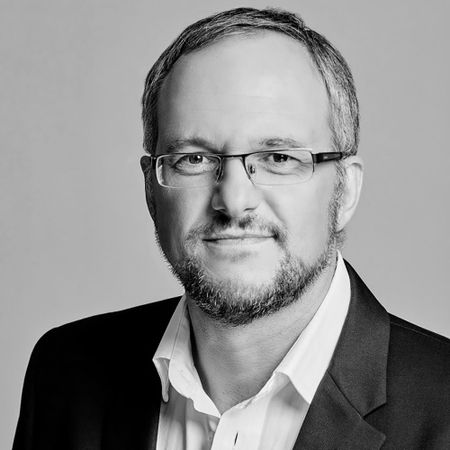
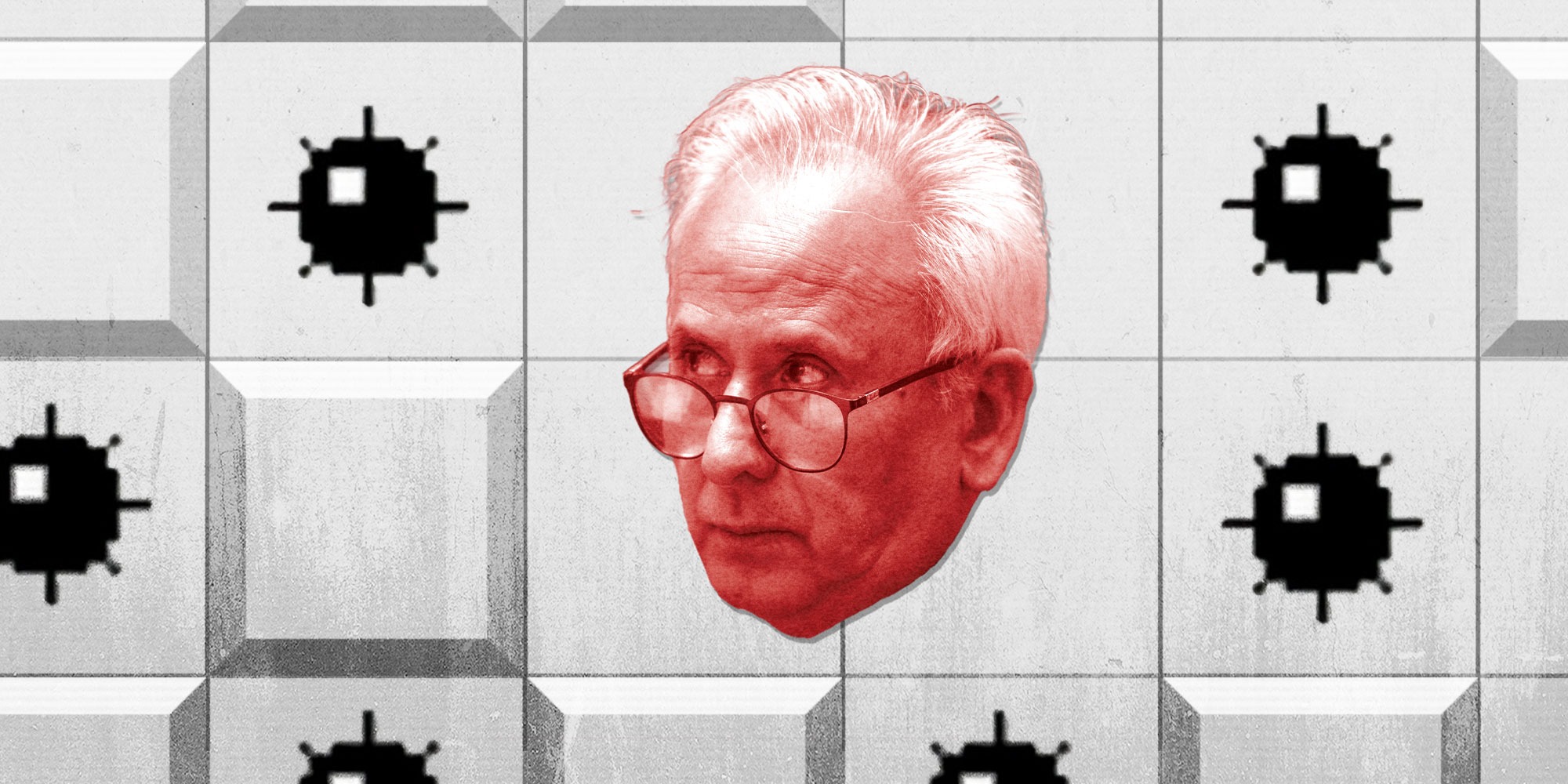
 Illustrative image: Acting Police Minister Firoz Cachalia. (Photo: Gallo Images / Brenton Geach). | (By Daniella Lee Ming Yesca)
 When President Cyril Ramaphosa approached Firoz Cachalia to become the police minister on an acting basis, he must have known that it would be a nearly impossible job.
It was in the wake of the KwaZulu-Natal Police Commissioner Nhlanhla Mkhwanazi’s claims that then Police Minister Senzo Mchunu was heavily involved in a criminal syndicate, and had acted illegally in trying to disband the police’s Political Killings Task Team.
Testimony at the Madlanga Commission has since shown it is almost impossible for Mchunu to return, National Police Commissioner Fannie Masemola has been suspended and virtually every weekend features the arrest of a high-ranking police officer.
Then, last week, it emerged that the NPA’s Investigating Directorate Against Corruption was planning to arrest the SAPS Intelligence boss Dumisani Khumalo.
‘Blood will flow’
This led Mkhwanazi to say there was a “war” going on in the criminal justice system, and that “blood will flow”.
This week, Investigating Directorate Against Corruption (Idac) head Andrea Johnson told News24 that she found those comments “devastating”, asking, “whose blood will flow, ours?”
It is a completely legitimate question. While Mkhwanazi might well have been upset that a friend and a person he believes is working with him to stop the criminalisation of the SAPS, it is logical to presume that he might mean the “blood” of Idac.
And, Khumalo is the head of the section of the police that has always been politicised. As News24’s Pieter du Toit told John Perlman on 702 on Tuesday, government intelligence agencies have been at the centre of our political contestation for at least 20 years (those with long memories will recall how then SAPS Crime Intelligence head Richard Mdluli basically offered to help Jacob Zuma win the 2012 ANC Conference in Mangaung. As Aubrey Matshiqi has written, he was asked his views by intelligence agencies on the ANC’s Polokwane Conference in 2007).
And, as Johnson argues in her News 24 interview, while the claims against Khumalo might revolve around what her critics call an “HR matter”, the key starting point of State Capture was to appoint particular people into particular positions (a more recent example is how Tembisa Hospital was looted).
Man in the middle
In the middle of all of this is Cachalia.
He said this week that, “I didn’t receive that news happily that they were about to arrest these two police officers who are needed in the fight against organised crime and to keep the country safe. That doesn’t mean that where accountability has to be enforced that it doesn’t do so. The way in which that happened was not right”.
Cachalia may now be trying to do several things.
First, he has to show some support to his police officers. These are people he is working very closely with ahead of the planned protests. He cannot work with them in the morning and condemn them in the afternoon.
But he is probably also not sure who may have done what before he came to office. Which means that he cannot go too far in backing Khumalo or others.
At the same time, he might well understand Mkhwanazi’s point and yet believe his comments about “war” went too far.
More complications
Making all of this more complicated is the fact that there is now an acting national police commissioner. Puleng Dimpane may find it difficult to command national attention. While both she and he are in acting positions, he has much more public experience.
This is not just because of his time as the Gauteng public safety MEC, but because of his long track record, first in the fight against apartheid, and then in the fight against crime.
Crucially, he has the express backing of Ramaphosa, which may become important in what comes next.
Cachalia has always been a mature and thoughtful voice on crime issues. He has an obvious tendency to think before speaking.
This trait might well be his biggest protection while dealing with the issues in the police. He has to think through every statement in every meeting, not knowing who he can really trust.
This also comes through in his public posture on the immigration protests planned for next week.
He has been careful not to raise the temperature by making threats or using inciting language. He has also said that 30 June “is a normal day”, by which he means businesses and government services will be open as normal.
By stating publicly that preparing for the day has cost the government around R600-million, he has also reminded all concerned that these actions have a very real financial cost.
But he also has no way of knowing what to really expect.
March and March
It is worth repeating that as late as December 2025, there was no evidence that the March and March movement actually existed. In just six months, it has come from literally nowhere to dominate the public agenda.
This is virtually without precedent.
The closest anyone has come to having such a big political impact in such a short time is the launch of MK. Before 16 December 2023, the party existed only as a registration with the Electoral Commission. By June 2024, it had won more votes in KZN than any other party and was the official opposition in Parliament.
It may be that March and March can bring major cities to a standstill next week.
But previous threats by other actors to implement a “National Shutdown” have also failed. In 2023, the EFF promised a “National Shutdown” only to see a few thousand people participate in public marches.
This means Cachalia has to both be prepared for massive protests and avoid being accused of overplaying the threat if virtually nothing happens.
This means he has to continue to try to control the public narrative, to provide reassurance and to respond carefully to the comments of others.
All of this comes without knowing who in the SAPS will be suspended or arrested next, or what may still emerge from the Madlanga Commission. DM
Comments
Scroll down to load comments...