



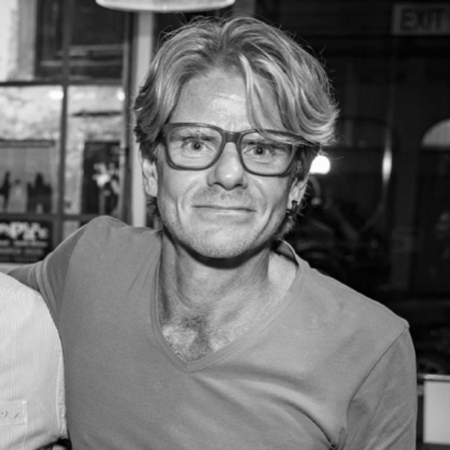
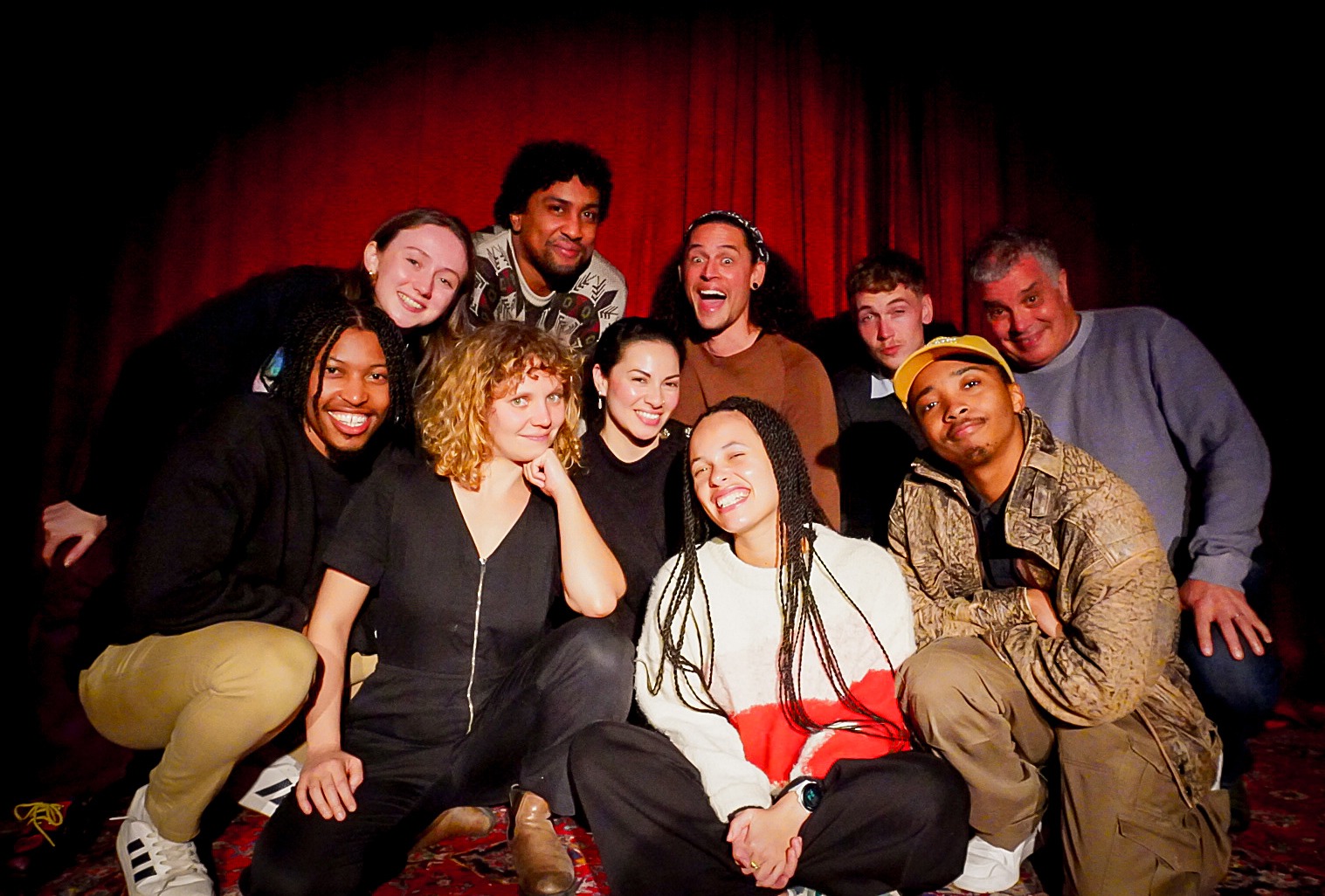
 The Spark Hub crew. (Photo: Courtesy of Spark Hub)
 She’s an actor, playwright, theatre producer, and – if the title of her new show is to be believed – she’s also (not) a real comedian. She is, however, whether she’d care to admit it or not, an entrepreneur, albeit not of the capitalist variety.
Sophie Joans is a community builder in the theatre world.
This role has, somewhat organically, come to define her, in fact. It happened out of necessity and perhaps because there is a real need within the theatre industry for sleeves-up, in-the-trenches go-getters like her.
Not that Joans is thrilled to be considered part of an “industry”.
“I’ve never been one to be in big musicals,” she says. “What I love is indie fringe theatre – a small black box space with artists on a tight budget doing whatever they can with whatever they have to make something special and captivating.”
/file/attachments/orphans/SophieJoans_SparkHub_413358.jpeg "Sophie Joans. (Photo: Courtesy of Spark Hub)")
Her frame of reference for this sort of independent (as opposed to comparatively industrial-scale) theatre is the erstwhile Alexander Bar, where she worked until the pandemic shut it down.
“It was a very fringe theatre in central Cape Town that offered artists a much-needed platform – a springboard of sorts for fresh graduates and emerging artists to try out their new work.”
She says that very few, if any, of those smaller indie spaces survived the pandemic, which prompted her, in 2021, to start Spark in the Dark. Initially a pop-up theatre, it operates as a platform obsessed with “showcasing the live performance talents of emerging, young actors”.
“We couldn’t front the cost of renting a space in one of the cool, hip spots in Cape Town, so we travelled around and put on work wherever we could,” Joans says.
In the process – by organising events, showcases, performance collaborations, get-togethers, whatever you want to call it – she has created a sense of community for young, up-and-coming, aspiring and similarly motivated theatre-makers like herself.
“Yes, I’m building a community,” she says. “I will never forget the joy and the love of working at the Alexander – because it wasn’t just a bar full of actors and writers, it was a place full of people who loved theatre.”
She says Spark in the Dark isn’t aiming to buy or rent a venue. “We’re still very much a pop-up, but we’re building a national audience of devoted theatre-goers.”
/file/attachments/orphans/ShannonHendryinMlungu_SparkHub_595909.jpg "Shannon Hendry in Mlungu. (Photo: Courtesy of Spark Hub)")
Part of that community-building drive now includes considerable focus on arts festivals within a reasonable driving distance of Cape Town. It began last year, with Spark Hub, essentially a collective of theatre-makers who, under the Spark in the Dark banner, take over a single festival venue and share as much of the financial and organisational burden as possible.
“The idea came to us while we were in Makhanda for the National Arts Festival (NAF) in 2024,” she says. “It happened over cheap shooters and glühwein.”
Joans and some of her actor friends realised that they were all, coincidentally performing in the same venue, and they also happened to be staying in the same house.
They had organically started helping one another with changeovers between productions, striking sets and carrying props on and off. They thought it might make sense to “curate” their productions together, apply for a single venue and share accommodations and costs, which, as anyone travelling to festivals knows, can be exorbitant.
By the time they arrived in Makhanda last year, they had 14 shows as part of their “hub”, all of them featuring emerging talent, and all of the work original, fresh, and – in many cases – slightly (and, sometimes, enormously) off the wall. To make it all happen they ran a fundraising campaign and raised R106,000 within three weeks.
“It still blows my mind how we managed to do that,” Joans says.
“I think we always live with a sense that there’s no money in the arts, but we’re in a real bind in South Africa, with blinding funding cuts – specifically R5.5-million that was cut from the National Arts Festival’s budget this year. It breaks my heart to see the effects of those cuts on a cultural institution that I’m deeply passionate about.”
/file/attachments/orphans/SophieJoansinNETPHLIX_SparkHub_755976.jpg "Sophie Joans in NETPHLIX. (Photo: Shayne Joseph)")
One saving grace, undoubtedly, is Joans’s own energy – and the vigour with which she and the other artists dedicated themselves to the task of collectively promoting their work. Flyers, posters, face-to-face missives and quite a vibe in and around their festival venue ensured that they had audiences, and that anyone curious enough to see what they were up to left those performances with something to remember them by.
Spark Hub’s first iteration was so successful, in fact, that the organisers of KKNK (the Klein Karoo National Arts Festival) approached Joans to run an Afrikaans version of the platform in Oudtshoorn earlier this year.
They called it Vonk Prop (literally Spark Plug) and ran a packed programme, with all their shows in a single venue, so it felt like its own mini-festival. Productions ranged from off-beat (and avant-garde) students plays, to screwball one-man shows, with a handful of well-established comedians showing up for guest appearances.
And they’re about to return to NAF which kicks off in Makhanda on 25 June.
Making it happen, though, has been a struggle.
In their line-up they have 13 shows and to cover the cost of getting to the festival, accommodating everyone, paying for the venue and surviving for almost two weeks, Joans and her team have had to run a Thunderfund campaign.
“Though we’ve previously applied for government funding – provincial, national, whatever it might be – we haven’t received anything. Which is why we opted for crowdfunding.
“We need to raise R150,000, because that’s what it costs to get 23 people up to Makhanda, house and feed them for 11 days, have posters printed, and pay for transport and petrol.”
She says fundraising this year has been sluggish.
“Right now, on the 14th of June, we’re in this crazy position of being only 20% into our goal of raising what we need to take everyone to NAF,” she says. “We’re 10 days away from showtime and it’s incredibly daunting, because you can’t squeeze water out of a stone. I’m not sure that young artists can cope without government funding for the arts. If you’re starting out, you need support.”
/file/attachments/orphans/KenanEnnieKlopse_SparkHub_619890.jpg "Kenan Ennie Klopse. (Photo: Nardus Engelbrecht)")
Come hell or high water, though, the show will go on and Spark Hub’s line-up is pretty wild, featuring mostly guaranteed hits, including Joans’s one-woman show, NETPHLIX. There are also shows that made a big impact at KKNK, such as Kenan ennie Klopse and Markus (en die brandblusser op die derde verdieping). The latter, a one-man monologue written and performed by Vihann van Rooyen, is a bittersweet, wild and turbulent, fantastically funny tale of a queer student who lands himself in an astonishing array of off-the-wall situations, mostly as a result of online hook-ups
Joans believes the artists involved are stand-out voices in new South African theatre.
Among these “new voices” is Shannon Hendry, a postgraduate student at Stellenbosch University, who is performing a show called Mlungu.
“It’s just a white woman up there on the stage doing her thing,” she says, straining to keep a straight face, hinting awkwardly that it’s about – eek!, cringe! – politics.
“It’s about those things that come out of our mouths and then it’s too late – you can’t take back what came out,” she says. She’s motivated by her belief that South Africans are the funniest people on Earth. And she’s on a mission to prove it.
Also on the bill are Anne Bosch’s Please, I Promise; Solitude, written and performed by Kamogelo Mhlantla and directed by Qondiswa James; and Tshiamo Moretlwe’s Filled, which won an Ovation at last year’s NAF and received a Kanna nomination for Best Script at KKNK.
A cornerstone elements at Spark Hub are its “late-night” shows. Play Things is a variety show with an ever-changing line-up – whoever gets on stage has roughly between five and eight minutes to a perform “a play-like thing”.
/file/attachments/orphans/JasonBaileyinPlayThings_SparkHub_211465.jpg "Jason Bailey in Play Things. (Photo: Courtesy of Spark Hub)")
And there’s the slightly X-rated Raunchy Renditions, an adults-only storytelling opportunity for “anyone who cares to participate”. In a spirit of open-heartedness, it’s simply 10 storytellers a night each telling a five-minute sex story (which often turns out to be both hilarious and eye-opening). It’s been running since before Joans established Spark in the Dark, and is something she says has always performed well, often with sold-out shows.
“It has been so beautiful and so empowering to hear so much sex-positive storytelling,” Joans says. “Over the years, there’ve been stories that make your jaw drop and others that make you cry with laugher, or make you think, ‘Wait! You put what, where? Why?’ But it’s always lots of fun, and probably only a skok [shock] if you have no idea what to expect. What guides the show is the idea that ‘shame dies when stories are told in safe spaces’.”
It is also a box office winner. “Sex definitely sells,” Joans says. “Raunchy Renditions is our highest selling show ever. It’s not just that we’re trying to push the envelope, though. People laugh and they feel validated. It’s very cathartic.”
Joans says it’s instinctive for young artists to want to push the boundaries. “And it’s our job to do so.”
Doing precisely that is Samantha Carlisle, whose one-woman show, Messy, is an autobiographical story about being an OnlyFans online sex worker. It’s also returning to NAF this year.
/file/attachments/orphans/SamanthaCarlisleinMessy_SparkHub_350670.jpeg "Samantha Carlisle in Messy. (Photo: Courtesy of Spark Hub)")
“I think we’re in an ever more sex-positive society,” Joans says. “What’s important about Sam’s show is that it dissolves many of the stigmas people have about sex work.”
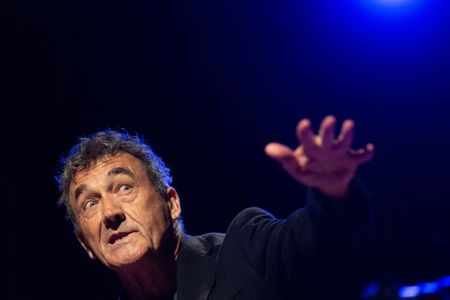
A major coup for Spark Hub is having theatre legend Andrew Buckland join the platform. Joans says that while Buckland is a veteran with 50 years of experience, he remains consistently one of the freshest voices in South African theatre.
“He heard about us and asked me if we’d be interested in having his new play, A Fool’s Guide to Living and Dying, on our programme. And then we asked if he’d bring The Ugly Noo Noo back because it’s such an iconic piece, and he agreed. So we have two brilliant Andrew Buckland plays on our line-up!”
Apart from the prestige of having a national icon on the bill, Joans says she’s “really looking forward to the foot traffic his name will attract”.
More seriously, though, she says Buckland’s involvement signals that he believes in what Spark Hub is trying to achieve. “Why else would he have agreed to join us bunch of crazies?”
Joans admits she’s ready to do anything to generate the right kind of hype for her “community”. “That’s where audience-building comes in,” she says. “We’re making a statement. The arts are, on the one hand, under threat like never before from funding cuts, and on the other hand, facing so much competition from other forms of more accessible ‘entertainment’.”
There is, however, also evidence of a steady backlash against everything online and on a screen; an appetite for live theatre is growing, including in unexpected places.
“I’ve come to realise that there are people all over the country who are really hungry for theatre – especially people who aren’t in the big cities,” Joans says.
“Our long-term vision for Spark in the Dark is to become a travelling roadshow – like a circus troupe – with a big van that tours the country and puts on little theatre festivals anywhere that’ll have us.”
In the meantime, she believes that there’s an urgent need for better-managed arts funding. She wants to see more investment in young artists, “while they still have the energy and spark to fight for their careers”.
“What breaks my heart is that many of the artists who inspired me to pursue this career have left the industry because they can’t sustain themselves. We have a very narrow window of people who can afford to stay in the arts – so what’s to become of emerging artists who are in their early twenties? About 90% of the people I studied with and who tried to break into the industry were forced to abandon their dreams. It’s a horrible cycle – and we’re dropping like flies.
“It’s so sad to see. We live in a world where theatre is more important than ever before. It’s something that helps us makes sense of being alive. Theatre is such a flipping blessing on society. Our government needs to recognise that.” DM
The National Arts Festival Spark Hub productions happen in Makhanda’s Princess Alice Hall from 25 June to 4 July.