



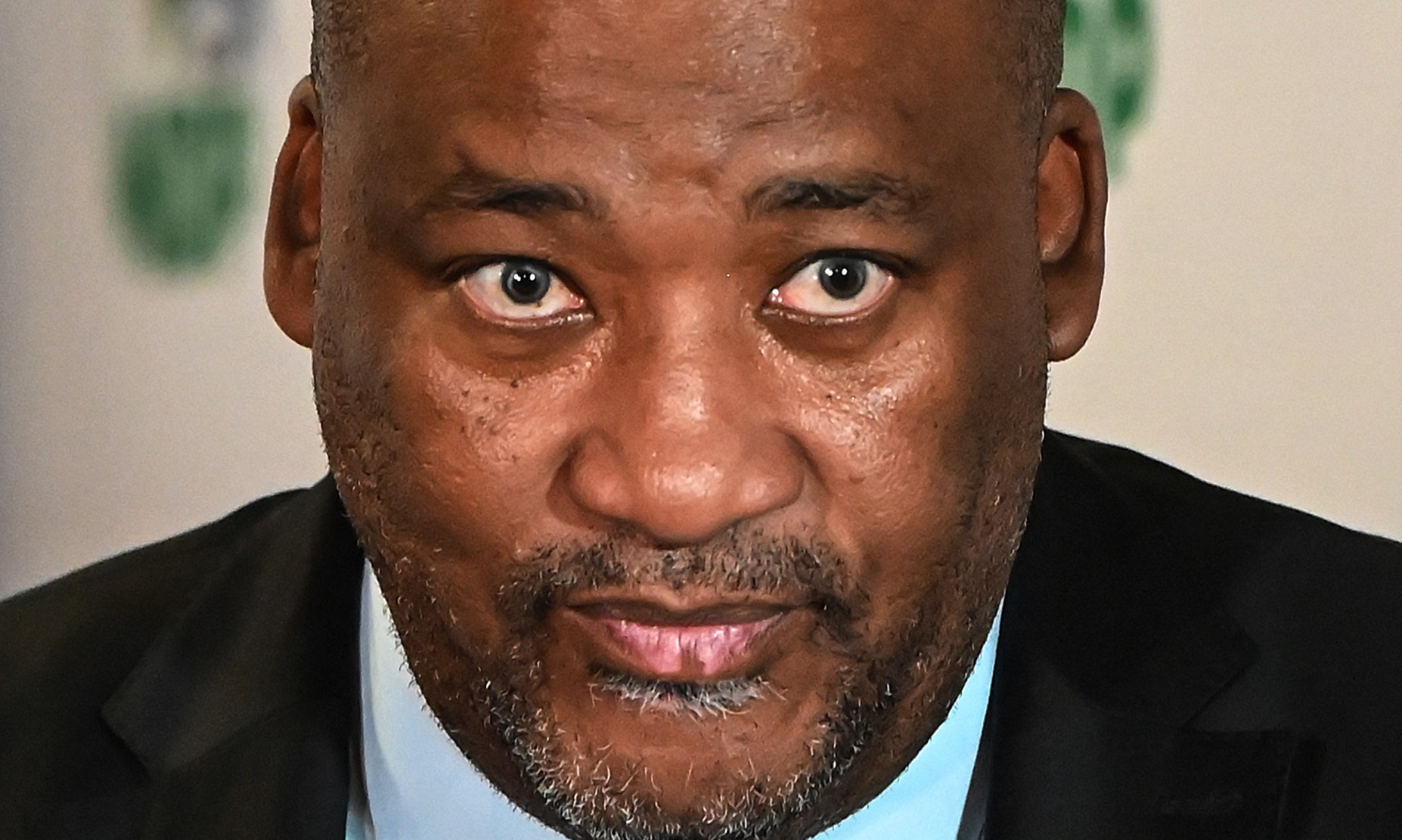
 Minister of Sport, Arts and Culture, Gayton McKenzie. (Photo: Frennie Shivambu / Gallo Images)
The Department of Sport, Arts and Culture (DSAC) last week released its latest list of projects supported by the Mzansi Golden Economy (MGE), revealing that funding has been reinstated for at least two major events — the Cape Town Carnival and the National Arts Festival in Mkhanda. However, this move comes amid lingering controversy over what critics describe as an “opaque” selection process.
Despite the release of the list, both the department and Minister Gayton McKenzie have yet to provide Parliament with a full account of the R110-million MGE budget. Specific details regarding individual award amounts and the criteria for panel selection remain strictly “confidential”.
McKenzie’s decision in September 2025 to defund major festivals triggered a wave of chaos across the sector, leaving landmark events in a catastrophic lurch after their financial lifelines were abruptly cut.
In a move that drew heavy criticism, McKenzie directed these organisations to seek support from the MGE fund instead. This guidance proved problematic, as it later emerged that MGE resources had never actually been earmarked for festival support, leaving many organisers stranded without a viable fallback.
Roundabouts and swings
On Friday, McKenzie announced the findings of a forensic investigation into the Cultural and Creative Industries Federation of South Africa (CCIFSA), which showed “extensive financial irregularities” for more than a decade.
The seed for CCIFSA was planted after a 2009 meeting between then president Jacob Zuma and members of the cultural and creative industries. Afterwards, the DSAC set up two task teams to develop a framework for the federation supposedly representing 12 identified sectors and 45 subsectors. The first budget in 2014 was R5-million.
CCIFSA fell under the protection of the then minister of sport, arts and culture, Nathi Mthethwa and for years failed to account for funding or its work and has been viewed as a platform for political manoeuvring.

/file/dailymaverick/wp-content/uploads/2025/09/AV_00017688.jpg "Jacob Zuma shares a toast with Nathi Mthethwa, as Zuma celebrates his 70th birthday at Luthuli House in Johannesburg on 12 April 2012. (Photo: Antonio Muchave / Gallo Images / Sowetan)")
The investigation that McKenzie announced, conducted by Gobodo Forensic and Investigative Accounting (GFIA) on behalf of the department, unpacked R51.8-million in public funds transferred to CCIFSA between the 2014/15 and 2023/24.
Some of the rot unearthed included an irregular contract addendum signed in March 2016 that increased an original CCIFSA funding agreement by R772,884 with “no submission, no justification and no proper approval”.
Unspent funds of R5.4-million as of the end of the 2016/17 were not returned to the department as required, instead being used by CCIFSA to fund its operations during the years in which it had no valid contract with the DSAC.
The department’s director-general, Dr Cynthia Khumalo, has been instructed to begin “appropriate processes” against departmental officials identified in the report.
The department will now refer the report to the Auditor-General of South Africa, the Special Investigating Unit and the Hawks for further investigation.
Lara Foot, celebrated CEO of the Baxter Theatre Centre in Cape Town, was prompted to respond on Facebook: “CCIFSA, who does not employ or create employment for artists, has mismanaged and essentially stolen R57 million, whilst real NPO’s and independent theatres receive nothing!”
Losses and gains
McKenzie drew the ire of the arts, theatre and cultural community in September 2025 when he defunded landmark events like the Cape Town International Jazz Festival and the Makhanda National Arts Festival, stating they should “stand on their own feet”.
The National Arts Festival lost R5.5-million in state funding after McKenzie withdrew support. Monica Newton, the CEO of the festival, said that the 50-year-old event had initially been excluded from the MGE funding model as it had fallen outside the department’s narrow time requirements.
/file/dailymaverick/wp-content/uploads/2025/11/ED_511184.jpg "A scene from the 2024 National Arts Festival in Makhanda. (Photo: Alet Pretorius / Gallo Images)")
To survive, it had relied on continued support from the Eastern Cape provincial government and the Sarah Baartman District Municipality in 2025. It also maintained partnerships with the Eastern Cape Development Corporation and Standard Bank.
Strict guidelines
While questions are still being asked about some of the organisations and projects that have received MGE funding, well-known artists such as singer and producer Loukmaan Adams and David Kramer received support.
/file/dailymaverick/wp-content/uploads/2024/10/David-Kramer-picture-by-Jesse-Kramer.jpg "Singer, songwriter and playwright David Kramer. (Photo: Jesse Kramer)")
Last week, the department released “strict compliance guidelines” for the new grants, while facing intense political backlash, with the Democratic Alliance (DA) accusing McKenzie of mismanaging MGE funds and avoiding parliamentary oversight.
The DA has accused the MGE adjudication panel, appointed by McKenzie, of behaving “with open defiance” during an appearance in Parliament.
The panel is chaired by the national spokesperson of the Patriotic Alliance (PA), Marlon Daniels, whom the DA has accused of having “no demonstrable professional background or recognised expertise in the arts, culture or creative industries”.
Misdirection
Since McKenzie’s shock announcement last year, it has emerged that the MGE had never been created to fund large arts and cultural festivals.
“After personally defunding established festivals across South Africa, the minister explicitly advised organisers to apply to MGE instead, creating the clear and reasonable expectation that this was an appropriate and viable funding route,” said DA MP Leah Potgieter.
/file/attachments/2991/Screenshot2026-05-10181119_665406.png "DA MP Leah Potgieter. (Photo: Parliament SA)")
The economic fallout from cancelled and downsized festivals had cost local economies close to R1-billion in lost tourism revenue, jobs and supplier income, she said.
McKenzie’s “misapplication” of existing funding programmes led to “severe financial consequences” for large arts and cultural festivals, which were directed to apply for MGE grants, even though the programme was not designed to support them.
Previously, some MGE applicants told Parliament about “unfair treatment, inconsistent decision-making, and funding being awarded to deregistered or non-compliant entities”.
The future of funding
Some of the biggest names and brains in the cultural sector in the Western Cape participated in an important discussion, The Future of Arts Funding: Sustainability, Innovation and Collaboration, which kicked off the annual Suidoosterfees, now in its 23rd year.
The panellists included Cornelia Faasen (CEO of Nasionale Afrikaanse Teater-inisiatief, NATi), writer Dominique Enthoven, Beth Arendse (CEO of Business and Arts South Africa, Basa) and Marlene le Roux (CEO of Artscape), with broadcaster Africa Melane moderating.
/file/attachments/orphans/ED_335139_552014.jpg "Cornelia Faasen, the CEO of Nasionale Afrikaanse Teater-inisiatief. (Photo: Deaan Vivier / Gallo Images / Beeld)")
Panellists focused on the “critical and urgent need” to rethink arts funding, noting that despite contributing at least 1.4 million jobs and 4% of the national GDP, the creative sector was often excluded from major investment conversations because current models prioritise “need” over “value”.
Models no longer fit
Basa’s Arendse said arts funding was “in crisis”, not due to a lack of money but because “old funding models are no longer fit”.
“There is capital,” she noted, “but the value of the arts is not clear to investors. We keep leading with need, rather than designing models that unlock value. Investors are just not seeing it.”
Artscape’s Le Roux highlighted the huge administrative burden attached to government funding and noted that compliance processes could be arduous for those who lacked capacity. The panel agreed that while artists were central to the cultural ecosystem, they should not be burdened with seeking support.
This, said Enthoven, should be the responsibility of “intermediaries and cultural stakeholders” who could build frameworks that would make sustainable funding possible, allowing artists to “just be able to create work”.
Faasen noted the arts sector continued to function “largely driven by passion”; however, this could be “significantly strengthened” through more coordinated government and private sector support. She highlighted the potential of inter-ministerial collaboration, particularly between trade and industry, tourism and innovation.
She cautioned that new regulatory frameworks, while “welcomed in principle”, could place additional burdens on artists. She called for greater social protections, including pension schemes and medical aid support, noting the lack of a safety net for many in the industry.
Le Roux echoed the importance of labour organisation within the sector, encouraging artists to unionise and organise “especially in light of new regulations”.
Faasen cited the Festival Enterprise Catalyst project, a model that deployed “match funding” to enable productions to travel across a network of partners, extending the lifespan of creative work. Project partners included the Klein Karoo Nasionale Kunstefees, the National Arts Festival in Makhanda, the Suidoosterfees, the Toyota Woordfees, Aardklop, Samro, Concerts SA, NATi and the Tribuo Arts Platform.
The CCIFSA bust
While those who tackle the gargantuan task of organising and running massive annual festivals and cultural events were barely swimming when they were hit by McKenzie's defunding wave, CCIFSA, it turns out, has been spending as if there were no oversight — which, of course, there wasn’t.
The GFIA forensic report contained further financial information, said McKenzie on Friday, that “misrepresented funds intended for the Downtown Music Hub” as CCIFSA’s own operational funding.
Downtown Music Hub (DTMH) is located in a landmark recording studio in Johannesburg that was given a makeover in 2015 to provide studio time to aspiring and established artists.
/file/dailymaverick/wp-content/uploads/2023/06/CBT-inner-city-programs-2.jpg "The Downtown Music Hub is a cutting-edge music facility dedicated to supporting the growth and development of professionals in SA’s music industry. (Photo: Piwokuhle Motha)")
The investigation found DTMH funds totalling R3-million “comingled” with CCIFSA’s funds in a single bank account. R10-million, the first tranche paid to CCIFSA for the Ushering In a New Era awards, “cannot be properly accounted for, as no supporting invoices or proof of payments were provided”.
Over and above this, a budget submitted by CCIFSA in support of a recent funding application reflected an administration fee of 32% of the total allocation — more than three times the 10% stipulated in the applicable agreement.
These administration costs consisted primarily of salaries and payments to CCIFSA executives.
McKenzie said the report had been shared in confidence with the Portfolio Committee on Sport, Arts and Culture and with the Auditor-General as part of the department’s accountability obligations. DM
Comments
Scroll down to load comments...