




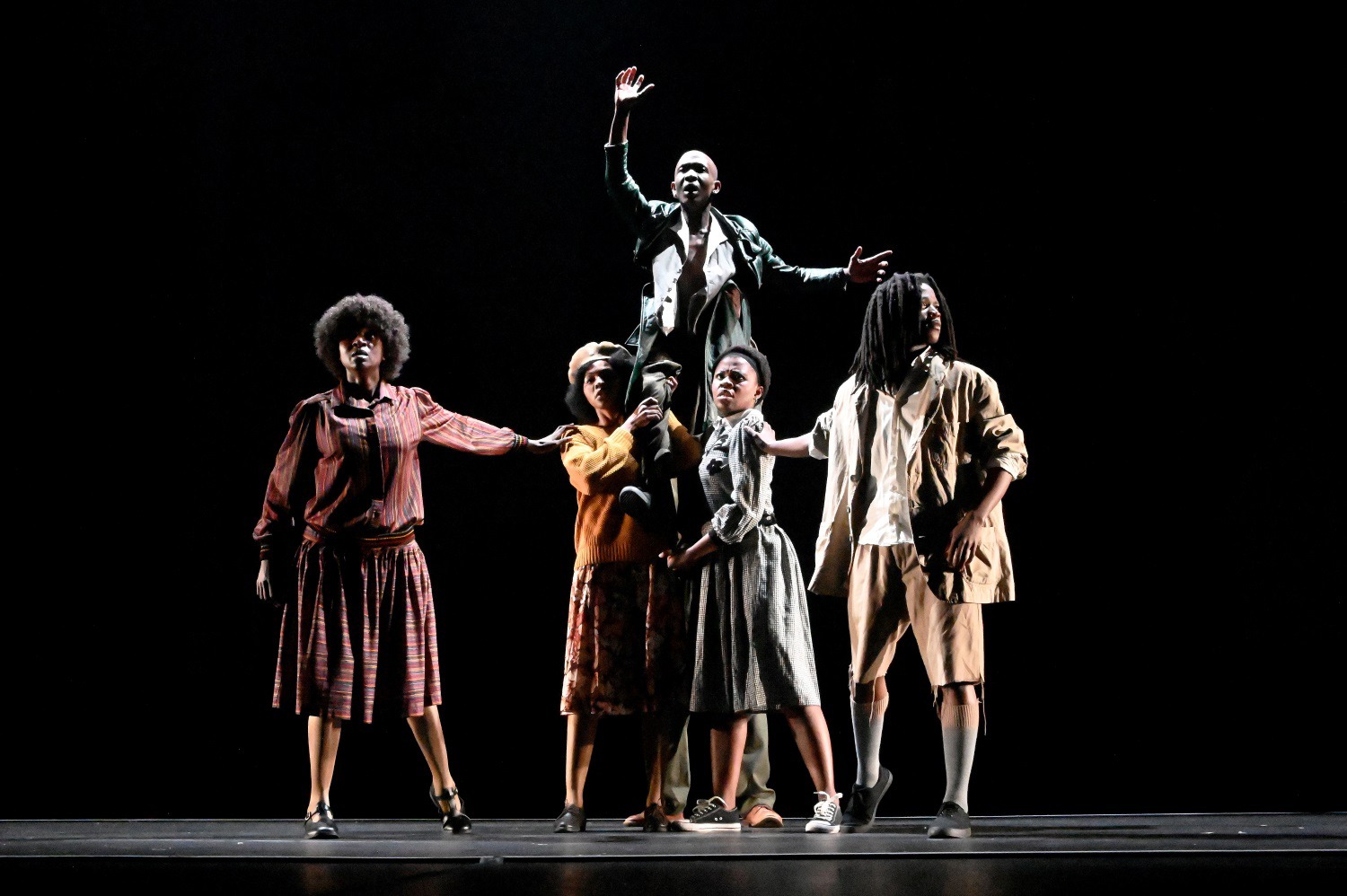
 The 50th anniversary performance, titled Let’s Meet At The Market, told the story of The Market Theatre through choreography and dialogue. It was staged at The Market Theatre over the 19-21 June weekend. (Photo: Supplied / Market Theatre)
For 50 years, Johannesburg’s iconic Market Theatre has served as a vital hub for cultural production and political protest. Staging plays by pioneering writers such as Athol Fugard, Phyllis Klotz and Mbongeni Ngema, and launching the careers of legendary South African actors and directors like Janice Honeyman, John Kani and Leleti Khumalo, the theatre has firmly cemented itself as a cornerstone of the nation’s cultural landscape.
In honour of this milestone anniversary, the theatre hosted a spectacular celebration from 19 to 21 June, translating its rich history into a series of dynamic performances, talks, and exhibitions.
The weekend’s pièce de résistance, Let’s Meet at The Market, vividly captured the theatre’s founding against the turbulent backdrop of the 1976 Soweto uprising. Directed by Clive Mathibe, this flagship showcase brought the venue’s theatrical highlights to life through choreographed dances and poignant vignettes.
Market Theatre artistic director Greg Homann said, “We have curated the whole birthday weekend experience not only in memory of the past, but as a commitment that The Market Theatre will always be home to the South African story in as authentic a way as possible, told by voices from all backgrounds. This is what has made The Market Theatre so resilient, so agile, and so important for us as a country, and the world, across the decades.”
/file/attachments/orphans/MannieManimBarneySimonin1976-TheatreimagebyGiseleWulfsohn1_784868.jpg "Mannie Manim (left) and Barney Simon founded The Market Theatre in Newtown in 1976. (Photo: Gisèle Wulfsohn)")
/file/attachments/orphans/RuphinCoudzyer_985689.jpg "The theatre has hosted many legendary performances. (Photo: Supplied / Market Theatre")
/file/attachments/orphans/MarketTheatre-HeritagePortal-2014-2_711174.jpg "The Market Theatre as it looks today. (Photo: Wikipedia)")
Founded in June 1976 by anti-apartheid playwright Barney Simon and theatre manager Mannie Manim, the theatre was established near the Old Indian Market in Newtown, where fruit and vegetables were sold, and animals were slaughtered in a nearby abattoir.
It quickly evolved into a powerful symbol of anti-apartheid defiance by staging seminal protest plays such as The Island, Sophiatown, and You Strike a Woman, You Strike a Rock (Wathint’ Abafazi, Wathint’ Imbokotho). Through these boundary-pushing productions, the theatre actively transgressed apartheid laws by opening its doors to racially mixed audiences. Notably, its 1987 production of Othello, starring John Kani, showcased an interracial relationship on stage.
The anniversary performances also featured the original cast of the hit South African musical Sarafina! (though missing a few members, including Leleti Khumalo and Dumisani Dlamini), who reunited to pay a moving tribute to the late Mbongeni Ngema. Other featured works included Matsemela Manaka’s Egoli, Athol Fugard’s Woza Albert!, and Mike van Graan’s Green Man Flashing.
Together, these performances traced the painful arcs of South African history, confronting the realities of the migrant labour system, the brutal suppression by apartheid security forces, and the intersection of race and gender in the liberation struggle.
Telling South Africa’s story
The milestone weekend celebrated the institution as well as the individuals who built it. Accordingly, the production featured cameo appearances from individuals whose careers were shaped by the theatre, including acting titans John Kani, Desmond Dube and Gcina Mhlophe, to name a few.
Tshiamo Mokgadi, chief executive officer at The Market Theatre Foundation, said, “As we look back, we reflect not only on the powerful works that have played on our stages, but the people who have turned our space into a dynamic, diverse and truly South African experience. This institution was not built by infrastructure alone; it has always stood on the unbending backs of many individuals, institutions and corporates whose names line the walls on the boards in our foyer.”
/file/attachments/orphans/MarketTheatre50th173_192252.jpg "South African acting veteran John Kani made a cameo appearance during The Market Theatre's 50th anniversary performance over the 20-21 June weekend. (Photo: Supplied / The Market Theatre)")
/file/attachments/orphans/GcinaMhlophe_337121.jpg "South African veteran storyteller and actor Gcina Mhlophe took to the stage for the theatre's 50th anniversary celebrations. (Photo: Supplied / The Market Theatre)")
The remaining founding members of The Market Theatre, iconic actress and director Janice Honeyman and actress Vanessa Cooke, also took to the stage to recount their experiences under Simon and Manim, including an incident in which Manim’s only direction to Honeyman was to act like “a disoriented green balloon”. Honeyman told Daily Maverick that it was Manim who gave her her first big break.
“Meeting Mannie, because I was still a student, he said, ‘When you qualify, don’t take any work; phone me first.’ He was running [The Performing Arts Council of the Transvaal] at the time; The Market hadn’t opened yet. Then they came, and they did auditions, and he accepted me. Then what was amazing is, from that day to this, Mannie has been my guiding light, my employer, my big, big buddy,” Honeyman explained.
Through Manim, she secured a three-year contract with The Market Theatre as an actress. But an unexpected personal catastrophe changed the trajectory of her career.
/file/attachments/orphans/NalediM-MarketTheatre-22June_746498.jpg "Director Janice Honeyman, one of the founding members of The Market Theatre Company. (Photo: Fiona McPherson/UKZN)")
“I was playing the lead in the show, and I broke my leg. I skated. It was a lead, a huge part, and I got a severe reprimanding because I’d been ice skating. And he said, ‘You’re not going to sit here doing nothing. He gave me three scripts – a library programme, a children’s programme and a sort of touring evening programme. And I had to do them. So I call that my lucky break because that was my actual break as a director. I stopped being an actress. I found I enjoyed directing much more than I enjoyed acting.”
Honeyman has since written and directed dozens of plays, including the annual pantomimes performed during the Festive Season at the Joburg Theatre.
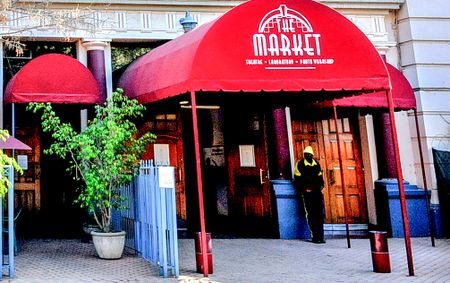
Another South African acting veteran who began his career at the theatre was Alistair Dube. His relationship with The Market Theatre began in 1987 after he performed in a local adaptation of Julius Caesar. Then in 1993, Barney Simon cast him to perform in a Market Theatre adaptation of the Can Themba classic short story The Suit.
“I did The Suit with Barney Simon before he died. We were the last people he worked with,” said Dube. “So, I’ve been having this relationship since 1987 with The Market Theatre. I’ve done so many shows. I’ve performed in every stage of The Market Theatre since then.”
In a recent interview with radio station PowerFM, artistic director Homann emphasised that despite modern challenges, including the fallout from the Covid-19 pandemic and a tough economic climate, the theatre’s enduring commitment to authentic local storytelling enabled it to keep its doors open.
“I think The Market Theatre has proved for 50 years that it’s about telling the South African story. And it’s about telling the South African story in the most authentic way possible by South Africans in all the diversity of the country in terms of language, in terms of culture, in terms of age, race, and everything else… and I think that at the heart of it is what has made The Market so resilient, so agile, and so important for us as a country.” DM
Comments
Scroll down to load comments...