




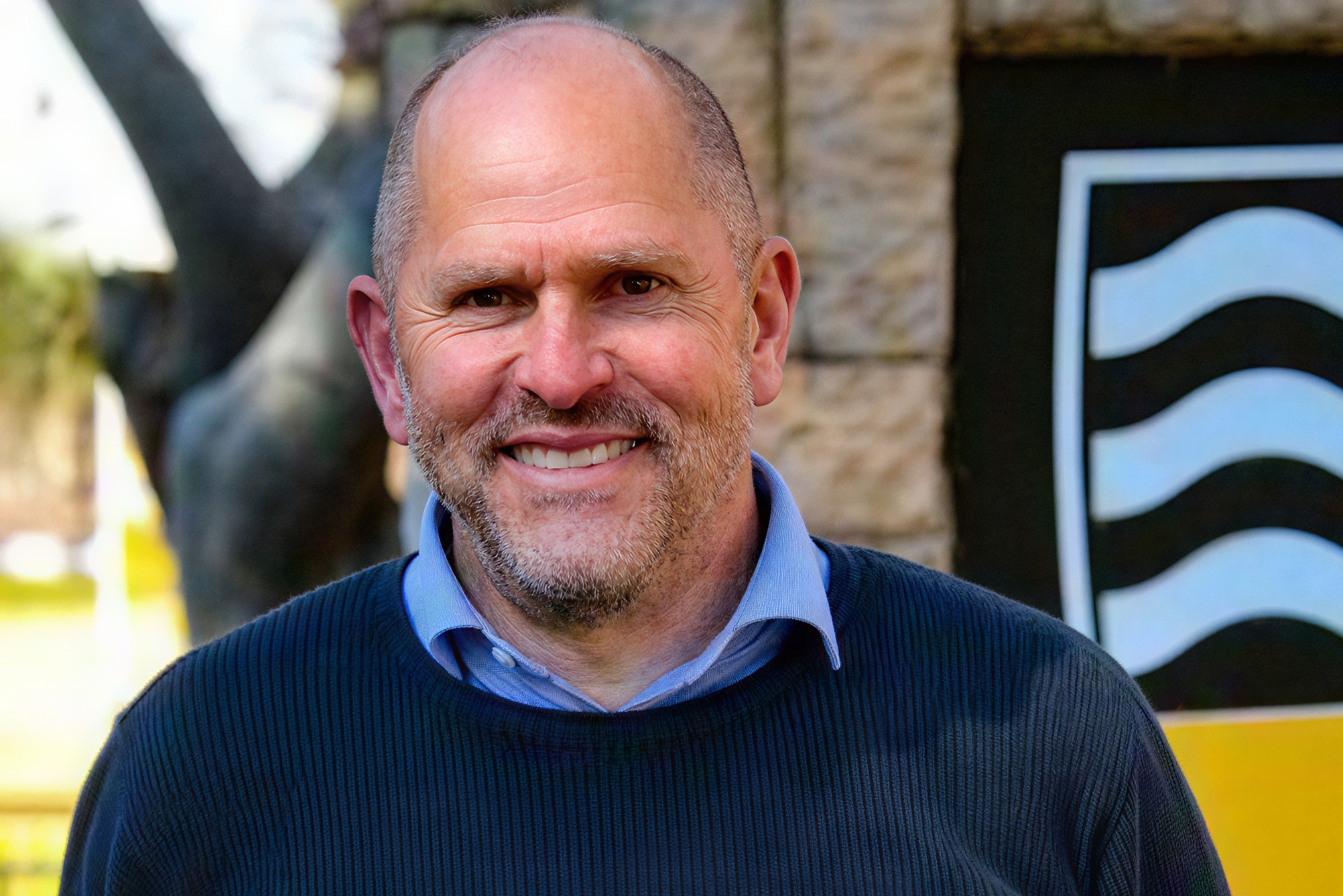
 Rob Katzen, one of the founders of Edusafe. (Photo: Sandringham High School Alumni Association)
What began as efforts by former pupils to reverse a decline at Jeppe High School for Boys has evolved into a growing initiative aimed at helping public schools across Gauteng improve safety, governance, maintenance and educational outcomes.
The EduSafe programme, spearheaded by businessman and education activist Rob Katzen, applies lessons learnt at Jeppe to schools serving township and working-class communities across the province through partnerships involving school leadership, alumni, businesses, communities and government.
Katzen, a Jeppe old boy, said the initiative was inspired by the transformation he witnessed at his former school.
“In the mid-2000s, Jeppe started declining after government funding reduced significantly. Together with the Jeppe Old Boys Association, we began investing in the school and rebuilding what had been lost,” he said.
The lessons learnt at Jeppe ultimately became the foundation of EduSafe.
“We learnt that a school cannot thrive if the community around it is collapsing.”
Katzen said the success achieved at Jeppe convinced him that the model could work elsewhere.
/file/attachments/orphans/WhatsAppImage2026-06-22at194635_723220.jpeg "The newly refurbished pool at Sandringham High School. The school’s Alumni Association worked closely with EduSafe. (Photo: Sandringham High School Alumni Association)")
“Based on that success, we decided to expand the concept to highly visible schools that could set an example for the public. We wanted schools where people could physically see the difference and understand that public schools can be turned around.”
The schools targeted by the programme draw most of their learners from neighbouring township communities and lower-income households.
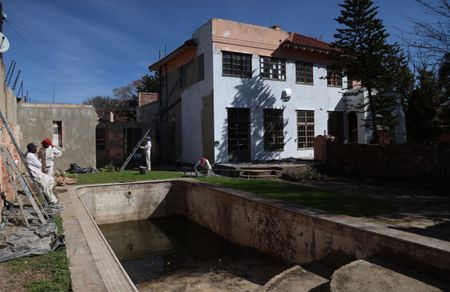
The programme aims to create sustainable schools through improving infrastructure, financial management, governance, maintenance, security and community involvement.
“It is about creating sustainable schools that can eventually run and sustain themselves. The government cannot carry this burden alone. There are simply not enough resources to go around.”
Katzen said schools functioned as the “centre of gravity” within communities and therefore required support from parents, alumni, businesses and residents.
“Communities have to become involved in their schools and help support them, and that includes rebuilding parental involvement and school spirit. We have to build pride and team spirit around schools.”
The programme has introduced campus managers, toilet janitors, maintenance systems, financial controls and governance support structures at participating schools through EduSafe funding.
/file/attachments/orphans/WhatsAppImage2026-06-22at194800_616895.jpeg "A new classroom at Sandringham High School. (Photo: Sandringham High School Alumni Association)")
“We are helping schools with financial management, property management and governance systems. We are helping schools build structures that will still be functioning long after we have left.”
Katzen said one of the biggest lessons from Jeppe was that schools succeeded when communities took ownership.
“Most of the parents we work with are not wealthy. But communities can contribute in many different ways.”
He praised the Gauteng Department of Education for supporting the initiative.
“They have been fantastic. They have gone out of their way to assist us wherever they can and are always willing to work with us.”
EduSafe estimates that about R3-million per school per year is required to provide the security, maintenance and support systems needed to create sustainable improvement.
“Within three to four years, we want functional, successful, sustainable public schools with good teachers, strong pass rates and sound finances. We want schools that can run themselves. We have proved that this model can work,” he said.
Sandringham becomes the test case
Former pupil Frankie Coda, a member of the Sandringham High School Alumni Association who worked closely with EduSafe, said the school faced severe challenges when the rejuvenation project began.
“There were two terrible toilet blocks serving about 1,000 learners. The swimming pool was not functioning. Classrooms were in poor condition. There was no tuckshop and there were weeds and rubbish around the school. Pupils cannot learn and teachers cannot teach effectively in those circumstances.”
/file/attachments/orphans/WhatsAppImage2026-06-22at195004_446649.jpeg "A before refurbishment photo of bathrooms at Sandringham High. (Photo: Darryl Brain / Burgess Plumbing)")
/file/attachments/orphans/WhatsAppImage2026-06-22at194225_583751.jpeg "A photo after the bathroom refurbishment at Sandringham High. (Photo: Darryl Brain / Burgess Plumbing)")
Over the past year, alumni, businesses and community partners have helped transform the school through the refurbishment of almost seven classrooms, the restoration of the swimming pool and tennis courts, the installation of 52,000 litres of JoJo tank water storage, the opening of The Den Gym and a R1.2-million ablution upgrade project.
/file/attachments/orphans/WhatsAppImage2026-06-22at194208_716587.jpeg "A before photo of a toilet at Sandringham High. (Photo: Darryl Brain / Burgess Plumbing)")
/file/attachments/orphans/WhatsAppImage2026-06-22at194242_187547.jpeg "An after photo of a refurbished toilet at Sandringham High. (Photo: Darryl Brain / Burgess Plumbing)")
“Over the past 12 months, Sandringham High School has undergone a remarkable period of growth, investment and renewal. Through the collective efforts of the school leadership, staff, governing body, alumni, community partners and supporters, significant strides have been made in improving both the learning environment and overall learner experience.”
Coda said substantial progress had also been made in strengthening campus security, enhancing learner support programmes, expanding alumni involvement and building partnerships aimed at ensuring the school’s long-term sustainability.
“These achievements represent far more than physical improvements. They reflect a school community united behind a shared vision of creating an environment where learners have access to safe, modern facilities and the opportunities they need to thrive. While there is still much work to be done, the progress of the past year demonstrates what can be achieved when a community comes together to invest in its school.”
/file/attachments/orphans/WhatsAppImage2026-06-22at194719_252137.jpeg "The tuck shop at Sandringham High. (Photo: Sandringham High School Alumni Association)")
“Sandringham High School is not simply improving its facilities. It is rebuilding pride, strengthening opportunity and laying the foundation for the next generation of Sandringham learners,” he said.
Expanding to Sandown
Sandown High School has also been incorporated into the EduSafe programme, with interventions focusing on improving school facilities, maintenance systems, security and governance structures as part of the school’s longer-term turnaround strategy.
Like Sandringham, the project relies on partnerships between alumni, business, community organisations and the Gauteng Department of Education to create sustainable improvements and rebuild pride in the school environment.
Katzen said the same principles being applied at Sandringham — maintenance, governance, infrastructure renewal and community involvement — were now being rolled out at Sandown.
CAP Green partnership
A key partner in the initiative is CAP Green, the environmental division of Community Active Protection (CAP).
Amanda Porter of CAP Green said the organisation immediately recognised the value of the EduSafe model.
“We immediately saw its value.”
Porter said CAP originally emerged following a murder in the Glenhazel area and initially focused on patrol vehicles and a community call centre before expanding into environmental renewal initiatives across about 80 suburbs.
“We soon realised that crime prevention is not about boots on the ground only. It is also about Crime Prevention Through Environmental Design.”
The approach, commonly known as CPTED, focuses on reducing opportunities for crime through cleaner public spaces, improved lighting, better visibility, regular maintenance and greater community use of streets, parks and public facilities.
Reclaiming public spaces
“The city is broken. We see it every day. But when we step in and clean and maintain an area or park, it becomes utilised. People are the best deterrent. It is not just about a clean-up. It is about transformation.”
Porter said communities needed to reclaim public spaces rather than retreat behind walls.
“We can all build high walls and hide behind them, but we have to reclaim our public spaces. The motto is simple: Love where you live.”
According to Porter, improvements around schools often triggered broader neighbourhood renewal.
“If the school is clean, the parks and streets follow. It creates a ripple effect.”
CAP Green employs about 70 workers through environmental improvement and youth employment programmes carried out in partnership with City Parks and the Johannesburg Roads Agency.
The organisation provides work opportunities for young people between 18 and 30 while teaching practical skills including painting, paving, bricklaying, woodwork and maintenance.
Porter said the programme was not intended to replace government, but to work alongside it.
“People sometimes say we are allowing government to abdicate its responsibilities, but that is not what we are doing. We are creating partnerships with government departments.”
She said maintenance remained one of the most important components of every project.
“City Parks can create beautiful spaces, but if nobody maintains them, they deteriorate. Maintenance is one of the most important parts of every project.”
Porter said communities that reclaimed and actively used public spaces inevitably created safer environments.
“If people start using parks, walking in their neighbourhoods and taking ownership of public spaces, crime declines. People become the best form of deterrence.” DM
Comments
Scroll down to load comments...