



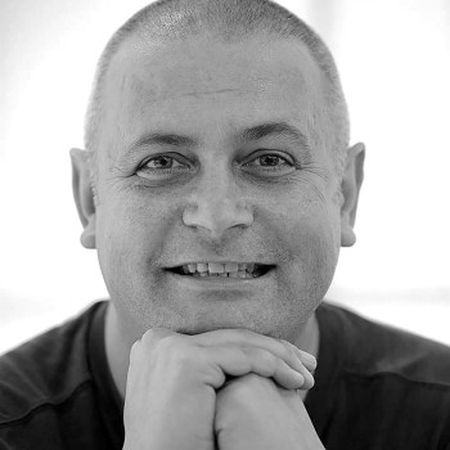
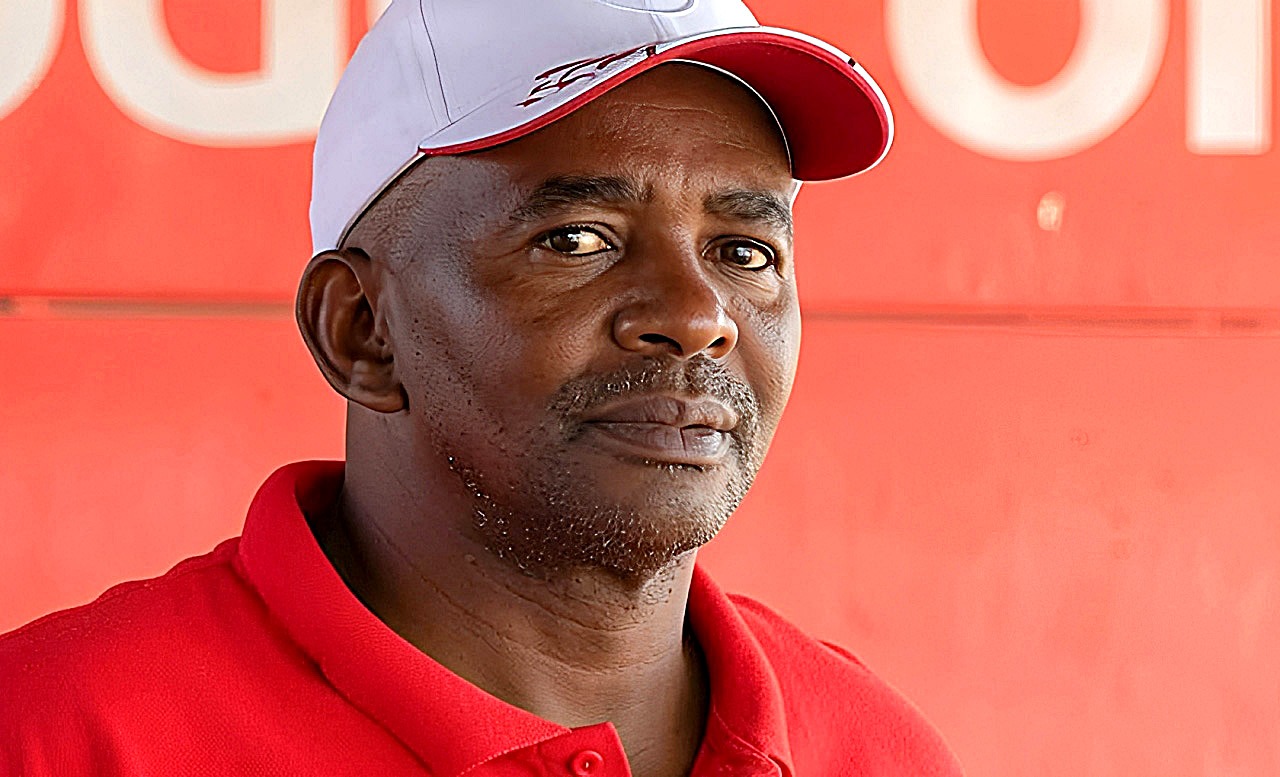
 Mzoli Ngcawuzele in his later years, after the stroke of 2017 had slowed but not stopped him. ‘Even after I suffered a stroke, I never sat down,’ he told the Cape Times. (Photo: Nhlanhla Lux Official / Facebook)
9 October 1954 – 6 June 2026
The man who lit the fires at Mzoli’s Place is gone, but Cape Town will not easily forget him. Edwin Mzoli Ngcawuzele, 71, who died at his home in Gugulethu, Cape Town, on 6 June, after a long stroke-related illness, was that rare figure: a man who turned forced removal, political sacrifice and a garage full of meat into one of the most joyful places this fractured country has known.
In his youth, he was a champion middle- and long-distance runner who refused to compete in the racially controlled sporting structures of his time, sacrificing sponsorships, national selection and any prospect of international competition in defence of a principle that cost him, in 1976, 10 weeks in detention; a self-made entrepreneur who built a backyard braai operation into a world-famous cultural landmark; and a man of such implacable stubbornness that even a stroke could not convince him to sit down.
He was born on 9 October 1954. In the 1960s, when Mzoli was still a boy, his family was displaced and forced to relocate to Gugulethu under the Group Areas Act. He told IOL in later years: “My family was displaced from the city and forced to relocate to Gugulethu in the 1960s under the Group Areas Act.” His stoic philosophy was “bloom where you are planted” and that’s precisely what he did. (Gugulethu is an isiXhosa word that translates to “our pride” or “our treasure”.)
Record-setting athlete
In the 1970s and early 1980s, Ngcawuzele was one of the most formidable athletes in Western Province. He ran the 5,000m and 1,500m for the Western Province Athletics Association, setting records that stood for years, and in 1984 he captained the Western Province senior team for what would be his final season.
/file/attachments/orphans/1_560679.jpg "Edward ‘Mzoli’ Ngcawuzele crosses the finish line to win the 5,000m in a new South African record time of 14 min and 40.8 sec. at the Boland championships held at Dal Josafat Stadium. Hendrik Moses finished second. (Photo: Jerry Seale)")
/file/attachments/orphans/718227049_1080831170986073_4848770876795562067_n_528821.jpg "Edward Ngcawuzele (454), running for Western Province, leads the field in the seventh round of the 5,000m. Despite his determination, the caption notes, he could not match the pace of Hendrik Moses (145), who won in 14:55.8. (Photo: Mogamat Toffar / Athletics Clipboard / Facebook)")
The Athletics Clipboard, which published a tribute after his death, recalled that those privileged enough to witness his last captaincy considered it among their outstanding sporting memories. “We were privileged and honoured as youngsters when he captained the WP senior team for the last time in 1984,” they noted.
But the record books capture only the outer shell of the man. Ngcawuzele competed under the banner of the South African Council of Sport (SACOS), the non-racial sporting body that operated according to equal human rights principles: “No normal sport in an abnormal society.”
It was tough and meant refusing the sponsorships, the national exposure and the competitive platforms that participation in apartheid-controlled structures would have brought. It required running on rough, under-resourced tracks and facilities.
June 16th: detention, and now a memorial
Ngcawuzele held that way of life or modus vivendi with a sort of hardiness and Taoism. On 16 June 1976, the Soweto uprising, the security apparatus detained activists and organisers wholesale, often without charge, under the broad powers of apartheid security legislation. Because Ngcawuzele was a prominent figure in the non-racial SACOS, he was held for 10 weeks. It is rather fitting that his memorial service will be held on the 16th of June.
Sipho Ngwema, a journalist who grew up watching Ngcawuzele run at Ny (Native Yard) 49 (sports grounds in Gugulethu), wrote after his passing: “As boys growing up in Gugs, we would watch in awe as ta-Mzo Ngcawuzele and the late Joseph Siyalana dominated the tracks of Ny 49 Stadium.
/file/attachments/orphans/718792992_1080818177654039_2116494779381766081_n_325656.jpg "Mzoli Ngcawuzele received a Legendary Award for his outstanding performances in athletics under the South African Council of Sport). The citation reads: ‘His legacy will live on forever – even if it is not for running.’ (Photo: Athletics Clipboard / Facebook)")
“Ta-Mzo belonged to a generation of athletes who believed that sport could not be separated from justice.” (Ngcawuzele was affectionately known as Ta-Mzo, the isiXhosa honorific “ta” denoting an elder respected by his community.)
After his running days were over, Ngcawuzele did not rest. The discipline of the long-distance runner, the capacity to hold a pace that others cannot sustain, translated into business ventures.
From garage meat to Mzoli’s
In 1998 he began selling meat informally from the garage of his house in NY111, Gugulethu. A University of Cape Town economic study later noted that he had moved “from selling meat informally from a garage, to owning one of the most popular hangouts in Cape Town”. By 2003, having secured start-up funding from the Development Bank of South Africa, Mzoli’s Place was officially open.
The concept was elegant in its simplicity. Patrons selected their raw cuts from the butchery and handed them to independent vendors operating braai stalls on the premises, who grilled the meat with flair and theatrics over charcoal. There was no waiter, white tablecloth, menu, boeuf bourguignon, sole meunière or crème brûlée. The chairs were plastic and basic. It was, in the best possible sense, itself.
/file/attachments/orphans/718687580_4302135916669652_4748481811481254068_n1_268655.jpg "Edwin Ngcawuzele outside Mzoli’s Meat in Gugulethu, the business he built from a garage<br>into one of Cape Town’s most celebrated destinations. (Photo: Ricardo Mackenzie / Facebook)<br>")
into one of Cape Town’s most celebrated destinations. (Photo: Ricardo Mackenzie / Facebook)
He served wors, chops, chicken, pap, and chakalaka (made from onions, tomatoes, peppers, carrots, beans and curry spices, cooked together into a thick, chunky sauce. It’s eaten cold or warm alongside braai meat, pap and bread.).
They played deep house music and created an atmosphere that proved absurd to fabricate and impossible to forget. “The reason behind the establishment of this place,” Ngcawuzele once told the Cape Times, “was to make a difference within our community.” For a few hours Gugulethu was the centre of Cape Town, not its margin. It generated serious money inside the township rather than extracting it. That was the difference.
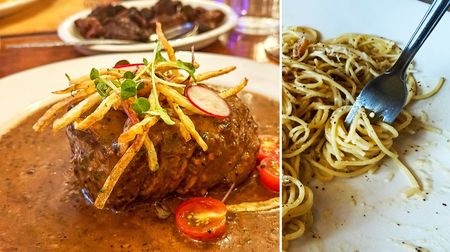
Within a few years, Mzoli’s Place was drawing up to 30,000 patrons on a busy weekend. It pulled in local families, politicians, visiting dignitaries, township regulars, suburban adventurers and foreign tourists in a mix that apartheid had spent 40 years and considerable violence attempting to prevent.
Jamie Oliver ‘sexy’ moment
British chef Jamie Oliver visited in 2009 and featured the venue on the cover of his magazine, describing it as “sexy” and praising the “incredible flavour” of the meat. Writing in Jamie Magazine, he added: “It’s so hot out there that they just can’t be hanging meat like we do in Europe. Just kill it. Gut it. Skin it. Eat it.” Ahem, those with plant-based convictions may have wanted to look away.
The Guardian’s Tina Walsh called it “a big open-air shack” with “a devoted following”. CNN filmed it and reported on it at length.
The world came, and this in Gugs nogal.
/file/attachments/orphans/716251712_122305985360199083_6115850078709342958_n_357271.jpg "Edwin Ngcawuzele at his butchery counter beneath a framed Cape Times front page bearing the headline Mzol’s mouth-watering meat. (Photo: Isgaxa News / Facebook)")
During the 2010 World Cup, foreign correspondents descended on Mzoli’s in search of what the journalist Eve Fairbanks, writing for The Atlantic, memorably diagnosed as an “authentically African” experience, meaning somewhere that confirmed rather than complicated their existing ideas about the continent.
Fairbanks herself proved resistant to the script. She found herself standing in the ordering room before a laminated copy of Oliver’s article, and wrote, “among four white tourists peering at his assertion we were ‘off the beaten track’. It was horribly recursive, like looking into a cage at a zoo and realising there’s nothing inside but a mirror; the exhibit is you.
“I fled back to my table, where my South African companion was starting to get into the whole authenticity thing himself. ‘We’re going to have a traditional South African dessert,’ he told me. He’d bought a loaf of white bread and two cans of soda. ‘You mix the bread in your mouth with Coke. It tastes like cake.’ ‘Whose tradition is that?’ I asked. ‘Construction workers,’ he said.”
Rod Solomons, who counted Ngcawuzele among his closest friends, recalled the infectious energy of those years in a tribute written after his death. “In the early days of our democracy it was the go-to place if you were a visitor to Cape Town and even if you were a Capetonian,” Solomons wrote. “That place gave practical effect to us being a Rainbow Nation and people just living and making new friends across the racial and cultural divide. If you wanted to meet politicians or bump into stars or well-known personalities, Mzoli’s was the place you just had to go to.”
Solomons remembered people from the suburbs, Cape Flats and the townships mingling without effort or anxiety on a Saturday afternoon. Ngcawuzele employed some 45 local staff, created a platform for small traders and street vendors operating alongside his enterprise, and helped build a model of township entrepreneurship that others would spend the next two decades trying to replicate.
/file/attachments/orphans/717710712_975336228635627_138115844671353555_n_339321.jpg "Edwin Ngcawuzele raises a glass outside Mzoli’s Place in its heyday: champagne in one<br>hand, the future in the other. (Photo: Vee Vuyo Qalazive Manentsa / Facebook)")
hand, the future in the other. (Photo: Vee Vuyo Qalazive Manentsa / Facebook)
This obituarist visited often in the early years. I recall the particular quality of those long Sundays: the meat portions were huge, the food so archetypical of South African braai vibes. I still remember thinking that this was the atmosphere and fun that the Nats tried their best to keep us all from experiencing. But I was also deeply aware that there was much more work to do on healing the past than just having a cackle and braai. One afternoon of laughter and smoke, however genuine, does not settle centuries of deliberate cruelty.
Not without its drama
The venue, nevertheless, was not without its drama. At some point there was criminal activity that got out of hand. One day I was sitting there with a large crowd of loud-mouths feeling that kumbaya mood when gunshots went off.
People screamed, some hid under the tables, sirens followed. In the mad rush, a minibus taxi stopped near our table and told us to jump in, they would take us to the station. We sped to the station, took a train back to Cape Town, and some of us had to collect our cars, undamaged, the next day. Never a dull moment.
Behind the noise and the success, his private life was accumulating sorrows that would have broken most men. In December 2006, his daughter Sisanda, then 20, was kidnapped by individuals posing as prospective clients for her promotions company, bound and gagged in a Parklands flat for three days while a ransom of R300,000 was demanded.
She was found alive and largely unharmed. The ringleader received 12 years; his two accomplices between seven and 11. When Sisanda heard the verdict, she told Sapa’s court reporter: “Sunday was my birthday. This was the best gift I have had.”
A month later, in January 2007, his son Unathi, 26, drowned near the Strandfontein Pavilion. Reporting for the Cape Times, Caryn Dolley wrote that the funeral at Gugulethu Sports Complex was attended by some 7,000 people. Ngcawuzele said the funeral had been a form of closure for the family trying to move on with their lives.
Two years after that, in 2009, Aziz Hartley reported for Cape Argus that Ngcawuzele’s son Mandisi, 31, had been killed on the N2 freeway near Athlone when two people ran into the road. “The family is not doing so good,” Ngcawuzele told Hartley. “This is tragic. So much has been happening.”
Rod Solomons believes the losses were never truly healed. “I doubt if Mzoli ever recovered from it, although in public he maintained that smile.”
In 2017, a stroke took him down. The man who had run 24 rounds at Ny 49 and built a business from a garage could no longer move as he once had. He refused, characteristically, to be defined by it.
“Even after I suffered a stroke, I never sat down,” he told the Cape Times. “That’s why I am saying my strength has kept me going. I am still recovering and not 100%.” He was still talking, at that point, about franchising Mzoli’s across the country. It was the same restless ambition that had been with him since the cinder tracks of his youth.
But the forces that finally closed Mzoli’s Place were beyond the reach of individual will. In May 2021, Ngcawuzele’s daughter Sisanda confirmed the closure, telling reporters it had come about due to “a lot of things, from physical safety to the state of the economy and restrictions of the pandemic”.
The site was taken over by another eatery. The corrugated iron, plastic chairs, charcoal smoke: gone. As if it were all a chimera. Or was it?
Edwin ‘Mzoli’ Ngcawuzele is survived by his wife, Phindiwe; his daughter, Sisanda Mangele; and three grandchildren. His sons, Unathi and Mandisi, predeceased him. DM
A memorial service will be held on Tuesday, 16 June from 3pm to 6pm at the Montevideo Faculty Hall, Montevideo Primary School, 17 Jersey Street, Montana, Cape Town.
Comments
Scroll down to load comments...