




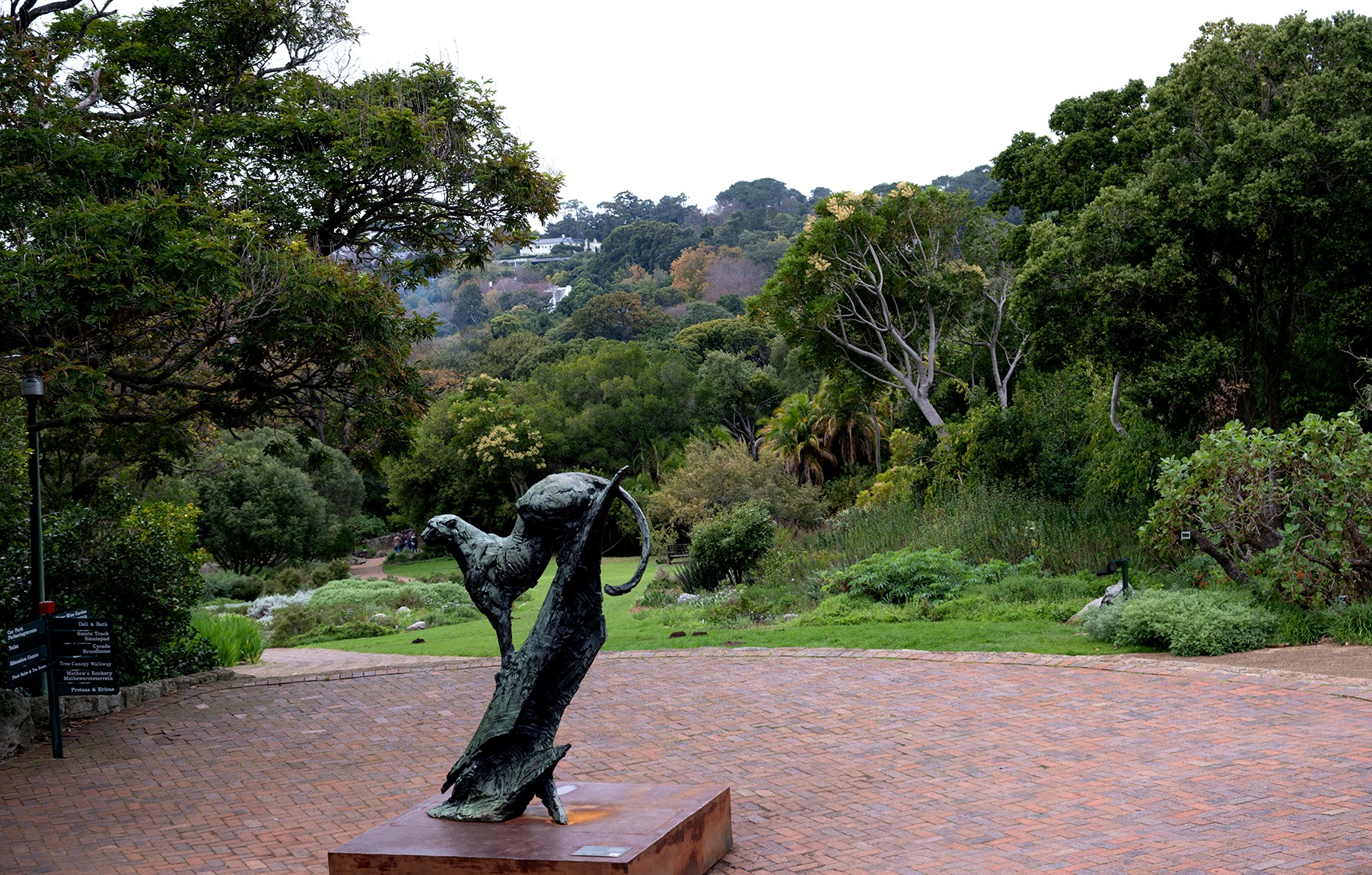
 Kirstenbosch National Botanical Garden in Cape Town draws millions of visitors. (Photo: Don Pinnock)
Kirstenbosch Gardens inspires great affection and genuine concern across a wide range of people, from scientists and tourists to locals privileged to have such a magical space close by.
Staff capacity
- Fill frozen horticultural, nursery, curatorial, collections management and technical support posts.
- Create protected specialist posts for living collections, nursery management, propagation, plant health and threatened species recovery rather than replacing these with general admin-heavy roles.
- Set a minimum horticultural qualification/skill level for collections specialists. The collections are too precious to be left in the hands of unskilled labourers.
- Prioritise hands-on cultivation ability, plant knowledge, not only formal qualifications.
- Bring back retired or former Kirstenbosch specialists on short-term contracts to train current staff to help recover institutional memory.
- Hire permanent horticultural staff for core maintenance to ensure continuity, rather than relying heavily on Public Works short-term contracts which are not conducive to essential garden care.
- Reduce unnecessary administrative burdens on horticultural and nursery staff so that skilled plant specialists can spend most of their time caring for, propagating and monitoring living collections.
- Reinstitute staff performance bonuses to incentivise hard work and recover staff morale.
Rebuild the nursery
- Treat the nursery as the engine room of Kirstenbosch’s living collections recovery, rather than as a back-of-house facility.
- Urgently repair and maintain mist houses, hot benches, irrigation and temperature-control systems.
- Restart rolling propagation programmes for collections of threatened, rare, range-restricted and difficult-to-cultivate plants.
- Remove dead, dying and diseased material to reduce pathogen load and disease spread.
- Set annual propagation targets for each priority collection with progress reviewed at least quarterly.
- Ensure that all propagated material is correctly labelled, accessioned, recorded in BRAHMS computer data system and linked to its original provenance and collection history.
- Assign named staff to each priority nursery collection, with clear reporting on losses, propagation attempts and survival rates.
Living collections
- Conduct an expert-led, independent audit of all of Kirstenbosch’s living collections, including data on age, health and propagation status.
- Compare the results of this audit with historical collection records and the BRAHMS database to determine which taxa and accessions have been lost, reduced, mislabelled, duplicated or left without viable backup material.
- Conduct an urgent audit of all extinct in the wild, critically endangered, endangered, range-restricted, historically important and single-provenance plants.
- Prioritise collections most at risk of dying in pots, including old material, old growing media and with inadequate irrigation.
- Repot, prune and propagate or duplicate irreplaceable material.
- Split the most valuable and vulnerable material across partner institutions to reduce risk of loss from disease, infrastructure failure, theft, drought or management failure.
- Establish quarantine sections for the most urgent material.
- Develop a living collections rescue register to be updated monthly, recording the status of high risk plants, actions taken, survival rates, propagation outcomes and remaining risks.
- Acknowledge which threatened species and collections Kirstenbosch does not have the capacity to care for and partner with other organisations/growers/expert specialists to transfer the care of these species rather than allowing them to become moribund and die.
Collections database and plant records
- Adopt a proven botanical garden database if what exists proves unwieldy.
- Fund a dedicated plant-records team.
- Clear the accession backlog.
Ecological restoration
- Employ sufficient staff to weed, replant and trim edges because appearance matters.
- Re-establish Kirstenbosch as a national centre of excellence for ecological restoration.
- Use Kirstenbosch’s living collections, nursery, herbarium knowledge, seed collections, horticultural expertise and public platform to support restoration of threatened South African ecosystems.
- Link collections to recovery using genetically appropriate propagated material, seed collections and specialist horticultural knowledge.
- Train horticultural staff, students, interns, EPWP teams, and volunteers in restoration-relevant skills.
Procurement
- Give Kirstenbosch a ring-fenced operational petty-cash or rapid procurement facility for essential horticultural items.
- Pre-approve reliable local suppliers for soil, pots, tools, labels, repairs and nursery equipment.
- Allow quality-based procurement for specialist items, not simply the cheapest quote.
- Set maximum turnaround times for basic garden purchases, with emergency procedures for failures that threaten living material.
- Let horticultural managers sign off urgent repairs below a defined threshold, with transparent reporting afterwards.
- Require procurement systems that recognise that living collections are time-sensitive, with missed propagation windows, delayed repotting, failed irrigation, or unavailable pest control materials resulting in irreversible conservation losses.
Volunteers
- Rebuild the BotSoc relationship with a negotiated member-access arrangement.
- Institute a structured volunteer-entry scheme: for example, seven verified days of volunteering earns six months of free entry.
- Offer different tiers, such as three days for one month, seven days for six months, with 14 days earning annual access.
- Create skilled volunteer teams for weeding, labelling support, propagation assistance, nursery hygiene, seed cleaning, plant records and guided interpretation.
- Match volunteers to tasks according to skill, experience, physical capacity and training needs.
- Give younger volunteers meaningful horticultural work, not only menial tasks.
- Pair volunteers with specialist horticulturists to support skills transfer.
- Ensure that volunteers supplement, but do not replace, permanent horticultural, nursery, collections or maintenance staff.
Confiscated plants
- Create a dedicated confiscated-plant processing unit separate from the main nursery trained to handle police and court-linked plant material.
- Tighten security of confiscated plants.
- Develop a protocol to identify, stabilise, quarantine, record, photograph and assess confiscated plants and decide future use.
- Develop legal routes for common confiscated material to be sold, where appropriate, to fund conservation.
- Keep rare, sensitive or uncertain material under expert care.
- Ensure that confiscated plants do not compromise the health, space, staffing or biosecurity of Kirstenbosch’s core living collections.
Decision-making
- Recognise that centralisation has weakened Kirstenbosch’s ability to respond to its own horticultural, nursery and collections needs.
- Ring-fence a defined and generous portion of Kirstenbosch income for Kirstenbosch maintenance and living collections.
- Give the curator control over a practical operating budget.
- Allow Kirstenbosch to fund urgent horticultural needs without waiting for distant administrative approval.
- Create an advisory board with horticultural, botanical, BotSoc, conservation, restoration, staff and public-interest representation.
- Create a one-year rescue plan and a five-year rebuilding plan with clear targets, timelines, responsible people and public progress reporting.
- Publish annual progress reports showing what has been stabilised, restored, propagated, repaired, funded, staffed and still remains at risk. DM
This is a Kirstenbosch series. Read Part 1 here and Part 2 here.


Comments
Scroll down to load comments...