




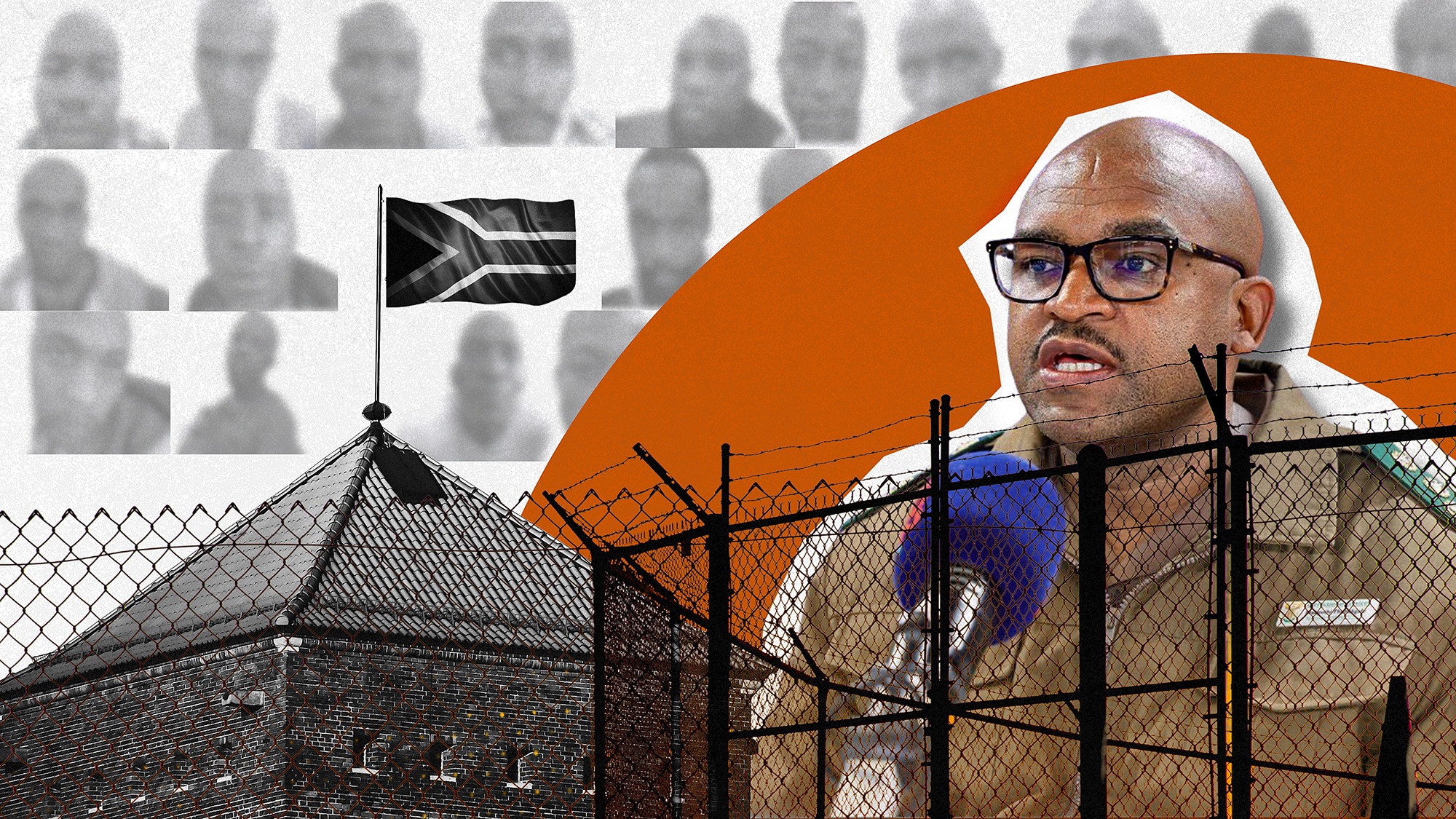
 Department of Correctional Services national commissioner Makgothi Samuel Thobakgale presides over a parole system that cannot account for nearly 28,000 absconders, including convicted murderers, rapists, kidnappers and armed robbers, amid mounting concerns over broken supervision, failed tracing systems and poor coordination with police. (Image: LinkedIn / Envato/ Canva)
 The Department of Correctional Services (DCS) can’t account for almost 28,000 (27,797) high-risk parolees who have absconded.
Among them are convicted murderers, rapists and armed robbers.
Sources within the parole monitoring system have sounded the alarm, raising concerns over being unable to locate serious and violent criminals who’ve absconded.
Parolee
An offender sentenced to imprisonment who, after serving a portion of their sentence, is released on parole to serve the remaining portion of their sentence under the supervision of a parole monitor.
AmaBhungane’s investigation comes at a time when the Department of Correctional Services is under scrutiny over food contracts that had to be cancelled and renegotiated after it was found that it was paying more than 20 times the market price for certain items, a matter expected to be the subject of a Special Investigating Unit probe.
/file/attachments/orphans/1Untracedabsconders_277126.jpg "Untraced absconders. (Image: Canva / Envato)")
More than half of those who can’t be traced are “archived absconders” (15,860) – parolees who were released between 1991 and 2004 and whom the state has failed to trace and rearrest for decades.
These cases of archived absconders are listed as “non-active” and remain separate from the current case loads of absconders.
Sources claim these “non-active” files are collecting dust at their offices and are never opened – meaning that those who absconded between 1991 and 2004 are free to do as they please.
Department of Correctional Services insiders who spoke to amaBhungane claim the department’s internal stats on recidivism (re-offence) for parolees stand at around 70% – painting a frightening picture of how dire the situation remains in a country overrun by criminals.
The department’s own stats show that between 2020 and 2025 close to 30,000 (29,940) parolees reoffended.
Insiders claim that Department of Correctional Services National Commissioner, Makgothi Samuel Thobakgale, should be aware of the situation as close-up and lock-up reports are filed to the national office daily.
Compiled at a regional level, close-up reports contain the number of active parolees versus the number who’ve absconded, while the lock-up reports contain the number of inmates incarcerated.
In terms of numbers, Gauteng leads the pack, being the province with the highest number of absconders (9,355), followed by KwaZulu-Natal (7,073) and the Western Cape (6,429).
Evidence gathered by amaBhungane shows areas in KZN, such as Inanda (historically known for being the country’s murder and rape capital with high levels of gender-based-violence), KwaMashu and Ntuzuma, have high numbers of absconders.
But what’s more unnerving is that parolees living in areas such as Inanda have not been monitored at all for more than a year, with parole monitors claiming the area remains too volatile, posing a danger to their lives.
In terms of serious and violent crimes, the majority of the absconders in the country were convicted of robbery with aggravated circumstances, followed by murder, rape, attempted murder, kidnapping and attempted rape.
/file/attachments/orphans/2Violentcrimesheatmap_833841.jpg "Violent crimes heat map. (Image: Canva)")
Parole monitors claim they’re under-resourced, understaffed and overwhelmed, having to monitor large numbers of parolees weekly without the proper tools to do their jobs effectively.
Presently, there are 44,857 active parolees in SA, with only 968 parole monitors, meaning that, on average, each parole monitor is responsible for about 46 parolees.
Sources claim absconders are rarely ever re-arrested as a result of active tracking and tracing by the Department of Correctional Services.
However, departmental spokesperson Singabakho Nxumalo insisted: “The department maintains an active, collaborative, and results-driven tracking and tracing capability, and continues to successfully return absconded parolees to the correctional system.”
But insiders deny this, alleging the tracking and tracing units, introduced some years ago, were phased out. Absconders are usually nabbed only once they’ve been caught for committing another crime.
In 2020 one of the country’s most heinous cases of an absconder reoffending took place in the Western Cape, where Moyhdian Pangkaeker kidnapped, raped and murdered eight-year-old Tazné van Wyk.
Pangkarker had been sentenced to 10 years’ imprisonment in 2008 for kidnapping and culpable homicide.
This after he took his wife’s two-year-old son, who was not his biological child, for about three months.
During this time the toddler was beaten and neglected, leading to his death.
According to the Mail & Guardian Pangkaeker was released on parole on 3 April 2013.
He first absconded from parole in 2015.
In October 2016, the police caught him driving without a licence and in possession of stolen goods, and he was placed on parole supervision at the Ladismith Community Corrections Office.
In May 2019, Pangkaeker absconded from parole a second time after he could not be located following various visits to his residence by parole monitors.
“We still see too many headlines and reports concerning parolees causing harm to our communities. An excessive number of medium to high-risk offenders are being recommended for parole. Once again, we must not allow the citizens of South Africa to bear the burden of this risk.” — Department of Correctional Services Minister Dr Pieter Groenewald.
Pangkaeker was officially listed as an absconder in February 2019 after he could not be located following various visits to his residence by parole monitors.
A criminal case was then opened against him at the local SAPS.
He was arrested for the murder of Tazné a year later, leading the police to a stormwater pipe outside Worcester where he’d dumped her body.
In 2023 he was convicted of nine life terms.
Pangkarker died in his sleep in November last year while serving his sentence at Brandvlei Correctional Centre.
Tazné’s mother, Carmen, declined to speak to amaBhungane, stating through an intermediary that she felt betrayed and let down by the justice system, having lost her job during the case and saying that no one had sought to assist her with the trauma of what she had to undergo.
A monitoring nightmare
Parole monitors paint a grim picture of their daily struggles, citing the lack of vehicles and access to firearms as their main concerns.
“Sometimes people go unmonitored because we don’t have vehicles, or the vehicles we have aren’t capable of getting to where the parolee resides.”
They also highlighted the dangers that come with monitoring serious and violent offenders, adding that all parole monitors were trained and certified to carry licensed firearms.
Community correction offices previously housed armouries where parole monitors could book out firearms, but that’s no longer the case.
“Previously we’d sign out firearms and keep them with us. Once a week we’d hand the firearms in for inspection.”
Now, parole monitors are required to book out firearms from prisons, but are often told that there are no firearms available.
Due to the inaccessibility of firearms, parole monitors can’t work certain shifts.
In eThekwini alone, parole monitors only work an 8am-2pm daily shift; the evening and dawn shifts were discontinued due to the risks associated with monitoring parolees after sunset.
Positively identifying absconded parolees poses another challenge for monitors.
“The Department of Correctional Services doesn’t have cameras to take pictures of inmates who are released on parole... We can’t rely on photos that the SAPS took of an inmate perhaps 10 years ago when they were convicted. Some inmates look completely different when they get released from prison. Upon admission to the parole office, a photo is supposed to be taken of them.”
In one instance relayed to amaBhungane, a parole monitor went to an area to search for an absconder and spoke to the very same absconder while not realising he was the person being sought.
Understanding parole
The length of an offender’s parole supervision is determined by the amount of time they were incarcerated in relation to their overall sentence.
For example, if an offender is sentenced to 15 years’ imprisonment and serves 10 years before being granted parole, upon release he/she will be subjected to five years’ parole supervision, essentially serving a portion of the sentence of imprisonment in the community under the control and supervision of correctional officials.
The degree of monitoring a parolee is determined by the offender’s possible risk to the community.
Supervision/monitoring is divided into three categories, high risk (maximum intensive monitoring) medium risk (medium intensive monitoring) and low risk (minimum monitoring).
The risk assessment determines the type of supervision a parolee requires in terms of weekly visitations, and further prescribes whether a parolee is allowed free time (to attend work/family obligations) or is required to stay at home.
/file/attachments/orphans/3Paroleerisklevels_395998.jpg "Parole risk levels. (Image: Canva)")
Every offender released on parole is categorised as high risk – irrespective of whether they were convicted for murder or fraud.
After six months, a parolee can be reclassified to medium risk and, following another six months, to low risk.
The decision of whether a parolee can be reclassified rests with the reintegration case management supervisor, who is in charge of caseloads and parole monitors at a regional level.
The Department of Correctional Services confirmed that all 27,797 parole absconders in the country were categorised as high risk – meaning they absconded within the first six months of being granted parole.
The broken system
One source indicated that action is seldom taken if a parolee absconds: “If a parole monitor can’t find a parolee, no action is taken. The parole monitor simply files them as ‘absconded’. Our department does nothing about it. We have cases of murderers and rapists who have absconded.”
One of the biggest issues in tracking absconded parolees is that the SAPS and Department of Correctional Services systems are not effectively integrated. If an absconder is re-arrested, parole monitors are not informed by the SAPS and have no way of being notified via the system.
But more than the systematic failure of collaboration between the SAPS and Department of Correctional Services, it boils down to the lack of tracking and tracing units.
Since tracking and tracing units were done away with, in and about 2018, and those Department of Correctional Services officials were absorbed into other departments within correctional services, the responsibility of following protocol in declaring a parolee an absconder rests with the reintegration case management supervisors.
/file/attachments/orphans/4Systemfailures_810160.jpg "System failures. (Image: Canva)")
When a parolee can’t be located, monitors have reason to believe he/she no longer resides at the address they’ve listed, the caregiver who signed for their release on parole is not able to account for their whereabouts, or the parolee has failed to report to their parole monitor, the reintegration case management supervisor is required to issue an internal warrant known as a G306 (48 Hour Warrant).
The reintegration case management supervisor is then meant to open a case with the SAPS in respect of the offender violating their parole (absconding), but more importantly, a case must also be reported to the SAPS Criminal Record Centre if the offender cannot be traced within 30 days after issuing of the warrant.
These rules are outlined in the Department of Correctional Services’ procedure manual for supervision – internally referred to as the “correctional services bible”.
This is where there is a fundamental breakdown in the system.
Cases are simply not being registered with the SAPS, and in the instances where they are registered, they are not being reported to the SAPS-Criminal Record Centre by the reintegration case management supervisor.
The department told amaBhungane that only 7,330 absconding cases had been registered with the SAPS.
Reporting the case to the SAPS-Criminal Record Centre is crucial as it is the only way the SAPS can identify an offender as having absconded if rearrested.
If this is not done, if the absconder is rearrested the SAPS has no way of knowing if they have absconded because the offender is likely to provide false information to the police.
Reintegration case management supervisor officials, however, claim it’s not feasible for them to have to report cases to the SAPS and the SAPS-Criminal Record Centre as this should be the responsibility of the tracing unit.
“The reintegration case management supervisor is playing all of these roles, and it is too much for us to deal with. The fact that there is no tracing unit, that’s where the issue rests.”
Parole monitors have to frequent correctional facilities to look for absconders – in many instances finding absconders back in prison.
Police sources confirmed that there were lengthy delays in determining whether an arrested person was an absconder.
“It’s only when we take fingerprints. That’s when we can see if they were out on parole and absconded or not. But this can take anything between 14-21 days to confirm.”
The strain on detention
Part of the issue is that the department’s correctional facilities are under immense strain with overcrowding, forcing the parole board into granting offenders parole to alleviate pressure on the system.
In his budget vote addressed to the National Assembly on 13 May, Groenewald confirmed that SA’s prisons are overcrowded by 58%, housing 169,519 inmates against a bed capacity of 107,067.
Groenewald explained that a large portion of inmates (63,194) were remand detainees – individuals who had not yet received a sentence by the courts.
According to the department’s 2024/25 annual report overcrowding is further exacerbated by state patients awaiting placement in mental health establishments, as well as the incarceration of a large number of foreign nationals.
“According to the Immigration Act, 2002 (No. 13 of 2002), foreign nationals detained for illegal presence (Section 34) are not the responsibility of the department, while those charged with crimes fall under Section 49 [offences and penalties for violating immigration law]. The department is actively engaging with the Department of Home Affairs to ensure foreign nationals detained under Section 34 are appropriately transferred.”
During his 2025/26 budget vote address to the National Assembly in July last year, Groenewald had already highlighted the magnitude of this issue: “The South African taxpayer foots the bill for just over 24,000 foreign nationals. Calculated at R463 per day, this results in an expense of R11,112,000 per day. We are currently exploring various solutions, including diplomatic approaches.”
Budget
According to the National Treasury’s correctional services budget, the bulk (almost 60%) of the correctional services R30.9-billion budget for 2026/27, an increase of more than R1.6-billion from the previous financial year, has been allocated to incarceration.
However, 77.1% of the R18.4-billion budget allocated to incarceration (R13.94-billion) will be spent on employee salaries.
By contrast, social reintegration, which includes community corrections, parole supervision, probation monitoring, electronic monitoring and reintegration support, accounts for only 4.1% of the total budget with an allocation of R1.27-billion for the current fiscal year.
Bear in mind that the majority of the funds allocated for social reintegration are also consumed by salaries, leaving limited operational funding for effective monitoring.
Simply put, we spend proportionally more to keep prisoners incarcerated than when they are released on parole – and given SA’s high recidivism rates, this remains a concern among parole monitors.
Unresolved parole system reform
For almost two decades (since 2007) the state has been mulling over means to address fundamental flaws in the current parole system – with no tangible solutions being implemented to date.
A review of SA’s parole system would need to address high recidivism rates, a public perception that it is too lenient on offenders and a lack of effective supervision.
During the Department of Correctional Services’s National Parole Review Summit held at Kgosi Mampuru II Correctional Facility in Pretoria in September last year, there was a strong push towards legislative reform in the form of dedicated parole legislation to encompass a transparent and uniformed approach in enhancing public trust, through a victim-centric approach.
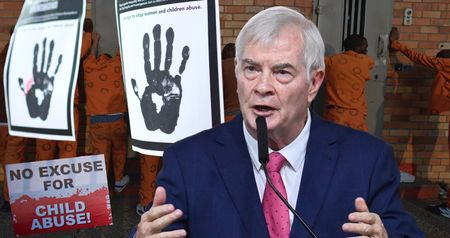
The composition of the correctional supervision and parole board has also been a topic of contention, often coming under sharp criticism for a lack of industry experts such as psychologists and criminologists.
At present, correctional supervision and parole boards comprise community members, appointed for five-year terms, along with Department of Correctional Services officials.
The department stresses that it provides the members with intensive training in respect of the processes, legislative implications and relative policies. Trained staff members of the department fill the positions of vice-chairperson and secretary. A board can also co-opt a representative of the SAPS and a representative of the Department of Justice and Constitutional Development.
Correctional supervision and parole boards don’t have the powers to grant offenders serving life sentences (lifers) parole; they can only make recommendations to the minister, who has the final say.
Electronic monitoring blunder
The utilisation of technology in tracking and monitoring parolees and probationers has long been touted as a solution for cracking down on absconders.
But the implementation of monitoring bracelets has been plagued by delays despite the department putting out tenders for several monitoring projects.
The Department of Correctional Services introduced electronic monitoring to track parolees and reduce absconding, particularly after the Constitutional Court’s Van Vuuren judgment made certain apartheid-era lifers eligible for parole.
In 2012, the department launched a pilot project for 150 inmates, awarding the contract to Engineered Systems Solutions.
Engineered Systems Solutions is part of the TMM Group, which also owns Siyangena Technologies, the company embroiled in allegations involving the Passenger Rail Agency of South Africa (Prasa) and its former CEO Lucky Montana.
Engineered Systems Solutions ultimately secured a R1.2-billion contract from the department, although in 2017 the department cancelled it and in 2018 the Special Investigation Unit (SIU) applied to set the contract aside.
The SIU alleged that its investigation revealed a number of irregularities in the procurement processes relating to contracts awarded to Engineered Systems Solutions by the department in relation to the Electronic Monitoring System. These included non-compliance with the State Information Technology Agency Act 88 of 1998, and the Private Security Industry Regulation Act 56 of 2001, as well as B-BBEE fronting.
However, in 2021 the Supreme Court of Appeal rejected these claims and refused to invalidate the procurement process or contracts.
The Department of Correctional Services remains locked in civil litigation with Engineered Systems Solutions. DM
This story was produced by the amaBhungane Centre for Investigative Journalism. Sign up for the newsletter.