



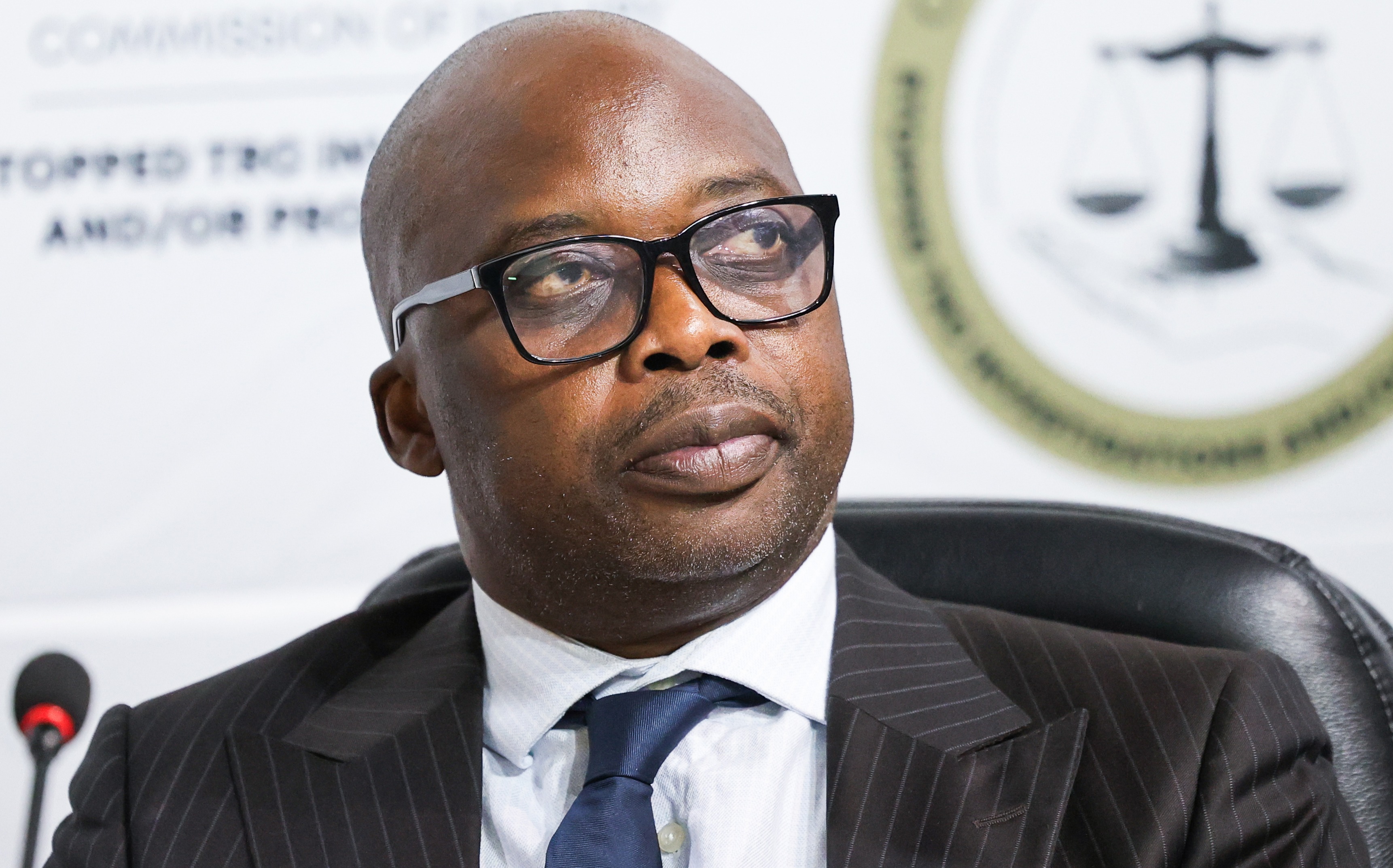
 Former minister of justice and constitutional development Michael Masutha testifies at the Khampepe Commission of Inquiry at Sci-Bono Discovery Centre on 26 May 2026 in Johannesburg, South Africa. The inquiry was established to investigate allegations of political interference in the investigations of apartheid era crimes. (Photo: Gallo Images / Luba Lesolle)
 Testifying on Tuesday, 26 May 2026, at the Khampepe Commission probing alleged political interference in post-Truth and Reconciliation Commission (TRC) prosecutions, Masutha – the first former minister to testify before the panel – said he had been “thrown in at the deep end” when he took up his position in 2014.
The soft-spoken and partially sighted Masutha succeeded Jeff Radebe as justice minister and “had a few hot potatoes to handle as two days after I took office we were slammed with an order from the North Gauteng court to consider an application by Eugene de Kock, often dubbed ‘Prime Evil’, for parole”, he said.
Masutha, who served until 2019, was invited to the Khampepe inquiry to provide information about whether any efforts were made by the executive to influence or pressure members of the South African Police Service (SAPS) or the National Prosecuting Authority (NPA) to stop investigating or prosecuting TRC cases.
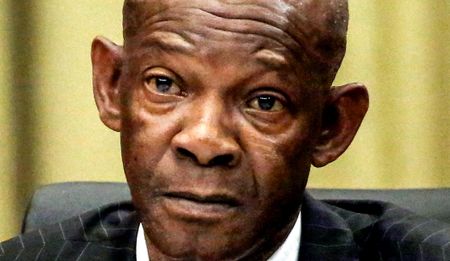
/file/attachments/orphans/7d4267207515b83f00ad645fb3f39ac3_381272.jpg "Jackie Selebi, the former head of South Africa's police force, looks on during his sentencing in Johannesburg on 3 August 2010. (Photo: Reuters Werner Beukes / Pool)")
SAPS an obstacle
Masuthu agreed with assertions that the NPA’s prosecution record on TRC matters by 2014 was “not good”, and that he had grown aware during his term of the difficult position the NPA had found itself in after the SAPS had refused to offer investigative capacity for TRC cases.
The commission has heard previously that former SAPS commissioner Jackie Selebi had been highly suspicious of the Priority Crimes Litigation Unit of the NPA and its intentions.
Selebi had been convinced that the NPA was about to prosecute then president Thabo Mbeki and 37 other senior ANC leaders, including himself. This turned out to be a ruse, allegedly orchestrated by former apartheid officials still lodged in the system.
At the time the Priority Crimes Litigation Unit was about to charge and arrest former minister of police, Adriaan Vlok, and police commissioner Johan van der Merwe for orchestrating the attempted murder by lethal toxin of Reverend Frank Chikane in 1989.
No investigative capacity
Masutha said that a briefing with then National Director of Public Prosecutions (NDPP) Shaun Abrahams, who also took office that year, had highlighted this crippling obstacle.
“When I took office the Directorate for Special Operations (DSO), the only investigative arm of the NPA, had ceased to exist [the ANC at its Polokwane Conference in 2007 took this decision which was then implemented in 2009 as Jacob Zuma took office as president – DM],” he said.
This had left “very little, if any investigative competence within the NPA. It must have been very difficult for the NPA to assume that role on behalf of the police.”
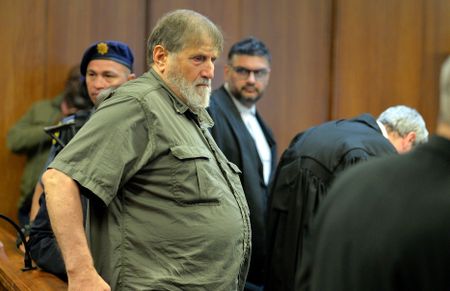
/file/attachments/orphans/DSC_3874copy_422423.jpg "Eugene de Kock testifies at the Eastern Cape Division of the High Court in Gqeberha inquest into the killing of the Cradock Four, on 23 March 2026. (Photo: Deon Ferreira)")
The De Kock dossier
Masutha told the panel on Tuesday that he had received De Kock’s entire file, from the day he was admitted to C-Max in October 1996 to 2014, and had noticed “something strange” when he flipped through it.
“There was a standalone paragraph that said that the victims’ families had been consulted and had had no objections leading up to the recommendation to release De Kock on parole,” he recalled.
However, he added, there was no paper trail or documentation to that effect, and “it was just a statement” that he decided to interrogate.
Later, he had read a newspaper report that the families had claimed quite the opposite from the proposal by the National Council for Correctional Services, which made the final recommendation for the minister’s sign-off.
“I then convened a luncheon with the families, some 250 who filled a hall and then informed me that they had not been consulted,” he said. It was on that basis that he had deferred De Kock’s release to allow for this consultation.
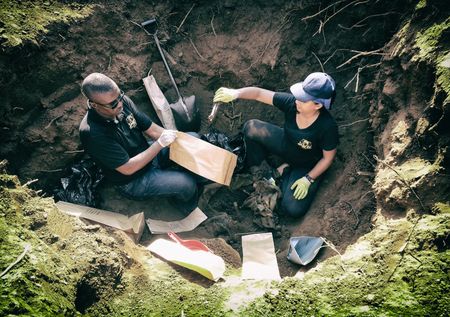
Later, Masutha granted De Kock parole on condition that he assisted the Missing Person’s Task Team and the NPA in locating “the remains of the victims of apartheid atrocities. This extended to TRC matters.”
The former minister personally presided at handover ceremonies of exhumed remains of anti-apartheid activists who, he said, “had been killed or executed both judicially and under extrajudicial circumstances”.
Special treatment
Advocate Howard Varney, for the Calata Group and other families, raised the issue of the widely held perception that De Kock had been the “fall guy for his superiors, those in the police and those who had issued him with commands at Vlakplaas who were not pursued”.
Masutha said De Kock had been the only parolee who had to be protected by the State Security Agency (SSA) as “almost all the security establishments were falling over each other to get him under their care”.
“I know the police wanted him, defence wanted him. There was a rumour that some of them wanted to keep him close for their own protection. Some of them wanted to see him gone,” added the former minister.
The Abrahams memorandum
Masutha was asked about a report dated 15 July 2015 from then NDPP advocate Shaun Abrahams concerning TRC investigations and their status at the time.
Masutha noted that while Abrahams’ memo had been addressed to him and he had been copied in with others, he had no recollection of the communication and noted it lacked his signature.
He added that he had only recently had sight of this memo in Abrahams’ 2025 submission to the inquiry.
“As appears from the memorandum, it was merely for my noting. It stated that I would be informed of the outcome of the individual cases once investigations had been concluded and a decision had been made on them,” he told the panel.
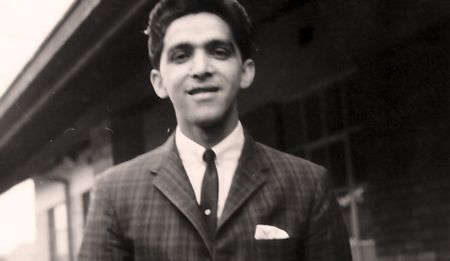
Masutha’s involvement in significant TRC-related matters during his term was a focus of his evidence, including his authorisation of the Ahmed Timol inquest and his approval for reopening the inquests of Dr Neil Aggett and Dr Hoosen Mia Haffejee.
Personal accountability
Asked whether any active policy or attempt to suppress TRC cases had taken place during his tenure, Masutha replied this had not occurred. He said his worldview was one of personal accountability. He added that the line between his office and the NPA was “holy ground”.
He was guided, he said, by the “cardinal principles that everyone should be accountable for their own actions, including myself”.
In management meetings he had often used the phrase: “Black man, black woman, white man, white woman, if you follow my example as I am here to lead by it, I will stand right behind you. If we fall, we fall together. But if you do your own thing, black man, black woman, white man, white woman, you are on your own.”
He told the panel that there was a “Chinese wall” that prevented him from interfering as a minister, and that “I could not instruct the NPA, any court or the National Director of Public Prosecutions to perform their prosecutorial functions”.
/file/attachments/orphans/Shaun-apartheidCrimes-inset_538411.jpg "Ahmed Timol was a young schoolteacher in Roodepoort who opposed apartheid. He was arrested at a police roadblock on 22 October 1971, and died five days later. He was the 22nd political detainee to die in detention since 1960. (Photo: www.ahmedtimol.co.za)")
Movement
Under his leadership Masutha said he had signed off on the reopening of several inquests, including the Timol murder, the first TRC-related matter that required specific action.
He also approved the reopening of the inquest into Dr Haffejee on 18 September 2018, and also gave approval for the reopening of the inquest into trade unionist Aggett’s 1982 death in detention, on 23 April 2019.
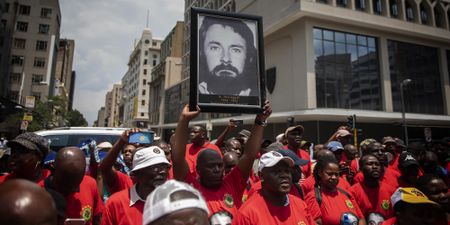
This was done at the request of NDPP Advocate Shamila Batohi. Beyond these specific interventions, no other TRC cases had required his direct action.
Masutha, who hails from Limpopo, began his long legal career working for Lawyers for Human Rights, and was later with the Department of Social Development as head of legal services.
In this position he was instrumental in introducing the universal Child Care Grant, a lifeline for poverty-stricken mothers. He also served as a member of Parliament for the ANC between June 1999 and May 2004.
He told commissioners that his focus had been on fulfilling the state’s ongoing obligations toward victims identified by the TRC, particularly regarding reparations and closing cases of “disappeared Struggle activists”.
Masutha told the panel he viewed reparations not just as a financial or administrative task, but “as a critical part of the state’s duty to provide closure and accountability to the families of victims”. DM