




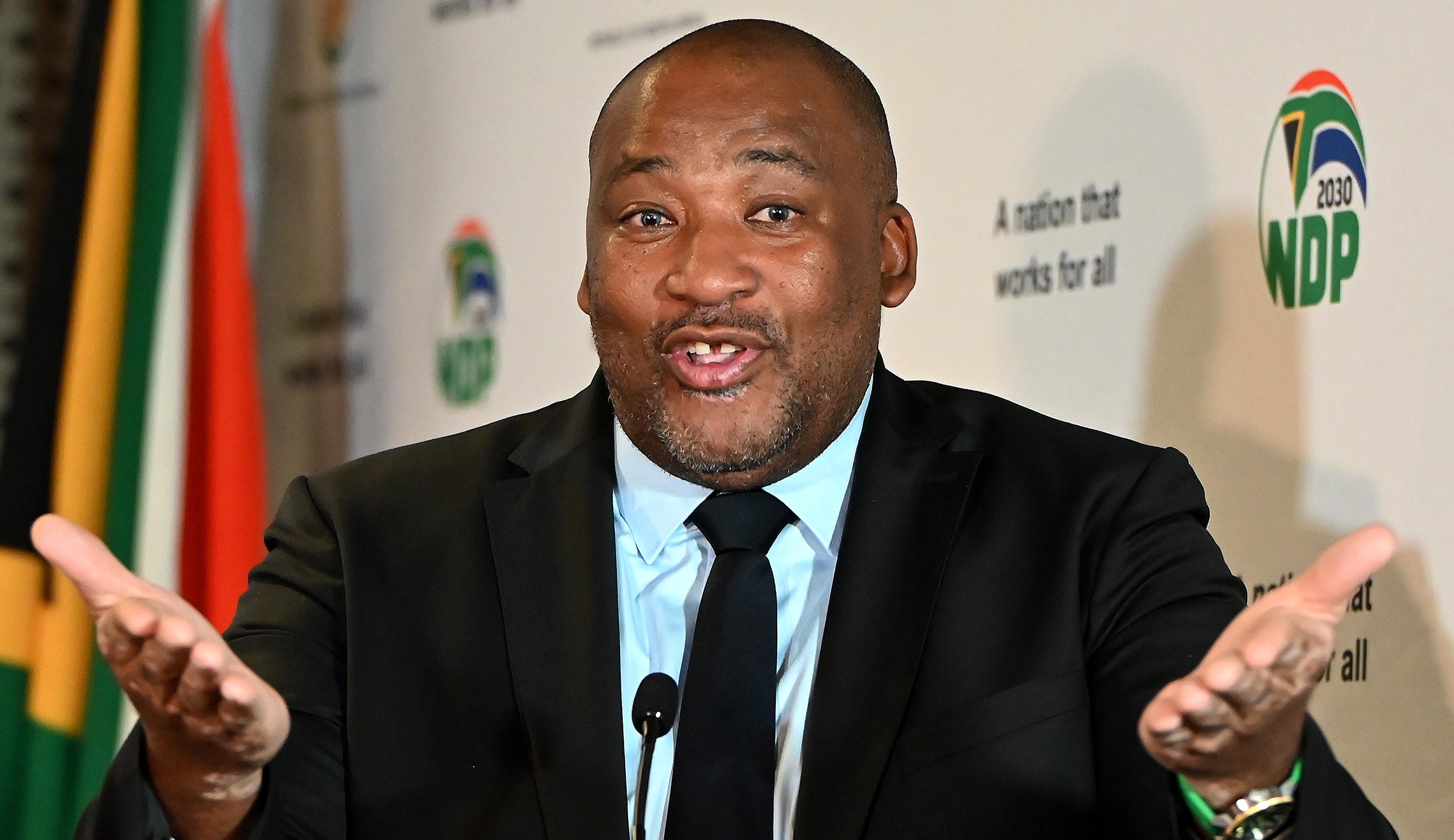
 The minister of sport, arts and culture, Gayton McKenzie. (Photo: Frennie Shivambu / Gallo Images)
The minister of sport, arts and culture, Gayton McKenzie, has dissolved the council of the National Arts Council (NAC) with immediate effect, citing ongoing labour disputes, a monthslong employee strike, financial incompetence, institutional governance failures and “credible information raising concerns regarding certain procurement decisions”.
Chairperson Eugene Botha confirmed that he and the rest of the council had stepped down as of Tuesday.
“I respect the Minister’s decision and I do not intend to contest it,” wrote Botha in a WhatsApp.
The dissolution of the board of a council mandated by Parliament in 1997 to disburse millions of rands annually to artists engaged in literature, the plastic arts, dance, music, theatre, film and more, across all nine provinces of South Africa, marks a low point for an organisation that has been in a crisis of leadership for more than half a decade. It also reflects the state of a sector in free-fall.
On 22 April, McKenzie sent a letter to the 24-member council demanding an urgent meeting to discuss the final settlement of a longstanding bonus dispute that finally prompted employees to down tools in mid-March.
/file/attachments/orphans/IMG_5740_486077.jpg "Striking employees at the National Arts Council headquarters in Johannesburg on 18 March. (Photo: Diana Neille)")
NAC employees previously told Daily Maverick that they had been petitioning for annual bonuses and fair treatment since the 2019/2020 financial year, to no avail.
“While I accept that no contractual or statutory entitlement to these bonuses was established at the time,” wrote McKenzie in the letter, “the Council’s prolonged delay, indecision, and apparent failure to exercise decisive governance leadership on this matter is unacceptable.”
He further requested, as a matter of urgency, a detailed governance framework, including an internal audit review and a draft settlement agreement, along with a slew of other documents for discussion.
More than a month later, no settlement had been tabled or concluded. The council had deferred the matter to a meeting set for 29 May, which McKenzie wrote was a timeline “not consistent with the urgency required. The matter continues to cause financial distress to employees and attracts ongoing public and media scrutiny.”
Accusations of graft
The NAC’s chief executive officer, Vincent Mashale, is employed in an acting capacity. The chief financial officer, Reshma Bhoola, holds an interim position. The outgoing council was composed of many individuals only vaguely associated with the arts (one is a fitness instructor; another is an actual queen with a law degree, and seemingly no cultural ties or output to speak of, other than claiming to be a “foodie”).
Last August, the Office of the Public Protector sent a letter to these executives, asking for a response to serious accusations of graft within the organisation. This was the NAC’s second run-in with the PP’s office in five years. Four long-serving council members were accused of plundering money meant for South African artists.
/file/attachments/orphans/Public_Protector_Letter_060825-1_960889.jpg)
“Long before the labour dispute took place, the National Arts Council staff have been calling [for the removal of] legacy council members ... and a full forensic investigation as per the minister’s recommendations to the NAC, following the allegations made by the Public Protector,” said a spokesperson for the NAC’s Nehawu branch.
According to the union, escalating mismanagement and alleged corruption have worked their way into every cranny of the NAC’s operations since at least 2021. Allegations of graft and cronyism within the organisation are so widespread that, in November 2025, the Portfolio Committee chairperson for Sport, Arts and Culture in Parliament, Joseph McGluwa, called the NAC a “cartel”, stating that the “era for trust is long gone. We are now in the era of ‘show us’ [that there are systems of accountability in place].”
“I have formed the view that it is not in the public interest for the current Council to continue in office,” wrote McKenzie in his letter, stating that he would “as a matter of priority, initiate the process for the appointment of a new Council (or an interim administrator) to ensure continuity of governance and the uninterrupted delivery of the NAC’s mandate.”
While staff say they are happy the board has been dissolved, they are calling on the minister to also deal with senior managers who they say are “part of the problem and caused the governance failures” in the first place.
“They must be suspended, while the NAC has a full forensic investigation,” said staff member Damien Naidu. DM
Comments
Scroll down to load comments...