




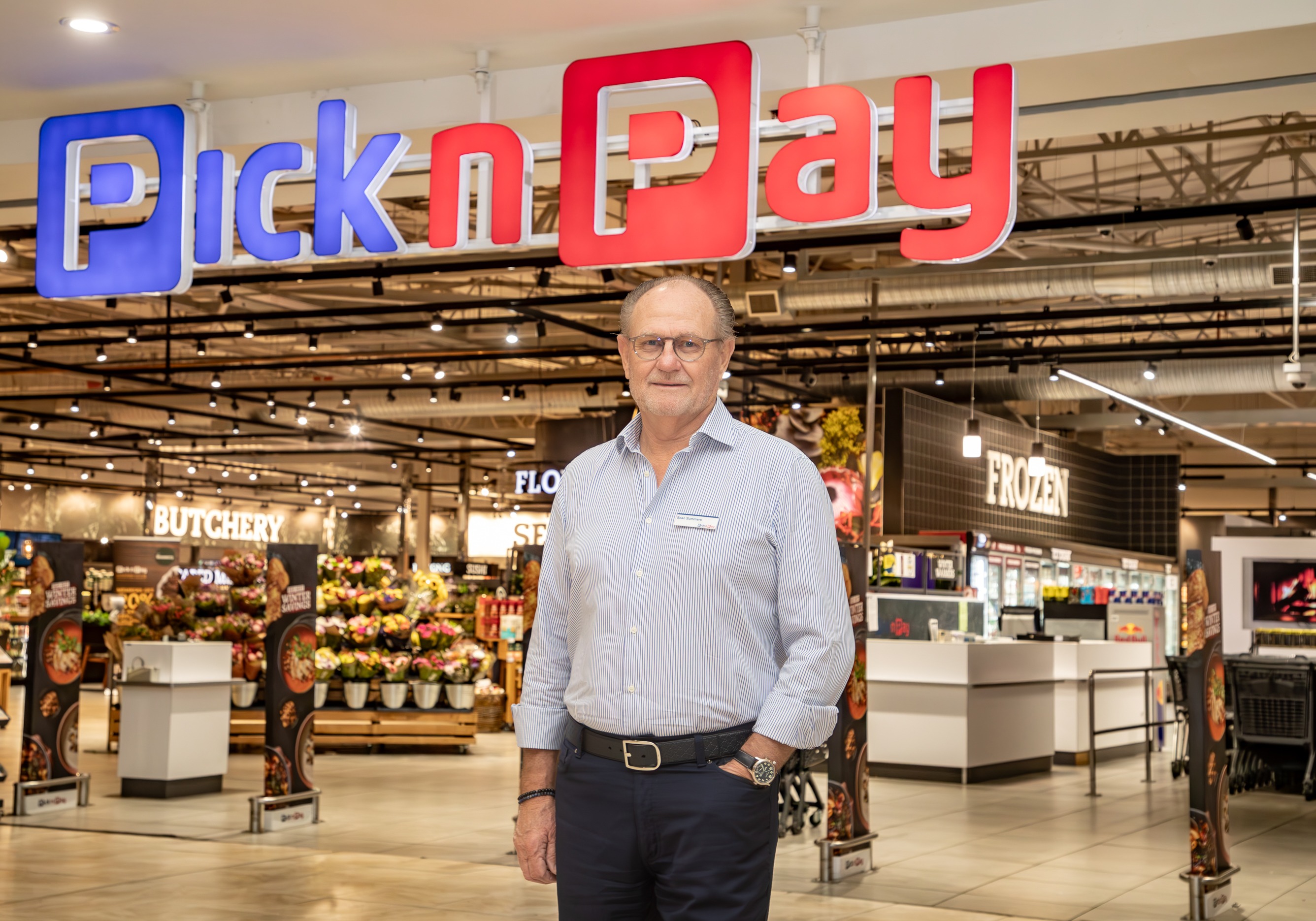
 Pick n Pay CEO Sean Summers. (Photo: Pick n Pay)
Remember the Pick n Choose sweeties aisle at ye olde Pick n Pay Hypermarket, where you could choose your own adventure for a future diabetes diagnosis and fill a bag with a hand-curated assortment of treats? The PnP 2026 annual results were kind of like that, but there’s only peanut brittle left, and the market is allergic to peanuts: the ticker dropped by 3.55% on the back of the results.
Oddly, PnP CEO Sean Summers told Daily Maverick that the bygone Hypermarket was also home to the original home grocery delivery service. “We invented it, my friend… 25 years ago,” he said, baulking at the idea that PnP is a fast follower in the current age of 60-minute grocery delivery.
“I started home delivery in South Africa. Me, out of the Hypermarkets on the back of what Tesco started... we were delivering way before these devices [smartphones] even existed… in those days you used to have to fax your order through. So we’ve been in there for 25 years.”
On that point, he says that the service is experiencing exceptional growth, currently tracking even higher than the 38% growth seen last year.
Summers acknowledged that home delivery is a “crucial element of retail going forward” because a specific segment of the market prefers not to go into stores and wants their groceries delivered.
However, there’s an important caveat: Summer’s second coming at Pick n Pay has a primary focus and goal of “running great physical stores with excellent people and a strong emphasis on fresh products”.
Not-so-friendly grocer
The employee costs of that strategy currently consume a highly distorted 41.4% of PnP’s trading expenses, which Summers insists is “out of kilter with the wider retail industry”. A formal Section 189 consultation process was initiated post year-end to restructure this.
He points directly to “successive labour concessions” made over the years. “Why do I have to pay, for example, on a Sunday, 100% loading for the labour in Pick n Pay when the market says you only need to pay 50%?”
He adds that “we have engaged with organised labour structures on this issue for more than two-and-a-half years without progress,” and concludes that “you get to a stage eventually where stuff gets real”.
Summers also rubbished ideas that this latest round of restructuring came as a surprise, insisting that he knew that in-store staff were aware of the position the company was in, and he had asked everyone to consider what they could do to help the company in its turnaround efforts.
“You cannot save your way to safety. Okay? You have to trade your way to safety,” he said in response to Daily Maverick’s questions about the optics of expensive Springbok sponsorships in the face of looming operational cuts.
His counterargument is that cutting that spending wouldn’t help the situation. “We can cut here and there… no one gets a [new] pencil, and the company will be gone.”
In his reading, the financials show that “like-for-like trading expense growth was 6.7%, ahead of 3.9% company-owned supermarket like-for-like sales growth”. He credits “increased advertising and employee costs”, with merchandising and administration costs increasing specifically “as a result of increased advertising costs as Pick n Pay invested in the brand to drive turnover growth”.
/file/attachments/orphans/PicknPay4_529803.jpg "A Pick n Pay store. (Photo: Pick n Pay)")
Lessons from the boerewors wars
PnP has also leveraged that rugby partnership to run Springbok matchday meal campaigns, specifically discounted boerewors deals, which he says – along with other food promotions like the burger campaign, pizzas and chicken Sundays – have been “great in generating our footfall”.
He explained that these campaigns had helped drive a “really unbelievable shift to the positive” compared with the negative sales trajectory the company had previously experienced.
However, the veteran CEO remains realistic about the ultimate financial goal. While the footfall and momentum are positive, the business still needs more volume to reach profitability. If they could add “another two, three, four percent on top of our sales now, we’d be making money”.
When quizzed about the R1-billion trading loss (a R404-million increase across the year) and shifting the promised breakeven out by 12 months to the end of the FY29, Summers took the shot like a champion.
“I don’t think one would ever be happy losing the money that we’re losing”. He acknowledges the cash burn, saying that he warned investors when he took the reins that “we would burn somewhere between six or 10 billion of the Boxer valuation that we had”.
Defending the delayed turnaround timeline, he argues that “it’s about the quality of the turnaround… and not the quantity of time”. He also points out that there are easy wins they could have realised faster, “but then we would pay a price for that in two years’ time... and then you’d be back in trouble again”.
About that Boxer sale, where just last week the group completed an accelerated bookbuild, selling 12.5% of Boxer shares in issue, and reduced the PnP’s Boxer shareholding from 65.6% to 53.1%. This resulted in a capital raise of R4.7-billion.
Summers defends the timing of the sale to maximise value, claiming that “if we’d sold those shares 18 months ago when we listed Boxer, we would have got three billion instead of 4.7”. Downplaying the loss of equity, he insists that “we still control one of the most beautiful retail assets in the country”. And, no, the Boxer shares are definitely not the credit facility that Daily Maverick’s questioning implied.
The Botswana-sized blemish
Talking about timing, that 2025 acquisition of the cross-border franchise in Botswana is not looking like a great move, given the challenges in that country’s economy. That deal was done on a cash consideration of R36-million. However, an impairment of R85-million was recognised on the goodwill during the reporting period as a result of the significant decline in the macroeconomic environment in Botswana.
In normal speak, it means that PnP overpriced the acquisition before the market went to crap, now it is stuck holding the bag.
Summers dismissed the multimillion-rand impairment.
“Botswana is a small piece of the business... I mean, it’s really a rounding error… it may make a nice headline, but it’s a rounding error at the end of the day.”
To be clear, Summers is not lying or misrepresenting the reality of the audited annual financials. He is acutely aware of the numbers and owns the losses.
He is refreshingly candid about the structural issues he inherited (like the bloated labour costs and the timeline required to fix the stores).
However, when pressed on capital allocation errors (Botswana) or the forced sale of Boxer shares to plug the cash bleed, Summers chose a particular collection of sweets that would serve as aggressive damage control.
The market isn’t buying it at the moment, but at least there were some bright spots on the balance sheet. DM
Comments
Scroll down to load comments...