




 Illustrative image: Trolley (Graphic: Freepik) | Pick n Pay logo (Source: picknpay.coza)
The other day I had an excellent breakfast with a friend and found myself with a few minutes before I had to do my usual dash around the potholes to my first port of work for the day.
Finding myself at a loose end in a shopping centre, without the fun company of any of my family members, my first pang was one of guilt.
Should I really be here? Without looking at my Google Keep shopping list of reasons to be at the mall at this particular time.
I decided to put away my pang of guilt (I have some practice at this) and walk to the bottom floor to see what I could see.
There was a Pick n Pay liquor outlet. And idly browsing the Irish medicinal section I realised, with something of a start, that a particular item was on a massive special.
In fact, owing to a global glut of high-quality Irish medicine (Really, I’m not making this up), there are some good prices around. And there was one on offer. In fact, it was literally a third off.
Out of duty to a friend I felt I needed to buy two, which would save me literally the full price I would now pay per bottle.
With a start I realised I had never bothered, never felt the need until that moment, to get a Pick n Pay Smart Shopper card. I had not been into one of their stores to actually buy something for that long.
Obviously, I did the rational thing, got the card (to make a friend happy) and ran out of the mall before anything else could happen.
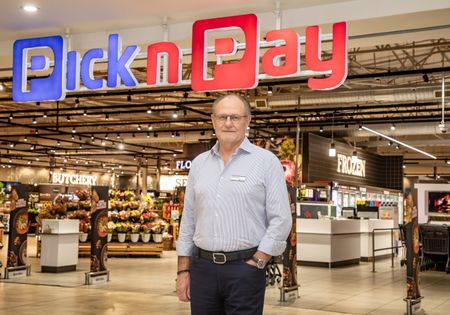
Turnaround strategy
In a way, this is Pick n Pay’s fundamental problem.
While Boxer is doing incredibly well, the turnover at Pick n Pay supermarkets was down 1.6%.
Now, the group will say, correctly, that one of the reasons for this is that it shut some of their stores during the period. And this was part of the turnaround plan.
As Pick n Pay CEO Sean Summers has previously explained, it made no sense to keep its big branch at Hyde Park in Joburg when the design of the store did not work for the group (in particular, he said it meant the group was paying for non-public space behind the store that came to around half the rent – of course, Checkers has taken the gap at Hyde Park).
But what really spooked investors last week was the announcement that Pick n Pay was selling R4.7-billion worth of its shares in Boxer. While it still has a controlling share (it now owns just more than 53%) it really looks like the group is selling what’s working to fund what’s not.
And it is doing this in the teeth of the toughest competition one can find.
Meanwhile, just up your street…
Checkers seems to have all the advantages at the moment. It is ahead in its delivery service; its corporate structure (it owns all its stores) allows it to invest in that service more easily (like Spar, Pick n Pay doesn’t own all its stores making this more difficult); it has huge momentum; and it’s able to keep its pricing down.
The real problem I think for Summers and Pick n Pay is simply to get people in through the doors.
And to do that, the group needs to make my experience better than anywhere else, and it needs to be cheaper.
But as previously discussed in this newsletter, in South Africa, you’re dealing with the best shoppers in the world. The nature of our society and the incredible pressure on promotions have created a group of people who plan their shopping and literally feed their families through the clever use of promotions.
Unlike the ultimate lazy shopper such as myself, they have all the cards and are not afraid to use them.
And Summers has to do all of this with workers who might well resist the major changes that are coming their way.
Workers’ perspective
The union Saccawu has condemned the changes, blasting management for introducing a Section 189 process.
While it is not the role of this newsletter to advise union leaders, if I were them, I would tread a little carefully here.
Pick n Pay says it’s not planning to fire or retrench people. It wants to change the shift system to make sure there are more workers in their stores on weekends and outside office hours. The reason is obvious – that’s when you shop.
But this will mean workers will, for example, get paid less for working on a Sunday.
If I were one of those workers I would be angry at that too – my life is about to be fundamentally changed and I might end up poorer.
But if this process goes badly, if Summers and those with him fail in turning around Pick n Pay, they might just be out of work completely. Because then this programme will move from changing shift patterns to actual retrenchments.
And if you used to work at Pick n Pay, you will have no option but to hope you can work for Checkers, which already uses the kind of shift pattern that Pick n Pay wants to emulate.
It reminds us that just because you haven’t been into a store for a while doesn’t mean it’s not important.
Pick n Pay is in a tough spot, it needs to make us all want to go to its stores to shop more often. And to spend more money. And to get Smart Shopper cards.
And if it fails to do that, the knock-on effects will be ghastly to contemplate. DM
Comments
Scroll down to load comments...