




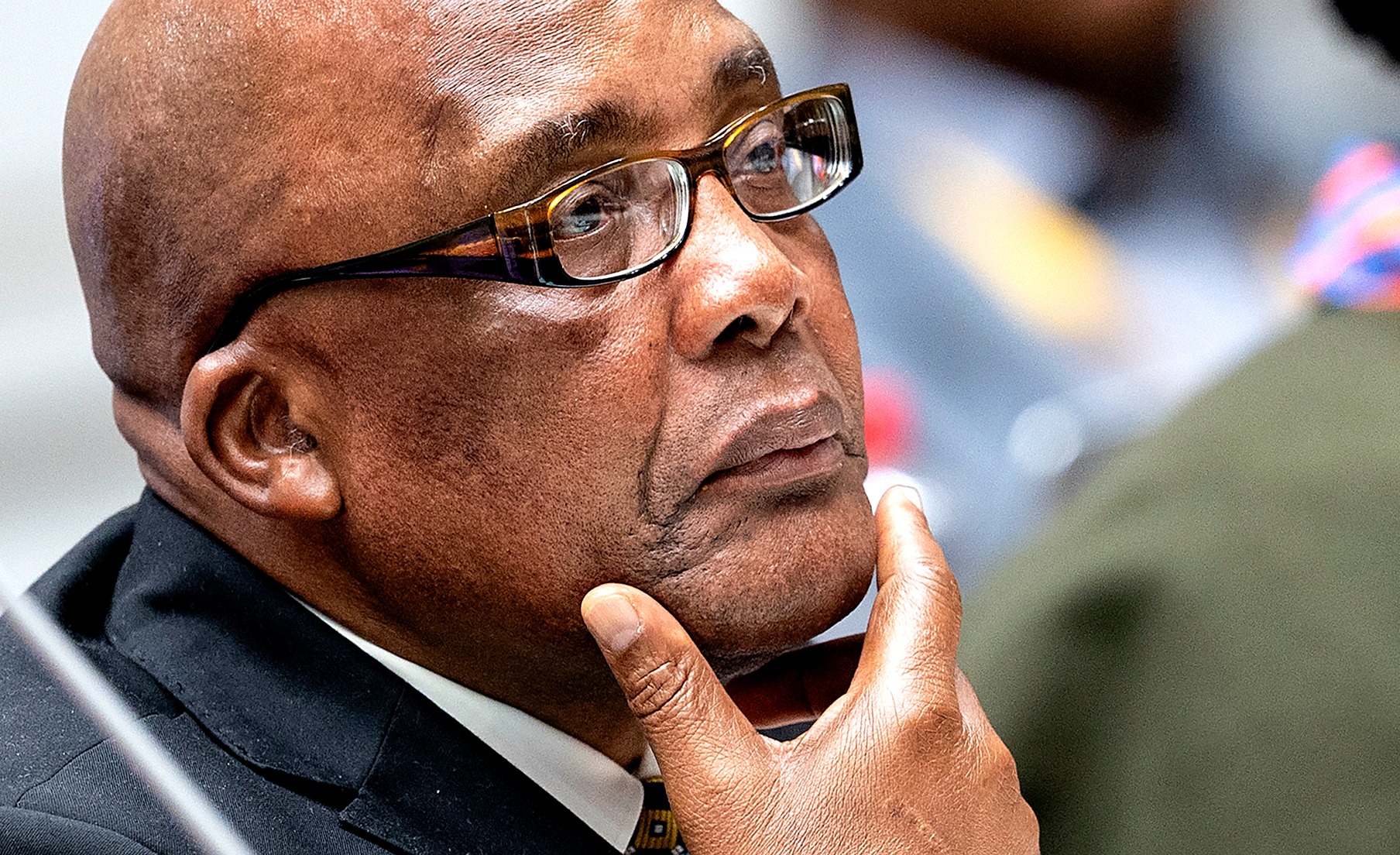
 Minister of Health Dr Aaron Motsoaledi. (Photo: Gallo Images / Brenton Geach)
After the Constitutional Court ruled against controversial provisions that would have allowed the government to determine where medical professionals could work, the Department of Health says it is now looking at alternatives.
National Health Department spokesperson Foster Mohale said the Department was looking at schemes in Canada and Denmark, where structured licences were issued to health facilities, and health practitioners had to apply to work at these hospitals.
The purpose of the certificate of need – the ruling the Constitutional Court shot down – was to equalise the availability of medical practitioners, including specialists, between the private and the public sector and also between urban and rural areas.
At the moment, the Department of Health has a limited ability to purchase some services from private doctors using conditional grants when those services are not available in the public sector.
But Mohale said a more proactive approach would be to follow the structured strategy used by Denmark or Canada, where licences were determined by the health department, and practitioners applied to work at those licensed establishments.
On Monday, after two decades of legal battles, the Constitutional Court declared as unconstitutional provisions that would have given the government control over where medical practitioners and nurses could work, and ordered their removal from legislation.
While the Department of Health’s lawyers labelled the certificate of need scheme “a central pillar in the implementation of the National Health Insurance Act” in court, spokesperson Foster Mohale said the department wished to point out that no part of the National Health Insurance Act had been declared unconstitutional.
The application was brought by the Solidarity trade union, the Alliance of South African Independent Practitioners Association, the South African Private Practitioners Forum, several doctors and the Hospital Association of South Africa.
They asked the court to confirm an earlier ruling by Judge Anthony Millar in 2024 that the provisions surrounding the “certificate of need” were unconstitutional.
‘A call for better health reform’
Doctors from the Universal Healthcare Access Coalition (UHAC) said the ruling by the Constitutional Court should be viewed as “a call for better health reform, not as a defence of the status quo”.
They welcomed the Constitutional Court judgment.
UHAC is a coalition of health professional bodies, health worker associations, patient advocacy groups and aligned constituencies working to actualise access, equity and uniform quality through integration of all health assets.
“The judgment does not reject health reform. It confirms that reform must be lawful, rational, evidence-based and institutionally workable. South Africa urgently needs universal access to quality healthcare.
“The deep inequalities between public and private healthcare, between provinces, and between urban and rural areas remain unacceptable. But these inequalities cannot be solved through broad, poorly defined and highly centralised powers without clear safeguards or a coherent implementation framework,” UHAC’s statement says.
The statement added that the judgment by the Constitutional Court also raised a concern that they too were very worried about – how the NHI reinforced excessive government centralisation, unclear powers and weak safeguards.

“These qualities do not create access. They create uncertainty, delay, risk and weakened capability,” the UHAC statement said.
“South Africa needs a practical pathway that strengthens public health services, regulates private participation properly, defines clear entitlements, improves purchasing and pricing and builds accountable institutions capable of delivering universal access,” the doctors said.
In their proposal for an alternative to the government-designed National Health Insurance, UHAC said a framework for the strategic planning of South Africa’s healthcare workforce needed to be implemented.
“This framework should address the following: First, workforce information from both the public and the private health systems must be systematically collected and collated on a routine basis.
“Second, systematic engagements are required with the health system to determine workforce supply shortfalls and surpluses. Third, technical work is required to support the development of long-term plans for workforce needs,” the UHAC proposal continues.
The conditional grant framework, currently used by the Department of Health, should also be revised, the UHAC proposed.
They further proposed that the remuneration for all health professionals required to undergo in-service training and supervision – whether medical, nursing or allied – had to be ring-fenced nationally through specific-purpose conditional grants.
“This is to insulate these posts from provincial austerity measures that impact the long-term needs of the country,” the proposal said. DM
Comments
Scroll down to load comments...