




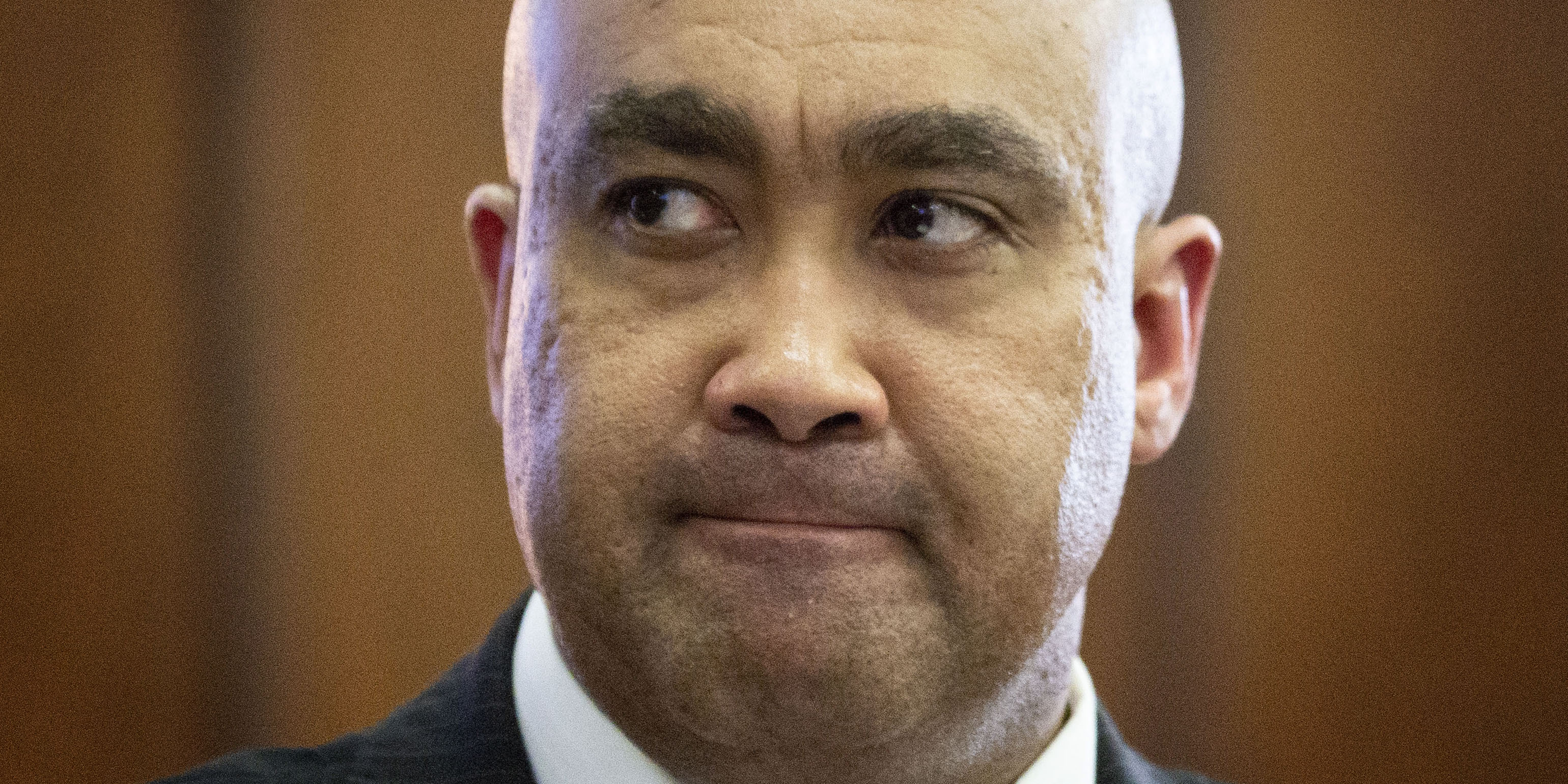
 Former National Prosecuting Authority (NPA) boss Shaun Abrahams. (Photo: Leila Dougan)
 Advocate Shaun Abrahams, the man who steered the National Prosecuting Authority (NPA) during peak State Capture between 2016 and 2018, has been accused by the families of victims of apartheid-era atrocities of “professional failure, neglect and susceptibility to external pressure”.
Abrahams hit back on Thursday, 14 May, telling the panel that, “with respect, the allegations are factually unfounded, legally misconceived and unsupported by any admissible evidence”.
He added that, on the contrary, “the prosecution of post-TRC (Truth and Reconciliation Commission) matters and the reopening of inquests commenced during my tenure as NDPP (National Director of Public Prosecutions)”.
Accusations
Abrahams denied involvement in the “disappearance” of the Cradock Four docket concerning security police involvement in the kidnapping and murder of activists Fort Calata, Sparrow Mkonto, Matthew Goniwe and Sicelo Mhlauli in June 1985, as had been implied.
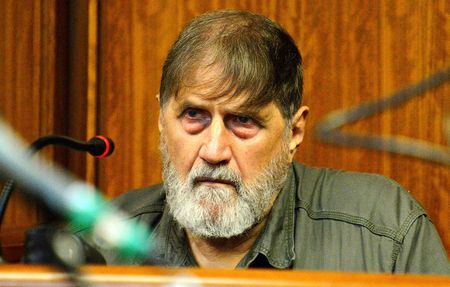
Thembisile Nkadimeng, sister of student Nokuthula Simelane who was also kidnapped and murdered by security police, alleged that Abrahams had failed in his legal obligations and had taken steps to charge her sister’s killers only after he had been “under pressure” from litigation she had initiated against the NPA (Nkadimeng II).

Families of other victims – specifically those of Ahmed Timol and Neil Aggett – also accused the NPA under Abrahams’ leadership of treating post-TRC prosecutions as a “belated, reactive measure” to deflect media scrutiny and public advocacy, rather than fulfilling a constitutional duty.
/file/dailymaverick/wp-content/uploads/nxasana-erin.jpg "Shaun Abrahams’ predecessor as National Director of Public Prosecutions, Mxolisi Nxasana. (Photo: Thapelo Morebudi / The Sunday Times)")
Institutional obstacles
Abrahams took office as NDPP in June 2015 and held the position until August 2018, when the Constitutional Court declared his appointment invalid.
This was as a result of former president Jacob Zuma’s payment of a “golden handshake” to Abrahams’ predecessor, advocate Mxolisi Nxasana.
Abrahams found himself in the eye of a political storm when he targeted former minister of finance, the late Pravin Gordhan, and South African Revenue Service (SARS) commissioners Ivan Pillay and Oupa Magashula.

Before finding himself in the hot seat, Abrahams headed the Priority Crimes Litigation Unit (PCLU – after the retirement in 2013 of its former head, advocate Anton Ackermann) from 2013 to July 2014.
Abrahams argued before the panel that systemic delays concerning TRC cases were rooted in institutional obstacles that had existed before his appointment, rather than personal negligence.
He said his administration had taken proactive steps to reopen inquests and pursue justice, asserting that there was no factual evidence of his collusion or improper influence.
“I reiterate and deny that I failed in my legal duty to pursue TRC matters, irrespective of the position I occupied and the associated period. I did what I could and what the law required of me, to advance TRC matters within the constraints and complexities” of the time.
Heavy load
Abrahams argued that by the time he took office, the PCLU had already been “grappling for a decade with systemic obstacles”, including missing documentation and the age of witnesses and suspects.
Added to this was the burden of historical non-cooperation or “refusals” by investigative bodies such as the SAPS and the now-defunct Directorate for Special Operations (Scorpions) to probe certain matters.
The NPA had “structural limitations”, said Abrahams, adding that the PCLU had never possessed independent investigative powers. The NPA provided “prosecutorial direction” and guidance, but was entirely reliant on the SAPS, specifically the Hawks (Directorate for Priority Crime Investigation), to conduct the actual investigations, he said.
It was the “paucity of evidence” and the challenges of investigating complex crimes nearly 30 years after the fact, rather than prosecutorial failure, that had led to delays.
Proactive steps
Abrahams told the panel he rejected the portrayal of NPA actions on post-TRC cases as a “belated, reactive measure,” characterising this view as a “distorted portrayal” of his victim-centric approach.
He highlighted several “proactive steps” taken during his tenure to demonstrate his commitment to justice for apartheid-era victims. These included submitting memoranda to the minister of justice to request the reopening of inquests, specifically for Ahmed Timol and Neil Aggett.
He said he had also directed investigations into the death of former ANC president Chief Albert Luthuli and had authorised the prosecution of the perpetrators in the Nokuthula Simelane matter.
Abrahams told commissioners that in March 2016, he had authorised the decision to charge former security branch officers Willem Coetzee, Anton Pretorius, Frederick Mong and Msebenzi Radebe with Simelane’s murder. This decision had followed “a process of intense prosecutorial assessment and a meeting with the family, rather than being a result of external litigation pressure”.
Abrahams argued that the evidence against him consisted essentially of “broad inferences drawn from institutional delay” rather than citing specific acts of misconduct.
He invited the commission to review his complete documentary record, confident that it would show that TRC matters received the “requisite dedicated attention” during his leadership.
/file/dailymaverick/wp-content/uploads/2022/05/08-ED_0113107.jpg "Eugene Terre’Blanche, leader of the Afrikaner Weerstandsbeweging (AWB). (Photo: Wessel Oosthuizen / Gallo Images)")
Abrahams also cited the successful prosecution by the NPA of Eugene Terre’Blanche, leader of the right-wing Afrikaner Weerstandsbeweging (AWB), following the TRC process.
These prosecutions related to a series of bombings in North West, and Terre’Blanche had entered into a plea agreement.
Abrahams maintained that during his leadership, the NPA adopted a “victim-centric approach,” ensuring that TRC matters received attention and that prosecutions were authorised whenever the evidentiary threshold had been satisfied. DM