




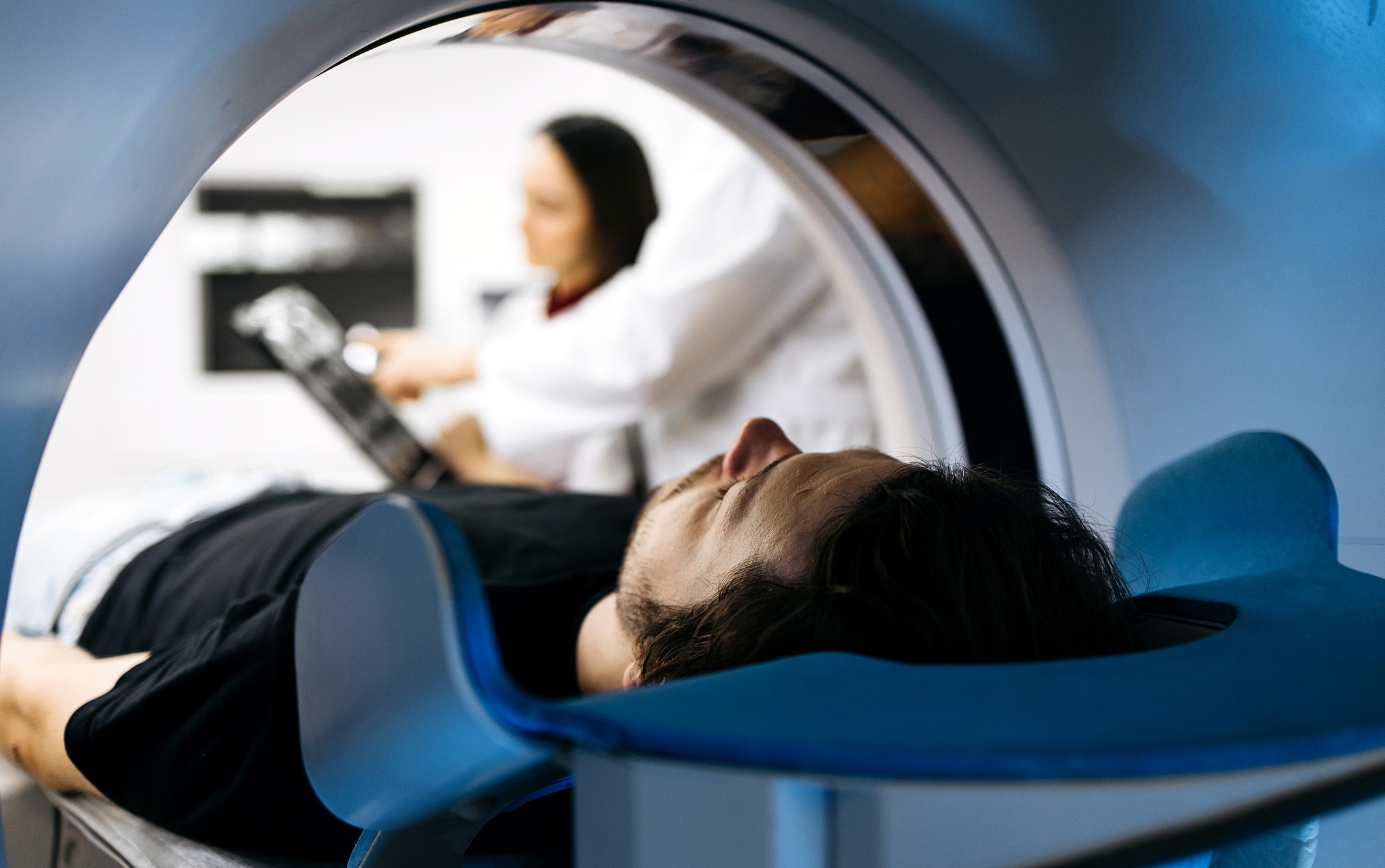
 The medical imaging community held their annual conference in Cape Town this week, and the main conversations were around reducing the healthcare industry’s reliance on helium. (Photo: iStock)
There’s a technical specification that has become the topic of many high-profile discussions since Iran retaliated against the US strikes by launching attacks on Trump’s allies in the Gulf region: 6N. No, it’s not the Men’s Six Nations Championship — that wrapped up on the weekend before Iran struck Qatar’s Ras Laffan facility on 18 March.
That 6N refers to the six nines that represent semiconductor-grade helium purity; 99.9999%. Only Qatar and the US have the capability of producing party-balloon gas at that level.

Research grade, the kind of helium that was the topic of discussion at the International Society for Magnetic Resonance in Medicine (ISMRM) conference that was held on African soil for the first time in Cape Town this week, is confusingly called 5.5 helium. Five nines followed by the number five; 99.9995%. That’s also in short supply for the same reasons.
The point is that helium is an irreplaceable part of many industries, and about a third of the global supply is stuck in the Gulf.
No time like the present
“It is not being spoken of enough in my view,” Megha Kalani, Philips’ regional business leader for Magnetic Resonance Imaging (MRI) in the Growth Region (a fancy name for emerging markets like South Africa and Indonesia), told Daily Maverick in an exclusive interview on the sidelines of the ISMRM conference.
“That is probably because there are long-term contracts that exist, right? So the disruption that happens today may not have an impact tomorrow … but it will have an impact in a couple of months from now. And that’s when the awakening will happen.”
Kalani was in Cape Town to do what she is remarkably good at: sell Philips’ “helium-free” MRI machines. They still contain seven litres of helium, which is sealed inside the machine “for life” (read: 30-year guarantee).
“It’s been more than 20 years that we have been working on the sealed magnet technology... This is from an ethos [and] a design principle that we should be self-reliant. Healthcare should be self-reliant. And it needs to be sustainable.”
What she means is that the Dutch company did a market study two decades ago that predicted a sustained rise in the cost of helium, which is a finite resource that also has the annoying habit of escaping the atmosphere at an alarming rate.
The healthcare industry also competes for helium against semiconductor fabrication plants and the aerospace industry, while the global demand for MRI machines has also accelerated. So it was a pragmatic decision for the dominant MRI original equipment manufacturer to plough R&D money into tech that would wean itself — and the entire industry by extension — off the voice-changing gas.
Space cowboys
Kalani described how helium has outpaced gold, silver and platinum in commodity price growth, and by utilising the Philips BlueSeal system that contains only seven litres of helium — apparently the Goldilocks amount for efficient cooling and operation — hospitals never have to pay for expensive helium refills, nor do they suffer the logistical costs of importing it.
But there is, of course, another side to the helium market conversation. In 2025, ASP Isotopes (Aspi) invested approximately $129.4-million to acquire the South African helium and liquefied natural gas (LNG) producer Renergen, gaining control of its Virginia Gas Project. This operation focuses on extracting helium and LNG from the unique geological deposits formed by the meteorite impact at the Vredefort Dome.

The deal closed officially on 6 January 2026 and was driven by the strategic imperative to secure critical material supply chains in an increasingly volatile geopolitical landscape.
Aspi’s additional capital and engineering expertise have accelerated Renergen’s operational timeline. In a company dispatch on 13 April, Aspi announced that the well drilling required for Phase 1 of the helium project had been completed about four months ahead of schedule — but keen followers of Renergen’s trajectory would have heard similar promises before.
This time, though, Paul Mann, executive chairperson and CEO of Aspi, had the privilege of giving the bold projections:
“We completed Phase 1 drilling at the Virginia Gas Project ahead of schedule and expect to obtain nameplate capacity for helium in the third quarter of 2026. Our singular focus in 2026 is execution, and we intend to deliver.”
By combining Renergen’s helium reserves with ASPI’s proprietary aerodynamic separation process (ASP) technology, the company achieves an unmatched horizontal integration.
As stated in that April dispatch, “ASP Isotopes is building a fully integrated electronic gases platform spanning Silicon-28, helium, and fluorinated gases, with the goal to serve semiconductor fabrication facilities globally”.
This creates a one-stop shop for fabricators needing silicon wafers for next-generation quantum/AI chips, alongside the helium and specialised fluorinated gases required for cooling and etching.
Local impact
This helium crisis will probably not manifest as shortages in the party balloon trade, although the price per fill will ratchet up to uncomfortable levels for your next big birthday.
However, the accelerated switch to helium-efficient technologies will make a massive difference in the healthcare landscape. Kalani could not disclose which customers she was engaging with in South Africa, but serious negotiations are happening for the sealed-up MRI tech.
While the current crop of Philips machines are significantly more expensive than old-fashioned MRI kits, there are unintended benefits.
If something gets stuck in the magnets, for instance, it’s only a couple of hours of downtime and no need to refill the helium tank. These machines are also lighter, which means they can be installed somewhere other than the ground floor or basement of a hospital, and could potentially be transported to a smaller clinic in an underserved community or township.
Just as the oil shocks are causing a demand collapse for the decomposed prehistoric plankton juice, the helium disruption is forcing a global rethink on the use of the gas. In time, we may even be grateful for the mindless acts of war — but right now it hurts like hell. DM
Comments
Scroll down to load comments...