



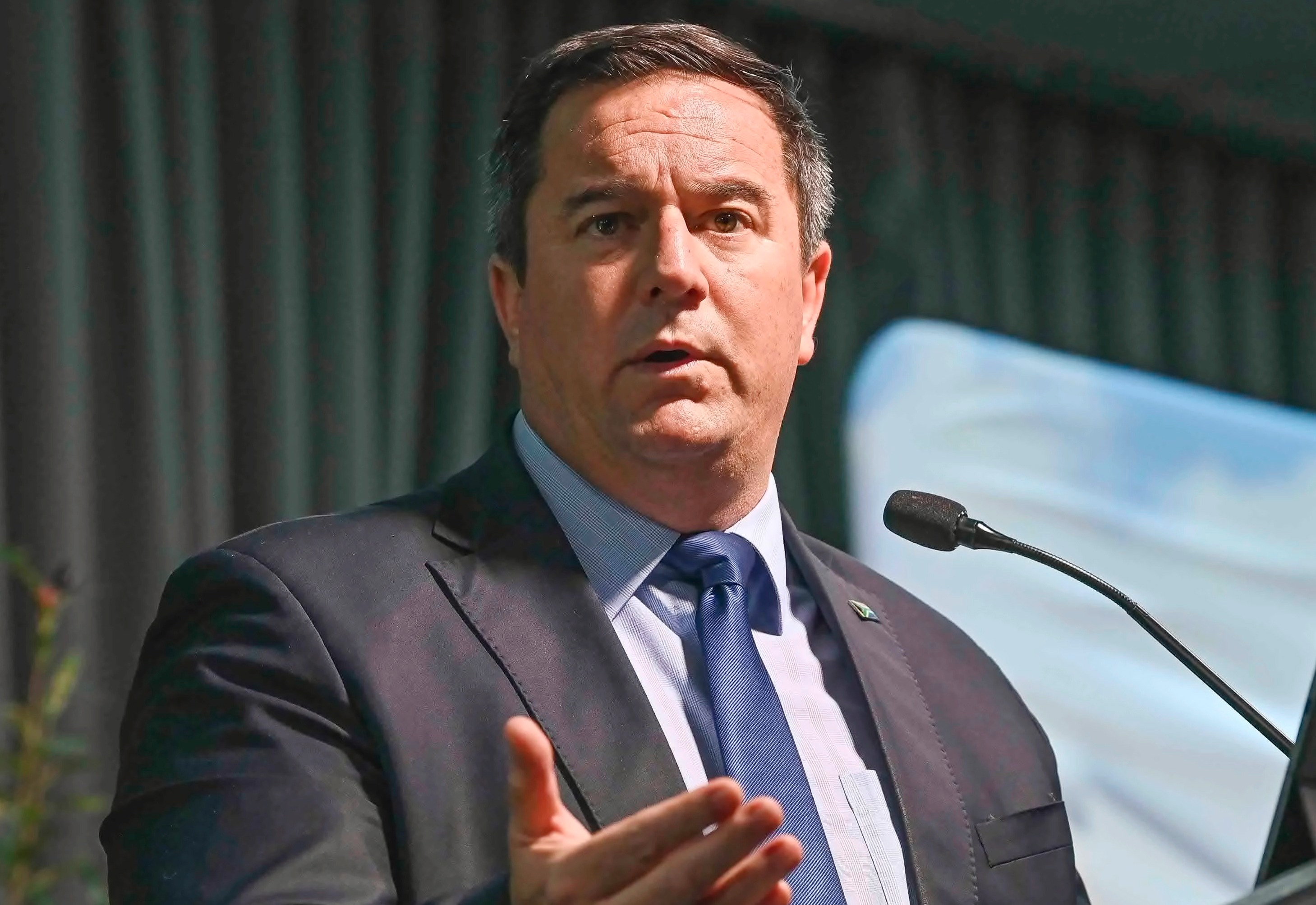
 Agriculture Minister John Steenhuisen address the Grain SA Congress at Nampo Park on 11 March (Photo: Mlungisi Louw / Gallo Images / Volksblad)
Livestock were pointedly missing at this year’s Grain SA Nampo Harvest Day near the Free State town of Bothaville because of the unfolding foot-and-mouth disease (FMD) crisis that has hammered South Africa’s cattle industry.
But FMD was on the mind of many a farmer at Nampo, and the issue took centre stage on Wednesday at a panel discussion that included Agriculture Minister John Steenhuisen, who reached for the skies for a comparison to his department’s response.
"What we have essentially been doing is trying to repair an aeroplane in mid-air. We are in the midst of a crisis, and there was a 180-degree change in strategy to a mass vaccination campaign,” said Steenhuisen.
The minister went on to say that the department had inherited a system that “had completely fallen on the ground for the last 20 years” and that it now had “to put together a new biosecurity system in the midst of a biosecurity crisis. We’ve had to really feel our way through this.”
South Africa’s capacity to deal with such an outbreak had been undermined by state failure and the withering of the state-run Onderstepoort Biological Products into a husk of its former self. Whether or not farmers buy the whole “feeling our way” is another matter.
“I haven’t been able to sell cattle for 15 months. It’s a big problem,” a North West cattle farmer who attended the session told Daily Maverick. “How would the minister feel if he didn’t get paid for 15 months?”
The panel discussion was held against the backdrop of the Department of Agriculture’s announcement earlier this week that two million doses of the Dollvet vaccine from Turkey had arrived in South Africa. With an additional five million doses expected soon, South Africa will have 15 million doses by the end of May as it strives to vaccinate 80% of a national herd estimated to number around 14 million.
Threshold
The 80% target is seen as the threshold required for containment within a 24-month time frame, based on the experience of Argentina and Brazil.
But FMD is here to stay.
"We have to make peace with the fact that we have to live with this disease. But we have to live with it in a different way than historically. We cannot unscramble a scrambled egg," said panellist Dirk Verwoerd, the senior feedlot veterinarian at South Africa’s largest beef producer, Karan Beef.
/file/attachments/orphans/ED_562046_581876.jpg "Cattle at the Karan Beef feedlot in Heidelberg are vaccinated against FMD on 23 June 2025. (Photo: OJ Koloti / Gallo Images)")
Verwoerd’s beef with the department “feeling its way through” is that the regulations around quarantine remain in limbo.
He told Daily Maverick the old regulations stipulated “depopulating”, which means a controlled slaughter or removing animals to an approved site with permission, throwing lime around and then repopulating again after 28 days.
But in this neverland between the new regulations coming in — for which there is no specific timeline — large-scale feedlots such as Karan Beef’s remain under “perpetual quarantine”.
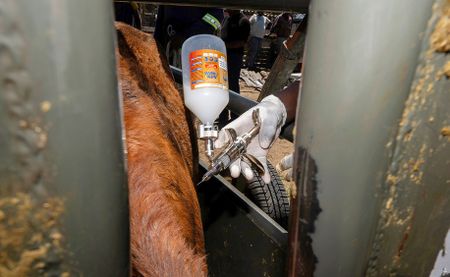
Still, amid the regulatory uncertainty and the rising costs to cattle farmers, at least the vaccination drive is kicking into gear, with 80% the target and new provisions to allow private vets to administer vaccinations with the state’s supervision. Unlike humans, cows are not “anti-vaxxers”.
That’s fine and well for registered commercial farms, but communal herds grazing on municipal land or in the former Bantustans remain an unregulated horn of concern.
“I’ve made mistakes, but I think we are headed in the right direction,” said Steenhuisen during the panel discussion.
That's at least the hope, and a vaccination campaign is probably the best measure, even one engineered in the air aboard a troubled plane.
Steenhuisen’s own political career has had something of a crash landing. For livestock farmers, South African consumers and the wider public, the hope is that the measures to contain the FMD outbreaks encounter less turbulence. DM
Comments
Scroll down to load comments...