




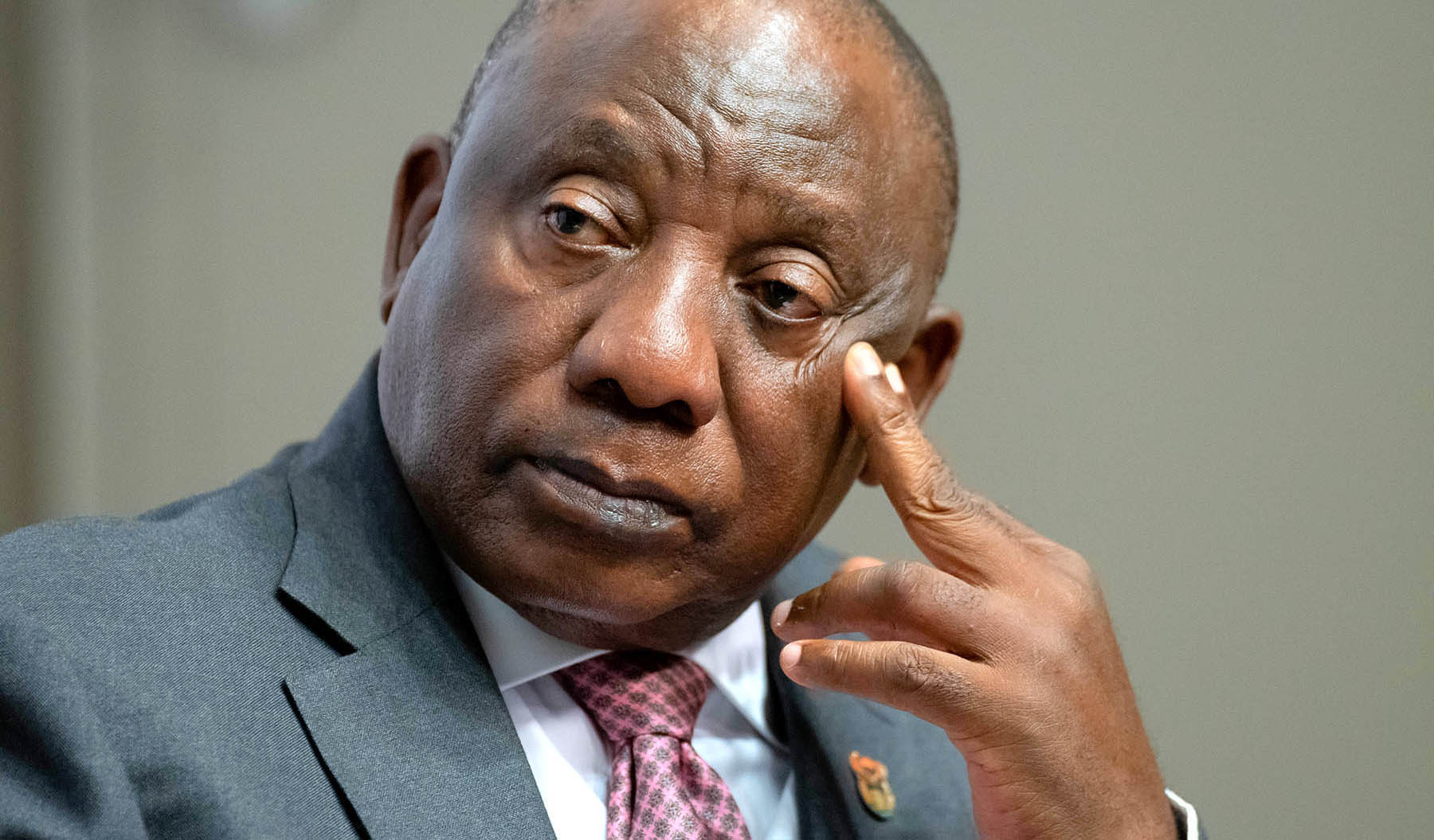
 ANC President Cyril Ramaphosa. (Photo: Gallo Images / Jeffrey Abrahams)
 That President Cyril Ramaphosa will face an impeachment hearing in Parliament into his conduct in the Phala Phala saga is now clear.
On Friday 8 May, the Constitutional Court found that rule 129I of the National Assembly Rules, which determines the consideration and referral of a report regarding the removal or impeachment of a president, was unconstitutional, and set it aside.
The apex court also set aside the National Assembly vote on 13 December 2022, in which it declined to refer the Section 89 independent panel report into Ramaphosa’s conduct over Phala Phala to an impeachment committee.
The panel report had found that Ramaphosa had a case to answer over serious violations of the Constitution, for exposing himself to a conflict of interest, doing outside paid work and contravening anti-corruption laws. Ramaphosa came close to resigning after the publication of the report, until persuaded against doing so by senior ANC leaders.
By order of the ConCourt, the report must now be referred to an impeachment committee established in terms of the National Assembly Rules.
The ruling will have profound implications for Ramaphosa’s political future, as Parliament moves to establish a committee that would hold public hearings into the matter.
/file/attachments/orphans/ED_608020_793246.jpg "EFF members picket ahead of the delivery of the judgment on Phala Phala at the Constitutional Court on 8 May 2026 in Johannesburg. This follows allegations linked to the 2020 theft of foreign currency from the president’s Phala Phala farm, as well as questions over whether proper procedures were followed. (Photo: Gallo Images / Luba Lesolle)")
The EFF were the big winners in the ConCourt on Friday.
The red berets had filed the case before the court in February 2024, contending that the National Assembly’s vote, as well as Rule 129I that allowed the vote to take place, were unconstitutional. Arguments in the case were later heard in November 2024.
Ramaphosa had argued that the EFF was “patently delayed” in bringing the case 14 months after the National Assembly’s vote.
‘Accountability’ due to ‘national significance’
However, the ConCourt found that although the delay was unreasonable, there was a proper basis to overlook the delay in all circumstances – in particular, because of its national significance.
“The National Assembly’s oversight role over the President lies at the heart of our constitutional scheme. Accountability is one of the foundational values of our Constitution, and the National Assembly bears the responsibility to ensure that the President is held accountable. The issues are of tremendous importance.
“It would be injudicious to permit delay to foreclose an interrogation of whether the National Assembly has fulfilled its responsibility of holding the President accountable, where the delay has neither caused prejudice nor hindered this Court’s ability to adjudicate the matter and the merits are, at least, arguable,” read the judgment.
/file/attachments/orphans/ED_607990_176999.jpg "EFF members during picket ahead of the the delivery of the judgment on Phala Phala at Constitutional Court on May 08, 2026 in Johannesburg, South Africa. This follows allegations linked to the 2020 theft of foreign currency from the president’s Phala Phala farm, as well as questions over whether proper procedures were followed. (Photo: Gallo Images / Luba Lesolle)")
Concourt finding
The Constitutional Court unanimously found that it had exclusive jurisdiction over the challenge to the validity of rule 129I, but by majority decision found that it did not have exclusive jurisdiction over the challenge to the National Assembly vote itself.
In terms of rule 129I, once a Section 89 panel has concluded a report, it must be debated by the National Assembly. A Section 89(1) inquiry only moves forward if the National Assembly so resolves.
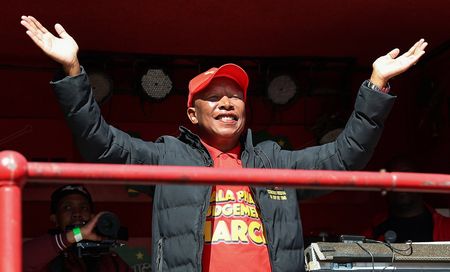
(In December 2022, the Section 89(1) inquiry against Ramaphosa was quashed when the ANC used its majority in the House to vote against the adoption of the panel’s report. The National Assembly voted by a majority of 214 to 149 against proceeding with the inquiry, and the matter was not referred to an impeachment committee as a result.)
‘Subverts the requirement of transparency’
The ConCourt found that rule 129I did “not pass constitutional muster” because it permitted MPs to “gatekeep” within the first stage of the Section 89 impeachment process even after an independent panel had found sufficient evidence that Ramaphosa had a serious case to answer.
“Rule 129I subverts this requirement of transparency. It permits the National Assembly to terminate the impeachment process at a stage when the relevant factual and evaluative issues have not been publicly ventilated in a structured and comprehensive manner."
“The panel conducts its work on a limited written record, and the more rigorous processes of testing evidence, assessing veracity and evaluating seriousness are reserved for the impeachment committee stage. If the process is halted before that stage is reached, the National Assembly’s decision is taken without the benefit of a full and public exposition of the issues,” read the judgment.
The ConCourt concluded that the rule frustrates the accountability purpose of Section 89 of the Constitution and “defeats the very constitutional mechanism it purports to give effect to, namely, the ability of the National Assembly to remove the President where the constitutional prerequisites exist”.
South Africa’s (SA’s) highest court effectively revived impeachment proceedings against Ramaphosa.
Once an impeachment committee is established, public hearings will be held.
It is still possible that no impeachment could happen. That impeachment committee would have to decide on that, and two thirds of the National Assembly would have to support such a finding, according to Section 89 of the Constitution.
Despite the ANC having lost its majority in the 2024 election, it still has well over one-third of the seats in the National Assembly.
/file/dailymaverick/wp-content/uploads/2025/11/WhatsApp-Image-2025-11-06-at-16.03.50_67dc8493.jpg "President Cyril Ramaphosa appears before the National Assembly to respond to oral questions. (Photo: Phando Jikelo / RSA Parliament)")
However, it is unclear whether the other Government of National Unity (GNU) parties would support a recommendation to remove the President. DA leader Geordin Hill-Lewis said the party would adhere to the judgment, as did the UDM, Good and Rise Mzansi.
‘Respects the ConCourt judgment’
It is also unclear whether Ramaphosa would subject himself to an impeachment hearing at this time.
In a statement on Friday afternoon, Ramaphosa said he respected the ConCourt’s judgment, reaffirming his commitment to the Constitution, the independence of the judiciary and the rule of law.
“President Ramaphosa has been consistent in providing his full assistance to the various enquiries into this matter. [He] maintains that no person is above the law and that any allegations should be subjected to due process without fear, favour or prejudice,” read the statement from his office. DM