




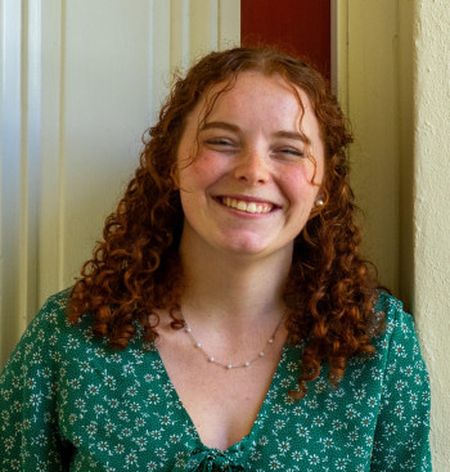
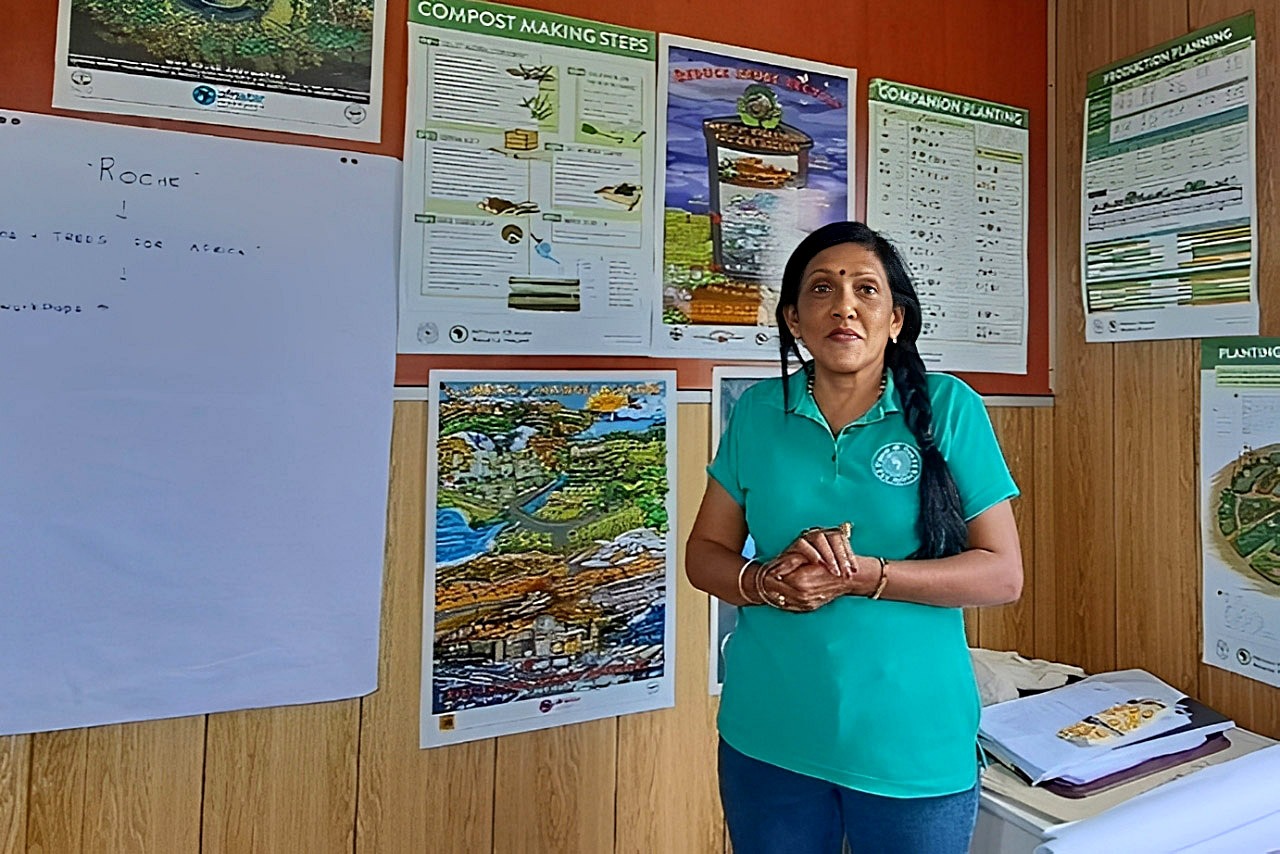
 Bharathi Tugh, EduPlant programme manager and education associate at Food & Trees for Africa, has been part of the EduPlant programme since 1995, first as a participant, and now as the driving force behind the longest-running school food gardening programme. (Photo: Food & Trees for Africa)
 Bharathi Tugh comes from a family of teachers. Her mother, her sisters, her cousins; teaching ran through the generations, and it was the path she followed too, qualifying in mathematics and natural science and spending 15 years in mainstream classrooms. But it was a move into special needs education, “divine intervention”, she calls it, that set the course for everything that followed.
Before joining West Park School in Chatsworth, KwaZulu-Natal, she had already been doing something quietly radical in her community. The area had been shaped by the Group Areas Act, with people relocated from homes with expansive yards into confined, boxed living.
“And I felt I needed to rejuvenate the sense of love for where you lived,” she said. She began working with the community: adopting open spaces, planting veggies, and running clean-ups.
“It started like an entire movement of wellbeing, of ownership,” she said.
It was through this work, in 1995, that she first came across Food & Trees for Africa. The organisation’s founder was running a national schools competition. Tugh’s school entered, building what she described as a door garden, a garden the size of a door, and won.
The garden attracted a lot of attention and, for Tugh, marked the beginning of a long relationship with EduPlant as a volunteer and competition participant.
/file/attachments/orphans/271_888018.jpg "Bharathi Tugh’s dual role as the EduPlant programme manager and education associate at Food & Trees for Africa sees her oversee everything from on-the-ground facilitation to the accreditation of EduPlant’s materials to international standards. (Photo: Food & Trees for Africa)")
At West Park, she arrived with a permaculture background and a problem she couldn’t ignore. At the time, there was almost no formalised curriculum for her learners. Teachers were expected to cover self-help skills, cookery and life skills, and were largely left to figure out the rest on their own.
She built a curriculum around the way her students actually learned – tactile, sensory, practical, and wherever possible, outside. With this, she said, a child with cerebral palsy who had use of only one hand could fill a bag with potting soil, and see how they helped build a garden.
The curriculum she developed eventually fed into the national framework – content from the programmes she started became part of the Draft Curriculum and Assessment Policy Statement (Decaps) Agriculture Studies, a specialised vocational curriculum designed to bridge the gap between education and the agriculture industry, focusing on hands-on farming skills.
Tugh is proud of the fact that former learners went on to work in the open labour market, as groundsmen, in grass-cutting businesses, and growing their own food. For her work, she received the National Teacher Award, the Mayor’s Award for Excellence, and the Nestlé Community Nutrition Award. Though recognition, she said, was never the point.
From one school to 750
“I’m here on a little small platform,” she realised after a few years. “I’m impacting here. One little school. Outside of that space, my reach is limited.”
When Food & Trees for Africa, the non-profit that would become her professional home, opened a KwaZulu-Natal branch in 2015, Tugh resigned from teaching after 32 years and joined full time. She is now the organisation’s education associate and the driving force behind EduPlant, one of the longest-running school food gardening programmes in SA.
Launched in 1994, EduPlant had grown into the largest and most impactful programme of its kind in southern Africa, she said. Its formal name, the EduPlant School Gardening and Nutrition Programme, reflects an ambition that goes well beyond growing vegetables.
/file/attachments/orphans/361_542541.jpg "Learners from Nobanda Primary School in Pietermaritzburg, KwaZulu-Natal, secured a place as finalists in the 2025 EduPlant Competition, one of 40 schools selected from across all nine provinces to compete at the national finals. (Photo: Food & Trees for Africa)")
The programme promotes permaculture, sustainable practices, environmental ethics and systems thinking. It builds food security networks in under-resourced communities and schools. And crucially, it is designed to fit inside the school day rather than be added on top of it.
When Tugh joined full -time, her first move was to align EduPlant with the Caps curriculum, before applying for formal accreditation through the South African Council of Educators, she said.
Teachers who attend EduPlant workshops now earn 15 professional development points, the continuing education credits required to keep their teaching licences valid.
“It’s not an extracurricular activity any more,” she said. “It’s co-curricular.”
This is precisely the thinking that Robyn Hills, who oversees Food & Trees for Africa’s programmes, credits for setting the organisation apart. Many well-intentioned NGO interventions inadvertently pile onto teachers’ already heavy workloads.
“We actually take away from that,” Hills said.

The programme, funded in partnership with Tiger Brands, currently operates in 250 schools, with a mentorship model, where one school shares its knowledge with the next, extending reach to approximately 750.
Each cycle runs facilitated cluster workshops for six school terms, bringing together a teacher, a community member, and three learners for a full day of practical and theoretical training. The programme is endorsed by both the Department of Basic Education and the National Schools Nutrition Programme, according to Tugh.
/file/attachments/orphans/47_879453.jpg "Learners from Emafini Primary School in Gqeberha, Eastern Cape, show off produce from their school food garden. The school joined the EduPlant programme in 2018 and has been growing ever since. (Photo: Food & Trees for Africa)")
Schools document their progress through portfolios that show how they have implemented what they learned from the workshops, and the produce goes back into school kitchens, homes with vulnerable learners, and in a number of cases is donated monthly to nearby clinics and shelters.
“Even if they give 10 bunches of spinach,” Tugh said, “it’s value added to their diets.”
This week, the first cluster workshops of the new cycle got under way.
According to Tugh, external monitoring had found that more than 60% of learners and community members who participated in the workshops went on to replicate what they’ve learned at home, often led by the children themselves, encouraging their parents to start growing too.
Rooted in purpose
The programme culminates in a national finals competition. Last year, 460 learners and educators from all nine provinces travelled to North West for four days of workshops, presentations and celebration.
Tugh has attended every national finals since 1994: first as a participant, then as a judge, now as the person who runs it.
“Every time I’m there, it doesn’t diminish what you feel on the inside,” she said. “It’s not a jaded experience. It’s a whole inspiration and a revival... that is why I do this.”
The goal, she said, was more than food security.
“The education is this bridge from a patch of dirt in a school to food production to nutrition,” Tugh said.
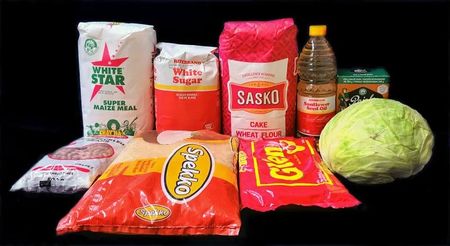
Children are exposed to careers they might never have considered, like agri-tech, environmental activism, soil economics and entrepreneurship. You don’t have to get on a tractor, she said, you don’t even have to get your hands dirty.
For Tugh, the measure of success is not in the numbers but in the moments: a child carrying a pumpkin on their head through a garden they built themselves, a Grade 11 learner standing at a podium speaking about climate change, and a school bottling tomatoes and building a business from their harvest.
“This is what resonates with my soul,” she said. “I could see the change right at the beginning of my career. I took one step towards a community, and it was returned multi-fold.” DM