




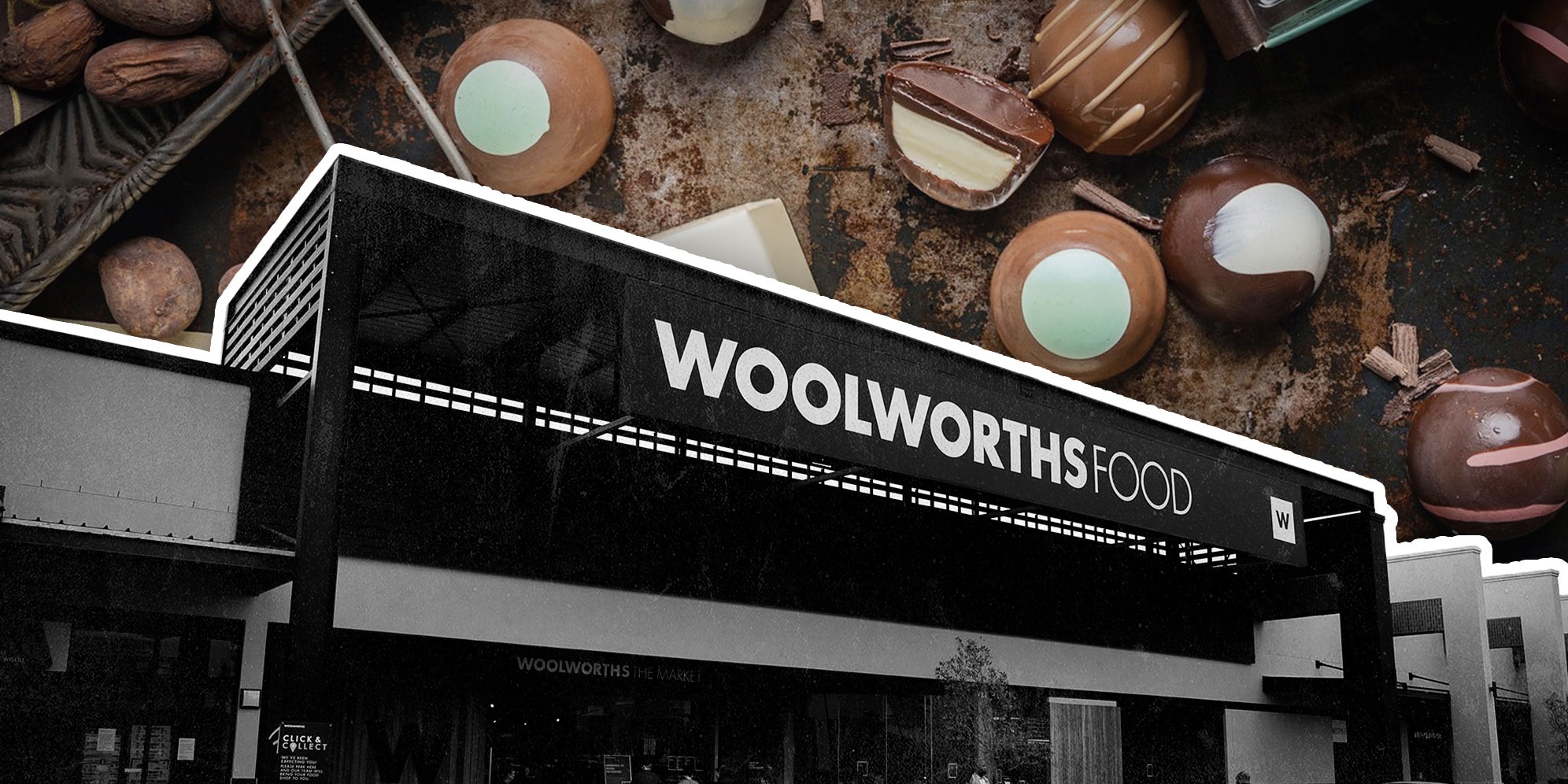
 Illustrative Image: Beyers Chocolates. (Photo: Beyers) | A Woolworths outlet in the suburb of Durbanville, Cape Town, South Africa. (Photo: Gallo Images / Jacques Stander) | (By Daniella Lee Ming Yesca)
 I’m one of those lucky people who live in an urban area where I am literally surrounded by people trying to part me from my money. There are big retailers and supermarkets and butchers and veggie shops all around me.
Most of the time, when I’m setting off in the family’s petrol car (the diesel has been put on necessary-trips-only duty) to head to the shops on a Saturday morning, I tend to think consciously about certain vital things.
Will they have what I need? Will the parking be okay?
More importantly, will I be judged to have bought the right things when I get home?
I don’t think, consciously, about the issue of exclusivity. I’m too busy fiddling with the latest episode of my Rest Is History podcast to do that (their series on King Leopold and the DRC was incredible, including some of the incredibly disturbing facts about his personal life).
But that doesn’t mean exclusivity isn’t guiding my decisions.
Many clever people spent a lot of very productive time thinking about how to get me into their store and to avoid another store.
They think about coffee and chocolate and the boerewors roll stand and the aroma it will put out.
This issue around product exclusivity is now coming to the fore.
After first hoping a short statement would do it, Woolworths has now realised they are going to have to be more forthcoming about their role in the demise of Beyers Chocolates.
The Financial Mail broke the story that the company was going under after Woolworths cancelled their contract with them. Kees Beyers spoke to The Money Show and, you may remember, featured in your email box last week. He then spoke to Moneyweb on Radio Sonder Grense this week.
Someone at the Woolies head office has had enough. And understood that their brief statement, which was quite personal about Beyers, was not enough.
It will not kill the story.
Now they’ve released a much longer statement, which they could have done at the start of this.
They say they had an exclusivity agreement with Beyers from 2019, but that in 2023 they noticed products similar to the ones Beyers made for them were being sold by their competitors. That, they say, went against their agreement, the two sides could not reach a compromise, so they ended their relationship with Beyers.
This is all entirely reasonable.
I have no doubt the exclusivity of a Chuckle is incredibly valuable. In these troubled times chuckles, like diesel, are rare. When you get a chance for a chuckle you must have it. It helps you get through the day.
Especially a chuckle that comes from a joke told by Dad.
But you may remember Beyers has a very different view of the facts. He says the exclusivity agreement had simply run out. And it was Woolworths who were not renewing it.
Since his business now depended on Woolworths he became worried and moved to find other customers. He also says the new factory he bought to make these products was on a completely different premises, using completely different people.
But as Moneyweb’s Hilton Tarrant pointed out this week, it was also rational of Woolworths to take steps to protect their exclusivity. His point is that brands like Woolworths and Checkers are in a new race to build and promote products that are exclusive to them.
All of this is true.
But Woolworths has not explained, or denied, Beyers’s claim that during the negotiations about this, he was told by people representing Woolworths that they had “bankrupted companies for doing what you are doing here”.
And the other threat, that “we will use you as an example to other suppliers”, also not denied by Woolworths, looks even more likely to be true in light of the importance of exclusive products.
Without a denial, Woolworths might find it hard to justify its claim that “we are confident we acted fairly”.
Dear Reader, as you know, I always delight in what you send me. I try very hard to reply to as many of your mails as I can. I would like to say sorry (again!) to those who I do not reply to.
But the flood of your correspondence on this issue last week completely floored me.
Two things stand out.
First, the person mentioned by Beyers as the person he negotiated with (Beyers has been clear and mentioned him in each interview he has done) came up as being accused of having treated at least one other supplier like this in the past.
If that’s true, it might suggest this is actually how Woolworths does business.
The other is the examples you sent me of people who had good ideas for a product, showed them to someone from Woolworths, were told they would not work, only to see something similar on a Woolworths shelf a few months later.
The closest anyone has ever got to proving this has happened was in the Frankie’s Olde Soft Drink Company saga in 2012, where there was a finding against Woolworths.
It’s worth remembering on Saturday morning as you fiddle with the radio, fret about parking and worry about finding the right stuff, that Woolworths would not be the only retail chain doing this.
They all know you’re surrounded by options. And to take your money they need to stand out.
And for that, they need something exclusive. DM