



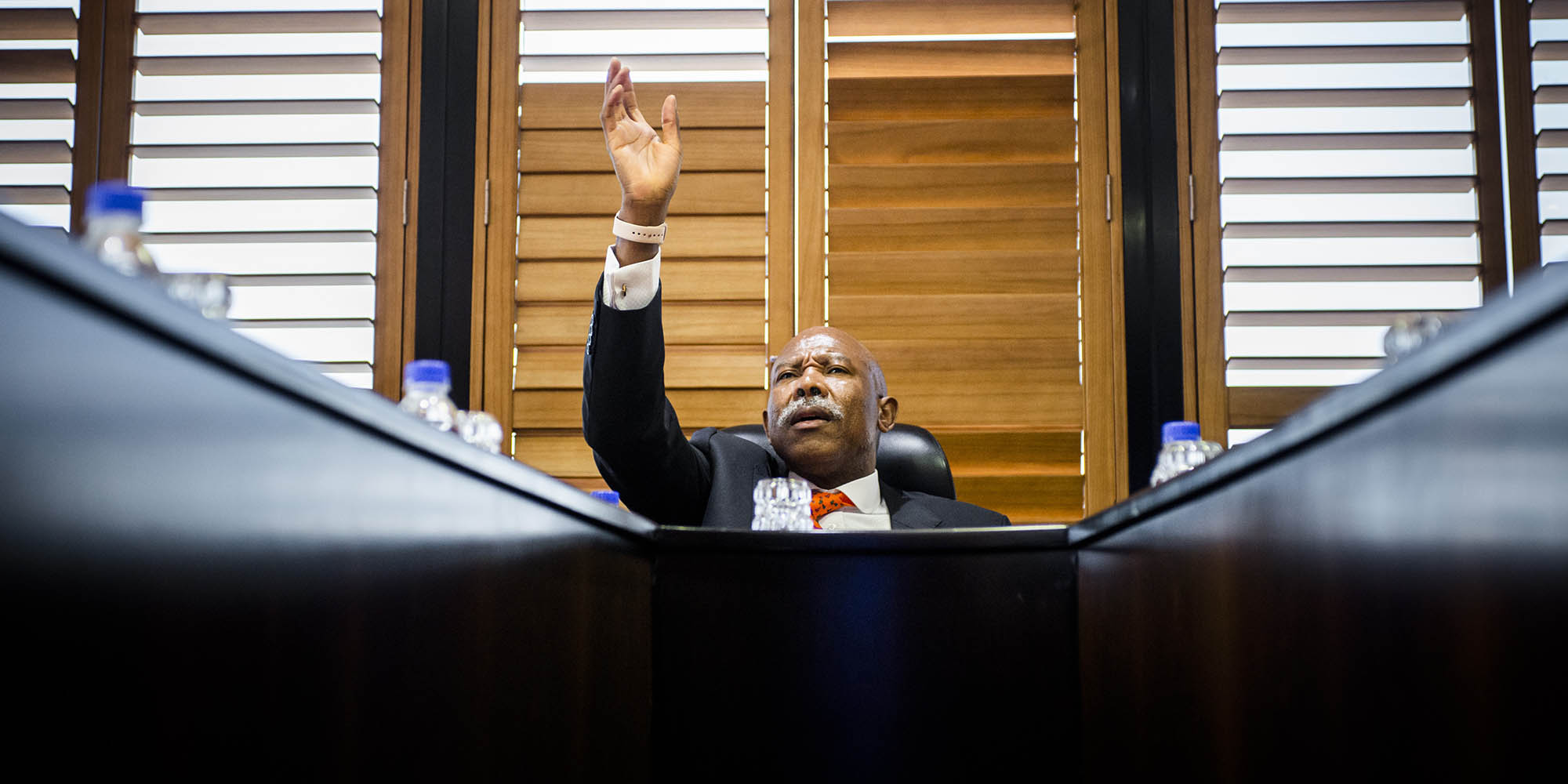
 Reserve Bank Governor Lesetja Kganyago has reiterated the bank’s unyielding goal to return inflation to 3%, despite facing unprecedented fuel price hikes. (Photo: Waldo Swiegers / Bloomberg via Getty Images)
 Reserve Bank Governor Lesetja Kganyago said on Monday, 4 May 2026, that the bank remained steadfast in its determination to anchor inflation at its 3% target, but remained typically coy on the interest rate outlook in the face of the biggest fuel price shock since South Africa adopted inflation targeting in 2000.
But the signs all point to rates rising this year.
“We cannot offer certainty about our next steps. Instead, we want to maximise certainty about where inflation is going – specifically, that it is going back to target,” Kganyago said in a public lecture delivered at Rhodes University.
“That is really our most important message: although we cannot do much about higher inflation right now, we are very committed to getting inflation back to 3%, just where we had it before the shock hit.”
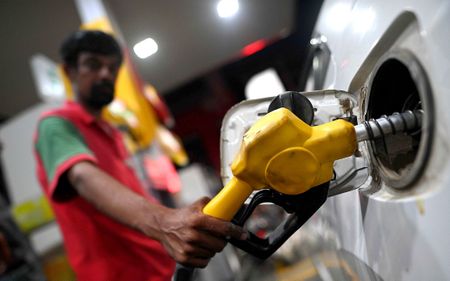
/file/attachments/orphans/GettyImages-1239465944_804110.jpg "South African motorists will pay 14% more for petrol and almost 24% more for diesel from Wednesday, 6 May 2026. (Photo: Dwayne Senior / Bloomberg via Getty Images)")
That shock of course came at the end of February with the launch of the US and Israeli attacks on Iran, and the chaotic disruptions to fuel and the supplies of other critical products that have subsequently unfolded. South African petrol prices in May have surged 14% to almost record highs.
Consumer inflation in March was 3.1% on an annual basis, but that was before the hefty April and May hikes in domestic fuel prices triggered by the Iran conflict.
“We are experiencing the biggest jump in fuel price inflation in the history of inflation targeting. Fuel is going from deflation to double-digit inflation. There is no doubt this is a large shock. Whether we will see multiple shocks is less certain,” the governor said.
Multiple shocks could include soaring prices for a wide range of goods and services that must be transported with internal combustion engines and heightened wage demands as households struggle to make ends meet – all factors that would pull “inflation expectations” well above 3.0%.
The governor – driving home a point he has made before – said that policymakers needed to look through first-round effects over which they had no agency to focus on second-round effects such as wage adjustments and accelerating retail price spikes.
He also said that “policymakers should respond pre-emptively” – a clear signal that Sarb will raise interest rates if it concludes that tighter monetary policy is required to curb inflation.
Kganyago noted the spectre of rising food prices because of disruptions to fertiliser and diesel supplies caused by the Iran war and the prospects of the looming El Niño, which could scorch SA’s grain fields next summer.
“Persistently higher food inflation on top of the fuel shock would pose serious risks to inflation expectations,” the governor said. “In our next few meetings, we will have to make tough decisions about whether second-round effects are coming or whether we have enough space to look through. As ever, we are not going to pre-commit to a path and give up optionality.”
In layman’s terms, that means Sarb’s Monetary Policy Committee has a tough balancing act ahead, but is not going to publicly commit to a stance in advance.
But it is gin clear that rates are not coming down this year and that the next move will be up from the current policy or repo rate of 6.75% and the prime rate of 10.25%. While Sarb keeps its monetary policy cards close to its chest, it does not always have the best poker face.
At the last Monetary Policy Committee meeting in March, it outlined two scenarios that deviated from its initial baseline with unchanged rates: one in which the Iran war lasted only two months, the other based on a prolonged conflict.
“In both scenarios, inflation is higher, exceeding 4% in the first version and 5% in the second. Both call for higher interest rates this year, with one hike in the first scenario and several more in the other,” the committee’s statement said at the time.
Higher interest rates this year
Given how events are unfolding, it all adds up to higher interest rates this year. Perhaps not at the next Monetary Policy Committee meeting later this month, but it is now a question of when, and not if.
In his Rhodes lecture, the governor said the point of these exercises “is to clarify the reaction function, so our stakeholders can then watch how events unfold and understand how we are likely to respond”.
The spoor where all of this is leading is as obvious as a fresh elephant track in a mud hole.
On another trail, the spoor all points to the Trump administration and its sidekick Israel, which have blown Sarb’s projected trajectories from early this year to smithereens.
“It is unfortunate that this shock is hitting during the transition to the new, lower inflation target. Until now, that transition was going about as smoothly as we could have hoped. It seemed we were going to complete the disinflation soon, perhaps this year. Now this process will take longer,” the governor said in his concluding remarks.
“If we do have to raise rates, it will be to sustain low and stable inflation, and all the benefits that brings. The lower target helped give us lower borrowing costs and a stronger rand. Some of those gains were reversed with the shock, but not fully and not for long. These gains are valuable and we do not intend to lose them.”
The bottom line is that 3% remains the target, and while bedding it down there will take longer than expected, as far as Sarb is concerned, it remains cast in stone. DM