



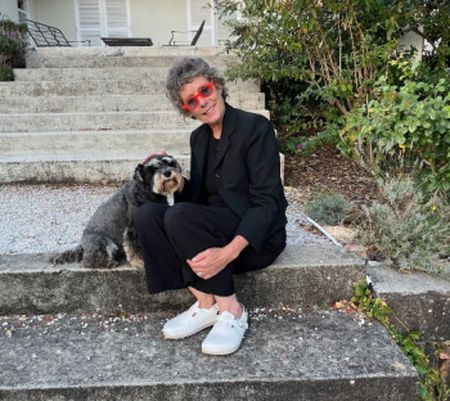
 Advocate Kgomotso Moroka, who spelt out at the Khampepe Commission the Department of Justice’s stance on the NPA. (Photo: Thulamela Chambers / Wikipedia)
 Anton Ackermann and his boss, the then National Prosecuting Authority (NPA) head, advocate Vusi Pikoli, might have believed the organisation they worked for was independent and immune from political interference, but this was not strictly true.
This was set out at the Khampepe Commission of Inquiry into delayed Truth and Reconciliation Commission (TRC) prosecutions on Friday by advocate Kgomotso Moroka, for the Department of Justice, while cross-examining Ackermann on his interpretation of the law.
While Pikoli, together with his predecessor, the inaugural NPA head, advocate Bulelani Ngcuka, and Ackermann, were all firmly of the opinion that the NPA was being “held to ransom by former [apartheid] generals”, their legal interpretation of the authority’s powers and independence complicated matters in the early 2000s.
Political interference
In 2004, Brigitte Mabandla became the minister of justice and constitutional development, and cases that the TRC had recommended for investigation were transferred to the newly established Priority Crimes Litigation Unit (PCLU), which Ackermann headed.
/file/attachments/orphans/000044435_968130.jpg "Former justice minister Brigitte Mabandla. (Photo: Felix Dlangamandla)<br>")
Ackermann — along with other witnesses and the families of victims who have brought this decades-old matter back into the open — has alleged that there was “political interference” in halting these prosecutions.
Dr Silas Ramaite, former acting Special Director of Prosecutions, testified that Mabandla instructed him to freeze all prosecutions stemming from the TRC. According to Ramaite, Mabandla informed him that a newly formed Amnesty Task Team (ATT) would now oversee these cases, and he was to await their “mandate” before proceeding. This structure, established under the Mbeki administration, required the National Director of Public Prosecutions to act on the ATT’s recommendations — a move Ramaite, along with colleagues Pikoli, Ngcuka and Ackermann, condemned as executive overreach.
Independence vs impartiality
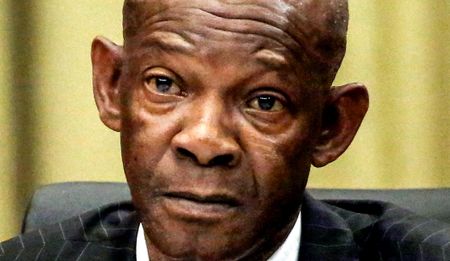
While subsequent heads of the NPA, including Shamila Batohi, have all campaigned for greater independence, the law currently requires the authority to act “without fear, favour or prejudice” and not necessarily “independently”.
/file/attachments/orphans/ED_604128_881105.jpg "Shamila Batohi testifies at the Khampepe Commission on 15 April. (Photo: Fani Mahuntsi / Gallo Images)")
Moroka asked Ackermann what he made of the “current” NPA’s assertion at the inquiry that there had been no political interference, to which he replied, “They do not know the facts.”
Moroka referred to section 179(4) of the Constitution, which states: “National legislation must ensure that the prosecuting authority exercises its functions without fear, favour or prejudice,” while subsection 179 (5a) requires “that this must be determined with a concurrence of the Cabinet member responsible for the administration of justice and after consulting the directors of public prosecution policy, which must be observed in the prosecution process”.
“May,” was Ackermann’s response to the word “must” in the final sentence.
“I am just letting you know that there is a provision that gives the minster overall responsibility for the office,” Moroka pointed out to Ackermann.
Legal tangle
Moroka noted that the National Prosecuting Authority Act 32 of 1998 ratified section 179 of the Constitution, which endorsed the NPA as the country’s “sole prosecuting authority”.
Earlier, advocate Makhosi Gwala, representing the NPA, said that no one had asked Ackermann not to specifically prosecute those responsible for planning the 1989 poisoning of the Rev Frank Chikane.
Ackermann replied that he had received the information from his boss, Ramaite, after Mabandla had heard that the prosecution of former police minister Adriaan Vlok and police commissioner Johan van der Merwe would take place in November 2004.
Advocate Howard Varney, for the victims’ families, noted that while the Constitution and the Act may have made room for “consultation” with the minister, section 32 (1) also made the provision that “no organ of state and no member or employee of an organ of state nor any other person shall improperly interfere with, hinder or obstruct the prosecuting authority or any member thereof in the exercise, carrying out or performance of its, his or her powers, duties and functions”.
Ackermann said he was familiar with this section and that he had believed Mabandla’s instruction to Ramaite had been inconsistent with this.
“She hindered me prosecuting the Chikane matter,” said Ackermann, adding that the minister had also “put a stop to all prosecutions”.
However, section 179(6) of the Constitution further set out that “the Cabinet member responsible for the administration of justice must exercise final responsibility over the prosecuting authority”, Moroka pointed out to Ackermann.
Apex decision
These differing interpretations of how to apply the legal instruments of the state and state power culminated in a Constitutional Court challenge in 2011. The case contested the legislation that disbanded the Directorate of Special Operations (Scorpions) and replaced it with the Directorate for Priority Crime Investigation (Hawks).
This legal battle had its origin in April 2008, when the Cabinet approved the dissolution of the Scorpions and shifted political oversight of the newly formed Hawks to the minister of police.
Deputy Chief Justice Dikgang Moseneke and Justice Edwin Cameron, in the matter now known as “Glenister Two”, noted that anti-corruption state machinery needed to be “repaired” as it failed to secure a degree of independence for the Hawks.
The South African government had an international legal obligation which required the creation of an independent anti-corruption unit, both the minority and majority judgments in Glenister Two noted.
At his first media appearance in March, after being appointed as head of the NPA, Mothibi highlighted that restoring the NPA’s independence was central to rebuilding trust and capacity and revealed that a draft amendment to the NPA Act would be tabled in Parliament in the next financial year.
“I have been in discussions with the Ministry of Justice and Constitutional Development on this subject, and I am pleased to say that the ministry and department are fully supportive and have committed to drive the legislative reform process,” said Mothibi. DM