



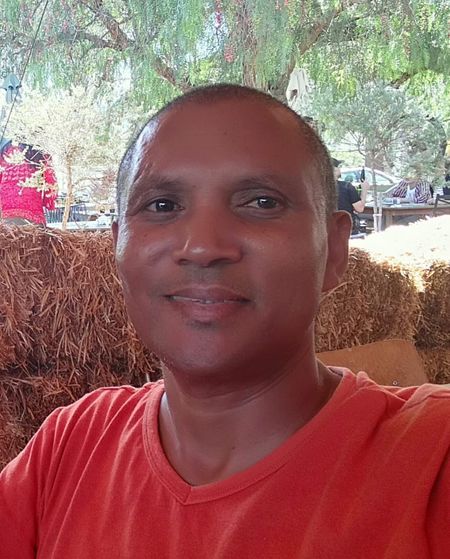
 Suspended Tshwane CFO Gareth Mnisi testifies at the Madlanga Commission of Inquiry in Pretoria. (Photo: Gallo Images / Frennie Shivambu)
The first blow to the suspended City of Tshwane CFO Gareth Mnisi came on Monday, 20 April when Madlanga Commission of Inquiry commissioner, advocate Sesi Baloyi SC, asked him if he had been aware of the multiple warning signs that suggested possible interference in procurement processes.
Baloyi dismissed Mnisi’s denials of tender rigging and asked the suspended CFO why he had been directly approached to assist a particular bidder.
This was a red flag in itself.
/file/dailymaverick/wp-content/uploads/2025/09/ED_575109.jpg "Commissioner Sesi Baloyi SC at the Madlanga Commission of Inquiry on 25 September 2025. (Photo: Gallo Images / Frennie Shivambu)")
Baloyi told Mnisi that he was aware that Tshwane deputy mayor Eugene Modise had also been approached for the same purpose.
Following up, Baloyi asked Mnisi if he was aware that suspended Tshwane Metro Police Department (TMPD) deputy chief Umashi Dlamini had allegedly distributed lists of companies earmarked for preferential treatment, and that bid evaluation committee chair Victor Kgopa had purportedly been given “mandates” in relation to the procurement process.
‘Why did you do nothing?’
“My question, CFO, is this,” Baloyi pressed. “Why did you do nothing about it?”
Both Mnisi and city manager Johann Mettler, Baloyi said, bore responsibility for safeguarding the integrity of the procurement system and that inaction, in the face of such evidence, asked serious questions about accountability within the highest echelons of the metropolitan municipality.
Evidence before the Madlanga Commission has painted a troubling picture of tender processes, in particular a 2016/17 tender for security services to protect property, assets and personnel at the TMPD. The commission heard of alleged irregularities, missing documentation and a series of legal challenges. Despite these concerns, the contract was ultimately renewed in 2025.

Central to the inquiry is the manner in which companies such as Ngaphesheya Construction, which is owned by police sergeant Fannie Nkosi’s brother Bheki, Elshaddai Security Services and Gupis85 Solutions, were among seven firms awarded the tender, which involved the monitoring and prevention of illegal land and building occupations, as well as the demolition of unlawfully erected structures in the City of Tshwane.
Messages link Dlamini, Nkosi and
Mnisi to alleged tender interference
A series of WhatsApp exchanges placed before the commission by evidence leader, advocate Matthew Chaskalson, dealt another blow to Mnisi’s testimony.
The messages could indicate coordination when Umashi Dlamini, Nkosi and Mnisi allegedly acted together to influence the tender process.
A message from Mnisi to Nkosi read: “Thank you I’m on top of it”.
/file/attachments/orphans/ED_600810_109750.jpg "SAPS Sergeant Fannie Nkosi testifies at the Madlanga Commission of Inquiry in Pretoria on 18 March 2026. (Photo: Gallo Images / Frennie Shivambu)")
Mnisi told the commission that this particular response to Nkosi was nothing more than frustration caused by the volume of messages he had been receiving, and that he had decided to “play along”, “huffing and puffing”, and not engaging directly.
This explanation did not sit well with commission chair Mbuyiseli Madlanga, who challenged Mnisi’s account.
“You do not come across as a weak person,” Madlanga said. “You are effectively asking me to make an improper inference at this stage. I suggest that you were cooperating with Nkosi, names were provided, and you asked for names.”
Chaskalson turned his focus to messages relating to Ngaphesheya Construction, Elshaddai Security Services and Gupis85 Solutions. He referred to at least four instances where Nkosi sent Mnisi lists of prospective bidders on 11 March 2025.
/file/attachments/orphans/ED_586833_394406.jpg "Madlanga Commission evidence leader Matthew Chaskalson. (Photo: Gallo Images / Frennie Shivambu)")
Chaskalson sketched out a pattern of communication where exchanges between Mnisi and Dlamini appeared to be channelled through Nkosi, a point Mnisi ultimately conceded to.
Another striking exchange related to a list of seven companies. In the messages, Dlamini referred to “the red berets” and asked Nkosi to confirm if this was the same list given by “Juju”, a reference Mnisi accepted as being to Julius Malema.
Mnisi, however, denied ever receiving such a list from Malema. He told the commission that Dlamini may have assumed he had been given one, but maintained that no such list had ever been provided to him.
Sharing confidential information
Mnisi was also asked about his apparent sharing of internal information with Nkosi. Evidence suggested that Mnisi discussed delays in payments due to Gupis85 Solutions.
The exchange raised concerns about whether confidential financial information had been disclosed to someone with no formal role within the City. Nkosi had not been employed by the City of Tshwane.
In a WhatsApp message sent by Mnisi to Nkosi on 6 March 2025, he wrote: “Please extend my gratitude to Dlamini, he has delivered. Purchase orders as per request have been approved.”
Those purchase orders, the commission heard, were valued at between R12-million and R13-million. Commissioner, advocate Sandile Khumalo, questioned why Mnisi was involving Nkosi in matters relating to invoices of such significant value, suggesting it pointed to a deeper level of engagement than Mnisi had acknowledged.
‘Conflict of interest’
On 24 April 2025, a WhatsApp message allegedly written by Mnisi to Nkosi said: “Ngaphesheya is Grade B security guards and not Grade A as required.”
Mnisi has vehemently denied having Ngaphesheya Construction at his disposal, and insisted that the message was sent after reading a document that had been placed before him.
Commission chair Madlanga then asked if this was a potential conflict of interest. He questioned whether it was appropriate for Mnisi to be assisting Ngaphesheya in relation to a tender, even if, as Mnisi contended, it concerned a different tender and another municipality, while the same company was simultaneously competing for work within the City of Tshwane.
/file/dailymaverick/wp-content/uploads/2025/09/ED_573762.jpg "Madlanga Commission chair Justice Mbuyiseli Madlanga (left). (Photo: Gallo Images / Alet Pretorius)")
Madlanga pressed the point further, pointing out that Mnisi, as chair of the bid adjudication committee, would be an adjudicator in Tshwane’s own tender process. Did this not create at least the appearance of a conflict of interest, Madlanga asked.
In response, Mnisi denied that the exchange constituted a conflict of interest, insisting it had no connection to the City of Tshwane.
He maintained that he did not review any attachments or engage with the full tender documentation, but merely looked at a “raw” description and offered a limited view on a specific aspect.
Mnisi argued that his input amounted to informal advice, given in the same way one might seek guidance from a professional such as an attorney.
He further stressed that, at the time, the tender in question had not yet closed and that he was not involved in that particular process.
Madlanga took issue with Mnisi’s explanation, describing it as an unduly narrow view of what constituted a conflict of interest.
“For a CFO, that is a very narrow understanding,” Madlanga said. “By agreeing to assist, you establish a relationship with that entity and, in effect, contribute to the preparation of its bid. At the same time, that very entity is competing in a tender process over which you will ultimately preside.”
He pointed out that Mnisi, as chair of the bid adjudication committee, would be involved at the final stage, making recommendations to the municipal manager on whether the contract should be awarded.
“You are effectively adjudicating a process in which an entity you assisted is a participant, yet you say there is no conflict of interest. In my view, that is an overly narrow interpretation of what a conflict of interest entails,” he said. DM
Comments
Scroll down to load comments...