



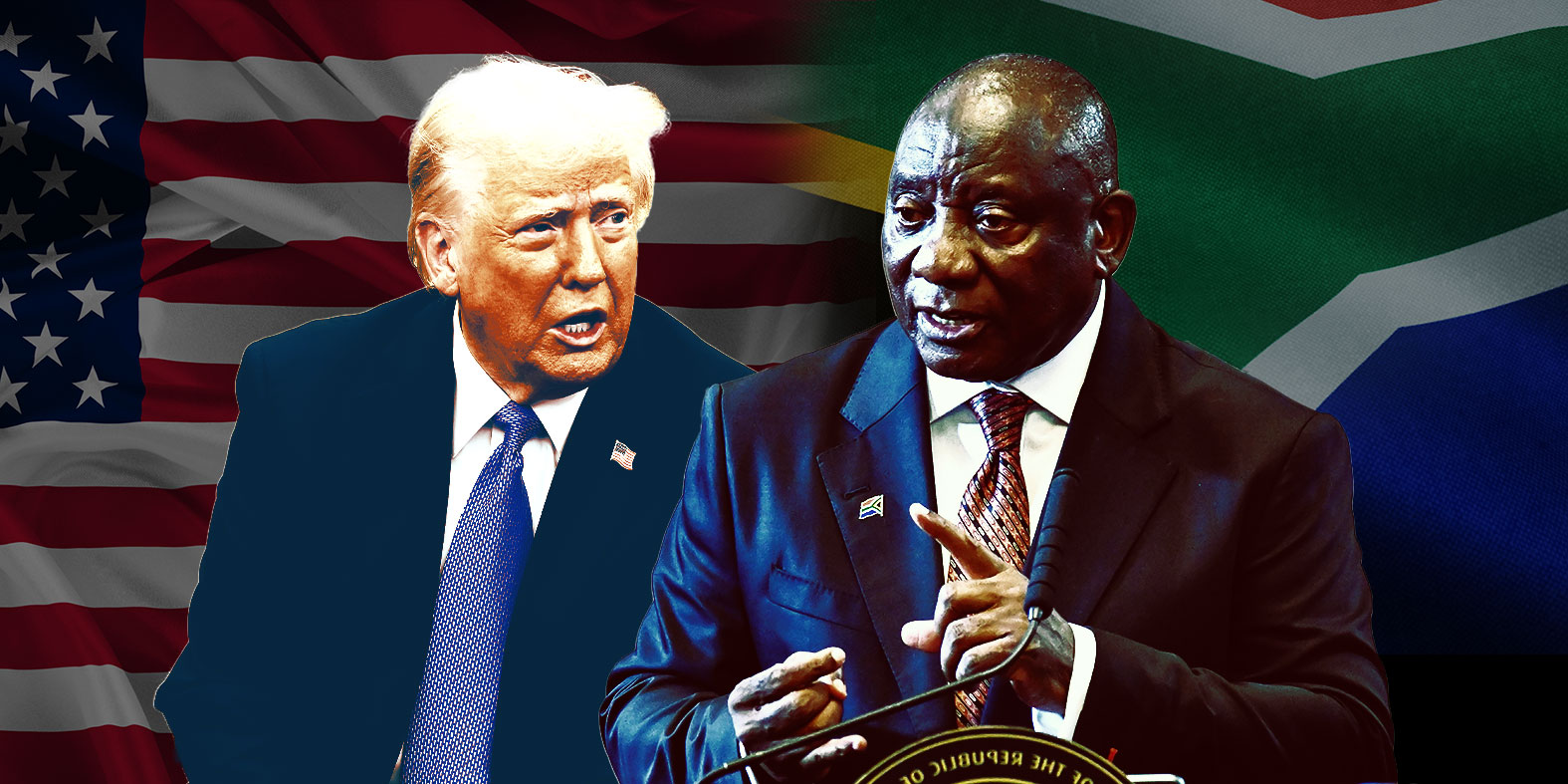
 Illustrative image, from left: US President Donald Trump. (Photo: Anna Moneymaker / Getty Images) | South African President Cyril Ramaphosa. (Photo: Gallo Images / Jeffrey Abrahams) | Flags (Image: Freepik)
 President Cyril Ramaphosa has chosen an ambassador to the United States to fill the hot seat that has been empty for more than a year, but the government is not revealing the name of the candidate.
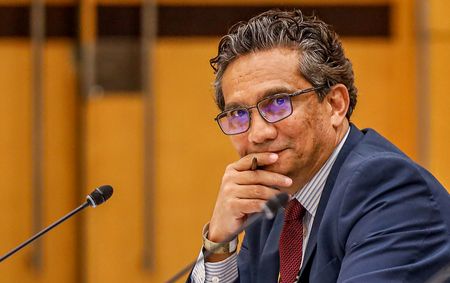
The selection was confirmed by Zane Dangor, director-general of the Department of International Relations and Cooperation (Dirco). He said he could not reveal the name of the person until all the formalities of the appointment had been completed.
“So there will be an ambassador quite soon, and it will be the kind of person who I think is ideally suited for the environment,” Dangor told the Cape Town Press Club on Monday, 13 April.
/file/attachments/orphans/ED_587250_295523.jpg "Dirco director general Zane Dangor said President Cyril Ramaphosa had chosen a candidate for SA’s ambassador to the US, but would not reveal who. (Photo: Gallo Images / Sharon Seretlo)")
The ambassadorship in Washington has been vacant since the US expelled Ebrahim Rasool in March 2025 after barely three months in the job because he implied in a public webinar that US President Donald Trump was a white supremacist.
Ramaphosa’s international investment adviser, Alistair Ruiters, a former director-general of the Department of Trade and Industry, as well as Andries Nel, Deputy Minister of Justice and Constitutional Development, have been tipped as possible ambassadors to the US. Colin Coleman, former CEO of Goldman Sachs, who currently lectures at Columbia Business School, has also been punted by some.
Their names have long been in circulation as possible appointees, and Ramaphosa could appoint an unexpected candidate.
Dangor added that the new ambassador would be competent in engaging the US on the outstanding issues South Africa still has with Washington. He noted that there were three baskets of such issues: domestic, foreign policy and trade.
“The most important issue unresolved is the domestic basket,” he said, evidently referring to domestic policies that the Trump administration objects to, such as black economic empowerment; expropriation of land without compensation; alleged persecution of white farmers and the Kill the Boer song, which the SA courts have ruled is a legitimate struggle song but which the US – and some South Africans – consider to be hate speech.
‘The hegemon’
Dangor nonetheless suggested that no one in the world was safe from what he called “the hegemon” – without naming the US or President Donald Trump – after what had happened in Iran and Venezuela over the past few months.
With the “guardrails completely gone”, he said, “who can be next, what stops any particular country anywhere from being subjected to the threat of the use of force?”
He said the “hegemon”, in kidnapping Venezuelan President Nicolas Maduro, attacking Iran and threatening to seize Greenland from Denmark, had abandoned the international rules enshrined in the UN Charter, which requires states to respect one another’s territorial integrity and sovereignty.
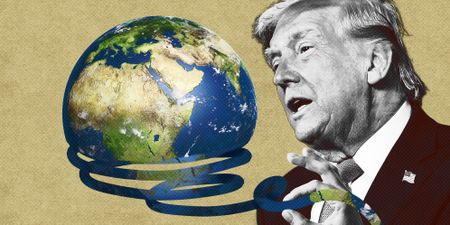
Dangor noted that the US was clear in its national security strategy, “that they are permitted to act in the way that they are acting”. This was because the Trump administration had reasserted the 19th-century Monroe Doctrine, now updated to the Donroe Doctrine, he noted, which asserts sole US influence over the Western Hemisphere.
“Essentially, it lays the basis for the US to act without regard for the UN and the norms of internationalism,” he said, adding that he was “not attacking the US, but simply describing the situation as it is”.
Dangor said the Global South was long accustomed to powerful states behaving hegemonically, but now other Western states were experiencing it too. This referred implicitly to Trump’s threats to seize Greenland and Canada.
G7 snub, G20 violation
He played down the decision by France not to invite Ramaphosa to its G7 summit in June, which some officials have attributed to pressure from Trump. Dangor stressed that SA was not a member of the G7 and did not feel entitled to attend G7 summits. He recalled that Japan had not invited Ramaphosa to its G7 summit in 2023.
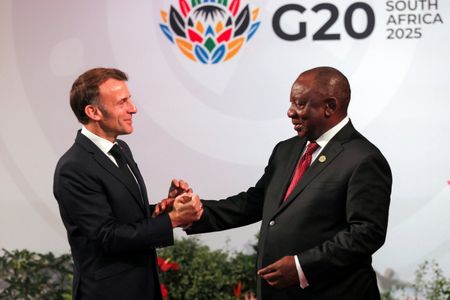
But Dangor insisted that as a full member of the G20, South Africa was entitled to attend its summits and said that France would raise the US exclusion of SA from its G20 meetings this year at the next meeting of G20 sherpas.
He noted that some other G20 members had already raised the issue, but said it would be raised again as this was a breach of the rules and called into question the status of this particular G20.
“Is it a full G20? Can you call it a G20 declaration if you have excluded a member? It doesn’t self-exclude as was the case last year [when the US boycotted SA’s G20], but it is actively excluded.
“So this is going to be a discussion. When you have countries at war in this period who are not excluded, and we are full G20 members, because you can only be excluded by consensus of all the members of the G20.”
Dangor said the South African government would meet the UK on Tuesday about issues which SA had raised during its G20 presidency and which the UK might need to take up during its expected presidency of the G20 next year. He noted that successive G20 presidencies from Italy, Indonesia, India, Brazil and South Africa had all focused on similar developmental issues, but there was “a bit of a gap this year” – because the US had dropped most of those issues from its agenda.
Tehran offers SA free passage
Dangor also disagreed with either Iran or the US blockading the Strait of Hormuz or exacting tolls for passage, saying that was a breach of the international law of the sea.
He confirmed to Daily Maverick that Iran had told Pretoria that it would allow safe and free passage of South African goods through the Strait. He noted that South Africa owned no ships traversing the Strait, but might be importing products such as medicines. The US began its blockade of the Strait on Monday, vowing to stop ships departing Iran, while allowing others to pass.
Dangor also defended SA’s friendly relations with Iran, including Tehran’s participation in a joint naval exercise in Simon’s Town in January this year.
The director-general said South Africa had criticised Iran’s violation of human rights and denying Iranians freedom of association and expression in protests.
He added that South Africa could not support a resolution at the UN condemning the suppression of protests “because we wanted an independent inquiry that would look at the totality of what happened. Because there were also indications that some of the protesters may have been armed”. This had not been agreed to by all the countries involved in the resolution.
Dangor also responded to the criticism by noting that Ramaphosa had ordered an official inquiry into why Iranian navy ships had been allowed to participate in the joint naval exercise, despite his instruction that they should not.
“So that’s not policy?” he was asked on Iran’s involvement. “It wasn’t a policy that was agreed to,” he replied.
Middle powers
Dangor disclosed that South Africa was already taking up Canadian Prime Minister Mark Carney’s suggestion that middle powers across all blocs that respected human rights and international rules should talk to one another and work more closely together in a world “ruptured” by big powers breaking UN rules.
He noted that South Africa and Finland had already co-hosted a side event at the UN as far back as 2023, with this goal. SA is now working with the Canadians and others.
He said South Africa refused to imitate the big powers by engaging in “realist” (read, selfish) politics, nor would it keep its head down, as that would be tantamount to appeasement of hegemons who disregarded international laws, norms and human rights.
“What is necessary is to build a collective of states and ideas who work on the institutions that will protect us all.” DM
Correction: An earlier version of this article said Colin Coleman currently lectures at Yale University. He has left Yale and teaches at Columbia Business School. (Updated: 14 April 2026)
Comments
Scroll down to load comments...