




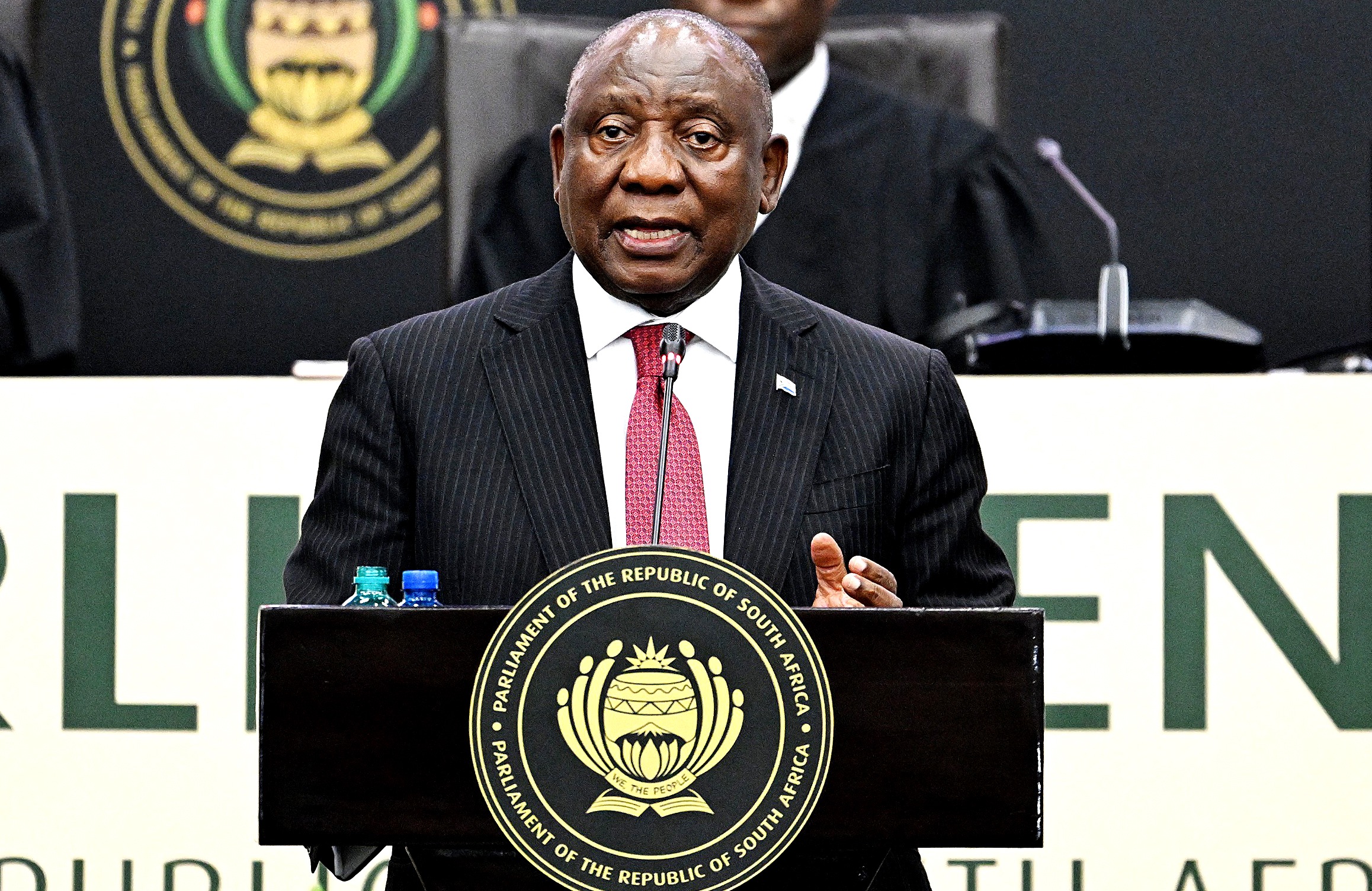
 President Cyril Ramaphosa has signed the Public Service Amendment Act into law, marking a significant reform to shift administrative authority from political office-bearers to departmental heads. (Photo: Phando Jikelo / RSA Parliament)
 /file/dailymaverick/wp-content/uploads/2025/10/label-analysis-2.jpg)
In any democracy, one of the most fundamental tensions lies in the degree of control elected officials exert over government departments — specifically regarding their management, leadership and the awarding of contracts.
Even in the US, the world’s oldest continuous constitutional republic, there are still arguments about whether President Donald Trump should have the right to remove officials in departments as diverse as the Justice Department, the Federal Reserve and the military.
To put it simply: granting election winners absolute authority over the state risks turning politics into a system of patronage, where power is maintained through the exchange of positions and public funds. Conversely, denying elected officials any control over the bureaucracy renders elections meaningless, effectively nullifying the democratic will of the people.
It is obvious that the system we have had up until now, where politicians have been able to appoint officials and thus control the administration, has failed us.
During the apartheid era, the National Party insisted that its members make all the big decisions in government. As Hans Strydom and Ivor Wilkins’ book, The Super Afrikaners, detailed, only members of the Broederbond were allowed in certain positions (according to legend at the time, perhaps the only significant Afrikaner who did not belong to that organisation was the head of the SA Rugby Union, Danie Craven).
Politicisation on repeat
When the ANC came to power in 1994, it was only natural that it would want to do the same.
The motive was clear: when the government has been used as a tool of oppression against you for generations, you ensure it can never happen again by occupying every key position. However, the dismal state of service delivery in eight of our nine provinces today proves that this consolidation of power has not translated into progress for the public.
As the executive director of the New South Institute, Ivor Chipkin, explained this week, there is a very high cost to the politicisation of services.
Using the police as an example, he noted that before the 1990s, black South Africans rarely sought police assistance as the police were seen as a tool of state repression. This shifted after 1994, with a rise in black South Africans reporting crimes and asking for assistance from the police.
However, this progress stalled after 2000 as the SAPS became deeply politicised. The tenure of National Commissioner Jackie Selebi — marked by his ties to drug traffickers, his role in the controversial removal of National Prosecuting Authority head Vusi Pikoli, and his eventual criminal conviction — shattered public confidence, leading many to once again stop calling the police for help.
/file/attachments/orphans/000075743_558735.jpg "The former commissioner of the South African Police Service, Jackie Selebi, on 8 June 2007. (Photo: Leon Botha / Beeld)")
At the same time, as Jonny Steinberg recently explained, bribery, corruption and incompetence became the order of the day.
This systemic rot, evidenced so clearly by the testimony before the Madlanga Commission, is no longer the exception; it has become the rule throughout the public sector.
Pauli van Wyk and Micah Reddy have explained in the book “Malema: Money. Power. Patronage” how someone like Julius Malema, who is not an elected official with power over a department, has been able to influence contracts.
Malema received money in his bank account from a fuel firm tendering for a contract in Tshwane.
He has been performing acts of a similar nature for a long time, since at least when now Deputy Police Minister Cassel Mathale was the premier of Limpopo, but has somehow avoided a criminal trial for doing so.
Fundamental reform
The Public Service Amendment Act will bring major change — politicians will no longer have the power to make appointments in their departments. They will set policy, but it will be up to government workers to implement it.
This means that public servants will now be professionals, appointed to their positions (by other government officials) based on their competence, rather than on their political connections.
The importance of this cannot be overstated; it transforms the government into a results-driven machine where performance — not political connections — determines an official’s tenure.
It also means that when, for example, a figure like National Police Commissioner Fannie Masemola is told by a police minister to shut down a Political Killings Task Team, it will no longer be “career-limiting” to defy an instruction that is clearly unlawful.

However, as any observer of our society will know, signing something into law doth not make it so.
This reform, as fundamental as it may be, was signed into law and announced during a long weekend. Considering that President Cyril Ramaphosa has frequently said that his main agenda is reforming the state, this is slightly surprising.
The ANC’s weakened state is probably the primary catalyst for this reform. If the party still held more than 50% of the vote, those within its ranks who benefit from the status quo would have almost certainly succeeded in stifling the legislation.
As the ANC’s grip on power loosens, its members are probably realising that the same broad appointment powers they once wielded could soon be turned against them. Consequently, they may have made the calculated decision that it is better to weaken incoming elected officials in advance of this change.
This is also a reminder that Ramaphosa occasionally prefers to reform by stealth. It might well be an indication of the real state of play in the party he leads.
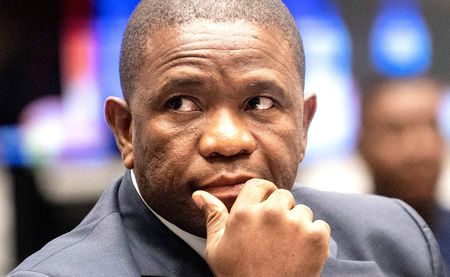
One of the primary people in charge of implementing the reforms will probably be the minister of public service and administration, Mzamo Buthelezi.
/file/dailymaverick/wp-content/uploads/2022/10/Inkosi-EM-Buthelezi.jpeg "The minister of public service and administration, Mzamo Buthelezi. (Photo: Supplied)")
Because Buthelezi is from the IFP, he may have more freedom of action than an ANC minister would, which could ensure that the new law is properly implemented.
But...
The end of the beginning
Old habits die hard. Because a vast number of current state officials owe their positions to political patrons, many are likely to persist in their established ways.
Decades of patronage have made political subservience instinctive for many in the civil service. While South Africa’s history is littered with well-intentioned laws that failed to deliver, this current reform feels different. We are witnessing an important, and perhaps fundamental, turning point.
The new legislation allows government officials to point to the law when given illegal instructions by politicians. It forces politicians to be aware that they are breaking the law when they issue illegal instructions.
This should lead to a change in the balance of power, removing some power from elected politicians.
And while it will not end corruption at a stroke, it has the potential to make a huge difference.
This is a moment that should be celebrated.
But it is only the end of the beginning. The next fight will be to ensure it is implemented properly and that pressure on politicians and government workers to do their duty is kept up.
Otherwise, very little will change on the ground. DM