



 (Image: reve.art)
 Once upon a time, there was an annual technology event that always had future-watchers trembling in anticipation. It delivered in spades. It was, of course, Steve Jobs at the annual Macworld event — where the iPod, the iPhone, the MacBook Air and the iPad were announced. Nothing since has quite matched the drama and glamour of those launches.
But these days, Jensen Huang of Nvidia gets reasonably close. Nvidia’s annual developers conference is called GTC (GPU Technology Conference). It's Nvidia’s flagship event where Huang typically unveils the company's major product and partnership announcements.
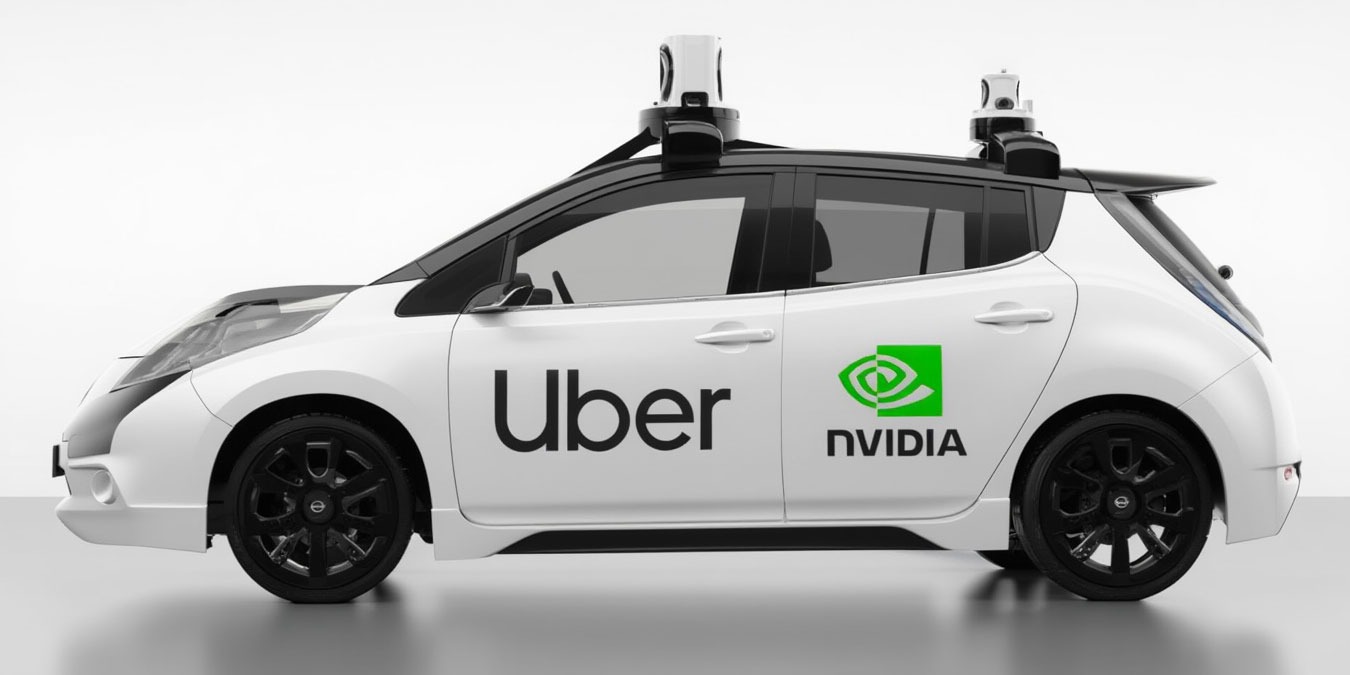
Huang delivered the keynote address on 16 March to a sold-out arena with 450 companies sponsoring the event, 2,000 speakers and 1,000 technical sessions. During that address, he dropped news that completely upended the autonomous vehicle race. It was the announcement of a partnership between Nvidia and Uber — the biggest name in AI infrastructure and the biggest name in ride-hailing.
It was not a demo, promise, or prototype. It was Nvidia entering the autonomous vehicle and robotaxi market alongside Uber, targeting 100,000 Level 4 autonomous vehicles deployed globally across 28 cities by 2028 — at Level 4, a vehicle can drive itself completely without any human input or oversight within a defined operational domain.
The announcement landed with the satisfying thud of a real industrial commitment. It also landed, rather less comfortably, on the livelihoods of somewhere between 30 and 50 million people worldwide who currently make their living driving for ride-hailing apps, which we will get to presently.
Uber will begin scaling its global autonomous fleet starting in 2027, targeting 100,000 vehicles and supported by a joint AI data factory built on the Nvidia Cosmos platform. Powering the fleet will be Nvidia’s Drive AGX Hyperion 10 platform and a new AI model called Alpamayo — a reasoning-based system built to handle the “long tail” of urban driving: the jaywalker, the illegally parked truck, the child chasing a ball into traffic.
Unlike traditional autonomous systems that require manual coding of rare scenarios, Alpamayo allows developers to describe situations in plain language, compressing development cycles from months to days. This is a critical difference between Nvidia and other autonomous vehicle players, underpinned by the massive leverage of Nvidia’s AI IP and expertise.
Huang told the capacity crowd at GTC, “Robotaxis mark the beginning of a global transformation in mobility — making transportation safer, cleaner and more efficient. What was once science fiction is fast becoming an everyday reality.”
Uber CEO Dara Khosrowshahi said the partnership lays “the foundation for an increasingly multiplayer AV world, ensuring broad commercialisation and helping to bring robotaxi service to more riders over time”.
Infrastructure
The deeper significance of this deal is not about taxis. It is about infrastructure. Nvidia is positioning itself as a core infrastructure layer across the entire ride-hailing category. Uber, which long ago abandoned any pretence of building its own autonomous technology, brings the other half: demand, routing, brand and global market access. Lyft and Bolt are also going to be using the Nvidia stack for their robotaxi roll-outs. And automobile manufacturers BYD, Geely, Isuzu and Nissan have also announced Nvidia technology integrations.
This deal has Nvidia trying to become not just a supplier, but a standard. If enough automakers, mobility platforms and fleet operators standardise around the same reference architecture, then autonomy will look less like a collection of bespoke moonshots and more like an industry with common rails. Once that happens, the value shifts. Hardware becomes easier to compare. Software gets stickier. And the company that sells the picks and shovels to all sides of the gold rush wins. Nvidia has already played this game in the world of AI compute and won handily.
The commercial implications are enormous. First, robotaxis cease to be only a technology challenge and become an infrastructure business – depots, charging, financing, insurance, utilisation, city permissions and rider demand. Uber is already investing more than $100-million in autonomous-vehicle charging hubs and says it partners with more than 20 firms worldwide on self-driving freight, delivery and taxi services.
Second, profit pools begin to migrate away from human labour and toward software orchestration and fleet management. Third, bargaining power starts to move to whoever sits closest to the customer and whoever controls the standardised autonomy layer. That is why this announcement matters — it suggests that the robotaxi business may end up looking less like a car business and more like cloud computing with wheels.
Who loses?
The commercial arithmetic is compelling for shareholders, less so for drivers. Human drivers currently cost Uber roughly 60 to 70% of every ride. Remove that, and the unit economics flip fast. If cost-per-mile drops to $0.80 (about R13.70) while ride prices hold at $1.50, the margin expansion at Uber’s scale of hundreds of millions of annual trips becomes extraordinary.
Existential for drivers
What is exciting for investors is existential for drivers. Uber alone had more than 8.8 million drivers worldwide as of mid-2025. DiDi has a fleet exceeding 15 million registered drivers across China. Add Lyft, Grab, Ola, Bolt, and the dozens of smaller regional platforms, and the global driver headcount sits somewhere between 30 and 50 million. Most are not full-time — 96% of gig workers work fewer than 35 hours per week. That matters for the displacement calculus — many of these are income supplements rather than livelihoods, which affects how disruptive the transition will ultimately feel.
The disruption is already measurable. According to Gridwise Analytics’ 2026 Autonomous Vehicle Impact Report, trips per hour fell by approximately 5.3% in AV-active markets in Q4 2025 compared with a 2.6% decline nationwide, with Los Angeles experiencing a nearly 10% year-on-year drop.
Khosrowshahi has not been coy about the long-run implications, saying at a Wall Street Journal event: “I think the human displacement here, while it’s not something that is going to happen tomorrow, is going to happen eventually. And it’s something we have to think about, society has to think about.” He is building the machine that will displace his own workforce — and saying so in public.
Tesla is the player most exposed by this change in shape. Elon Musk’s vision has always been imperial (and occasionally imperious). Tesla does not want to be one autonomous fleet among many, or a supplier to somebody else’s network. It wants to own the cars, the software, the economics and the mythology. There is still a serious Tesla case. Reuters reported in January that Tesla started robotaxi rides without safety monitors in Austin, and if its camera-heavy, lower-cost approach works at scale, it could be brutally competitive.
But there is also the awkward matter of reality. Reuters reported in February that Tesla logged zero autonomous test miles in California in 2025, had not applied for the permits needed for a real California robotaxi service, and remained far behind Waymo on the slow, boring business of regulatory accumulation. Tesla may yet have its “ChatGPT moment”, to borrow Travis Kalanick’s phrase, but Uber and Nvidia are building a world in which Tesla no longer gets to be the only grand narrative in town.
What happens now?
The Nvidia–Uber deal has created a credible 2027 deadline around which the entire industry must now orient itself — industry analysts will track cost per mile, fleet utilisation rates, and earnings data out of AV-active cities. If those numbers move the way the deal’s architects intend, the era of human-driven urban transport will recede quickly. For the tens of millions of people currently occupying that seat, as Khosrowshahi himself has acknowledged, this is something society has to think about.
The robotaxi race has now matured from a beauty pageant into a supply-chain battle. Uber and Nvidia have moved not only the goalposts, but the entire playing field — don’t just build a robotaxi; build the marketplace and the operating system on which robotaxis depend. If that works, the real winners of autonomy may not be the companies whose names are on the doors of cars. They will be the ones quietly collecting rent every time their underlying operating platforms are used. DM
Steven Boykey Sidley is a professor of practice at JBS, University of Johannesburg, a partner at Bridge Capital and a columnist-at-large at Daily Maverick. His new book, It’s Mine: How the Crypto Industry is Redefining Ownership, is published by Maverick451 in SA and Legend Times Group in the UK/EU, available now.