




 Nelson Mandela Bay Business Chamber CEO Denise van Huyssteen. (Photo: Facebook)
 The Nelson Mandela Bay Business Chamber has cautioned that the municipality is at risk of defaulting on payments to Eskom as losses from its electricity department approach a projected R1.7-billion this financial year.
Calling the situation dire, Business Chamber CEO Denise van Huyssteen said the crisis could ultimately render the metro insolvent and collapse municipal services.
The warning comes after the metro recorded electricity losses of R840-million and a investment portfolio reduced by R318-million in the first half of 2025/26.
With electricity failing to generate a profit, the city is covering the shortfall by dipping into its reserves.
Van Huyssteen said the municipality’s electricity trading losses and shrinking reserves were placing the metro’s financial sustainability under severe pressure.
She said an Eskom takeover of electricity distribution was one of the options the municipality needed to urgently consider, alongside authorising Eskom’s active partnering initiative to provide technical assistance.
A business environment under threat
Van Huyssteen said municipal service delivery had already deteriorated to the extent that the environment was no longer enabling for business.
“High-risk areas include the lack of safety and security, poor water management and unreliable electricity,” Van Huyssteen said.
She said that since 2023 the metro’s industrial areas had recorded 201 power outages, with power dips occurring almost daily, “forcing factories to halt production, miss export orders and put workers on short time or retrench them”.
Several factors at play
The electricity losses are caused by several factors, including meter tampering, failure to replace meters, vandalism and inherent technical losses in the electricity system, which should not exceed 6%.
The city needs to replace 25,000 meters for its amnesty beneficiaries – people who tampered with their meters but came forward after promises to replace their tampered meters without any punitive measures.
The city was forced to revise its projected revenue collection rate down from an initial 85% to 75% and has since procured four debt collectors to help it chase the cumulative arrears debt that was at R21.7-million from July to November 2025.
Van Huyssteen said electricity consumption losses were running above 27% — more than four times the acceptable technical threshold of 6% — and that the municipality had lost R1.4-billion on electricity in 2024/25, with the projected loss for 2025/26 at R1.7-billion.
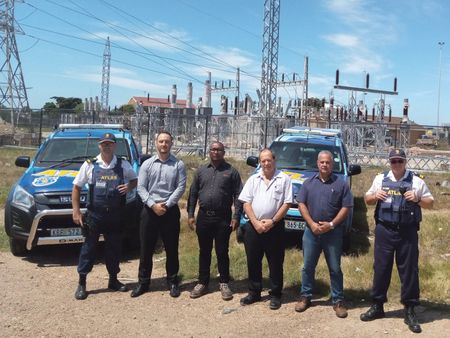
“Electricity used to generate a profit for the municipality, but it has become a loss-generating activity,” she said.
‘Urgent intervention needed’
“Given this deteriorating trend and the fact that the municipality is dipping into its reserves, it will eventually default on payment to Eskom. This is a very dire situation and requires urgent intervention.”
She warned that an Eskom default would not happen in isolation. Without a turnaround, the metro risked defaulting on all service providers – triggering a collapse of water, roads, cleaning and every other municipal service.
The warning echoes concerns raised by DA councillor Brendon Pegram, who said, “Nelson Mandela Bay is heading for a cash crisis with cash reserves now at its lowest level in more than a decade.
/file/attachments/orphans/WhatsAppImage2026-03-05at140956_394505_945876.jpeg "Nelson Mandela Bay DA councillor Brendon Pegram. (Photo: Andisa Bonani)")
“Continued financial mismanagement, wasteful expenditure and an electricity department that has incurred financial losses of R1.5-billion last year are strangling the financial life out of our metro.”
Pegram added that in the 2023/24 financial year “our cost coverage was enough to cover about five-and-a-half months of self-sustainability, but now we are sitting at 56 days — massively as a result of the electricity department. There’s no turnaround plan. We have been requesting it for the past three years, but they keep following the same pattern.”
He painted a broader picture of financial dysfunction, pointing to the loss of R1.2-billion in conditional grant funding intended for water, electricity, sewerage and transport infrastructure, a debtors book that had ballooned by R7.5-billion as fewer residents paid for services, and electricity losses that had increased by 400% over three financial years.
Electricity losses ‘not new’
The metro’s politics head for infrastructure and engineering Khanya Ngqisha said he agreed with the chamber that there was cause for concern over the city’s electricity department finances.
/file/attachments/orphans/Khanya1_552794.jpg "Nelson Mandela Bay metro’s politics head for infrastructure and engineering Khanya Ngqisha. (Photo: Supplied / Nelson Mandela Bay metro).")
“However, I want to dispel the notion that electricity losses are a new thing. They were there even during the DA’s administration. Of course, we have a responsibility to reach a point where we break even and actually make profit from electricity sales which is currently not the case.”
Ngqisha said that while the electricity unit faced challenges, he was against the idea of Eskom taking over the distribution unit.
“I disagree with the suggestion that Eskom should take over one of our functions. That is not going to happen. We just need to find a way to turn the situation around.”
He said the budget and treasury department had begun benchmarking itself against other municipalities to see how they managed financial viability.
“We need to look at other sources of revenue and not only rely on electricity sales and grant funding. For instance we have properties as a city where we get a fraction of their value in terms of income. We will conduct an audit of all municipal properties and determine their value so we are paid based on this. I know we will get lots of money from this exercise.”
Metro ‘adheres to Treasury turnaround strategy’
Acting executive director for electricity and engineering Bernhardt Lamour said the city was adhering to a compulsory turnaround strategy initiated by the National Treasury.
/file/attachments/orphans/BernhardtLamour_185605.jpeg "Nelson Mandela Bay acting executive director for electricity and energy Bernhardt Lamour. (Photo: Nelson Mandela Bay metro / Facebook)")
“It entails an intense process that if we get it right, we should get funding of about R200-million per annum from the total financial model of R4.5-billion. National Treasury wants us to restructure the directorate to be an independent trading service, which means it will be ringfenced to have its own finance, human resource and procurement teams and staff … we need to achieve certain milestones before the end of this financial year to unlock this funding.”
Lamour said they were in the process of appointing a contractor to help with reducing the losses, which was in the bid evaluation stage.
Most losses attributed to vandalism
Mayor Babalwa Lobishe said the business chamber was more interested in the city outsourcing the electricity function, which would benefit businesses.
“However, the distribution unit has not shown incapacity more than the losses being technical and non-technical. The majority of the losses are attributed to vandalism because we replace what we already have.”
Lobishe said they were expecting feedback from the special investigating unit (SIU) on a corruption case involving municipal officials.
/file/dailymaverick/wp-content/uploads/2025/08/ED_560569.jpg "Nelson Mandela Bay Executive Mayor Babalwa Lobishe. (Photo: Gallo Images / Die Burger / Lulama Zenzile)")
“[The municipal] officials are allegedly involved in ensuring that there are electricity trips so they can respond by appointing service providers aligned to them. To curb such occurrences, the city is considering expanding the SIU scope of investigation to also look into other suspicious areas that they picked up.
“We have managed to close some financial leakages in procurement, part of what perpetuates the losses [is] that we are not using a central system in the procuring of goods and services, so we are addressing this.”
Lobishe said the city might be faced with huge losses, but the situation wouldn’t remain for long, as they anticipated that the electricity directorate would have stabilised issues within the next six months. DM