



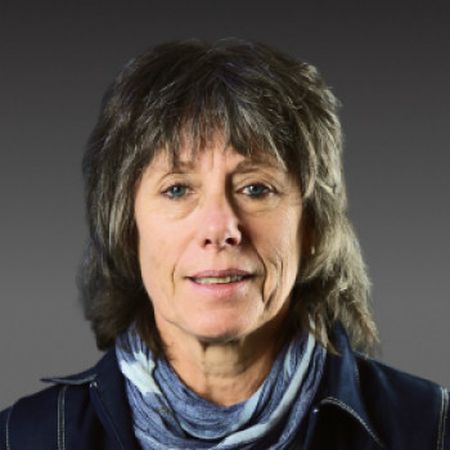
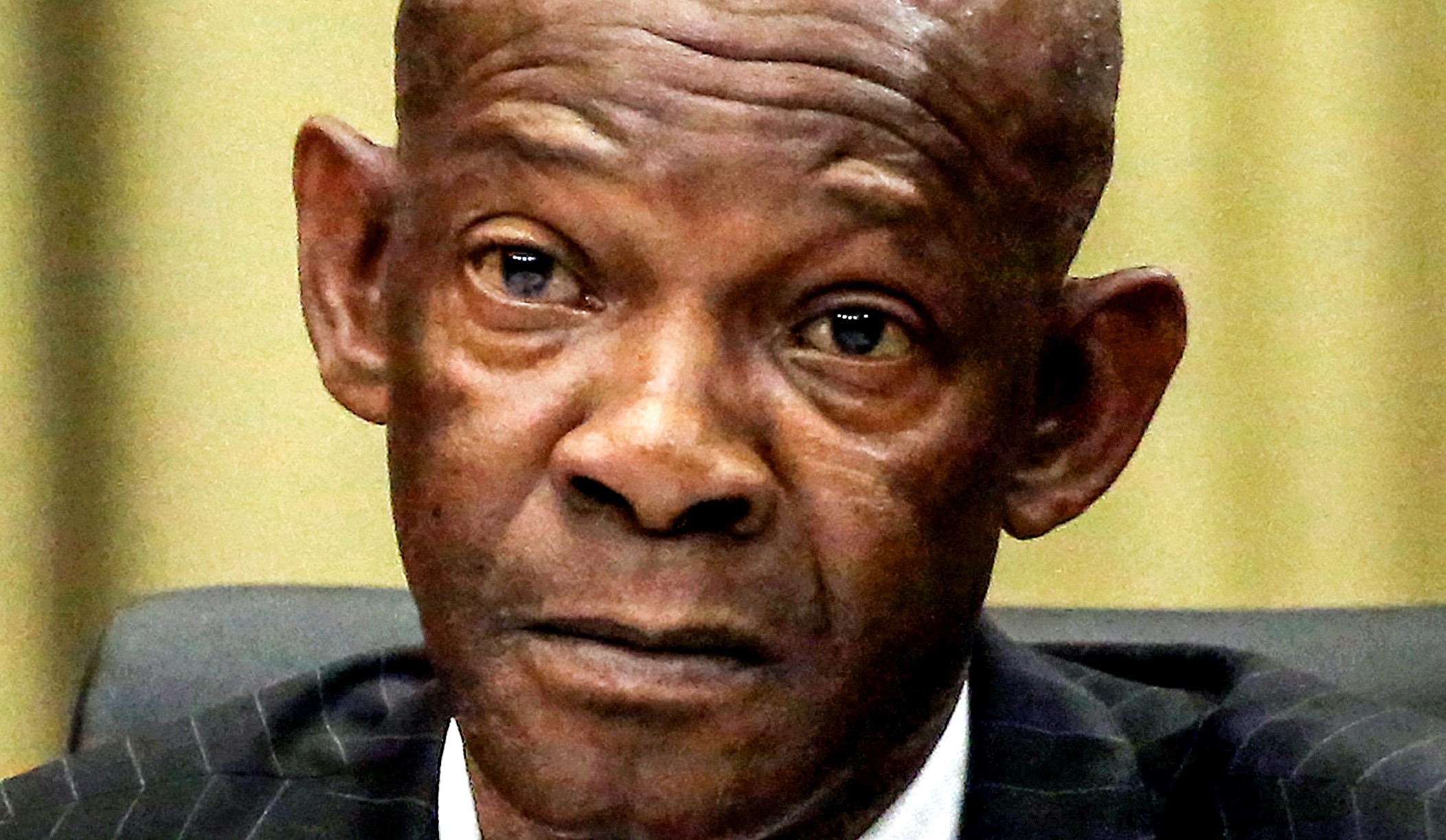
 Advocate Silas Ramaite, who testified at the Khampepe Commission that former justice minister Brigitte Mabandla halted prosecution efforts related to the Truth and Reconciliation Commission. (Photo: Phill Magakoe / Gallo Images)
Former high-ranking National Prosecuting Authority (NPA) official Dr Silas Ramaite testified on Monday that former justice minister Brigitte Mabandla had instructed him to halt all investigations stemming from the Truth and Reconciliation Commission (TRC).
At the resumption of the Khampepe inquiry into TRC prosecution delays, Ramaite also revealed that former national police commissioner Jackie Selebi had interfered with the work of the NPA, accusing it of seeking to target ANC leaders for prosecution.
Around 400 TRC-related dockets that were being investigated were suddenly “dumped” at the office of the Directorate of Special Operations (also known as the Scorpions) on the instruction of Selebi. These were later transferred to the National Director of Public Prosecutions, the inquiry heard.
“My response was that the dockets were still under investigation and that once complete we would take a decision whether to prosecute or not. I was not happy. It cut through prosecutorial independence,” said Ramaite.
Concerning Mabandla’s instruction to halt TRC investigations, Ramaite told the evidence leader, advocate Vas Soni, “I was surprised. I was not happy with the involvement of the executive.”
/file/attachments/orphans/ED_0143240_487320.jpg "Advocate Silas Ramaite during an interview for the position of National Director of Public Prosecutions at the Union Buildings on 14 November 2018. (Photo: Phill Magakoe / Gallo Images)<br>")
Outside mechanisms
Ramaite was appointed in 2001 as Special Director of Public Prosecutions by the then inaugural NPA head, advocate Bulelani Ngcuka. Ngcuka resigned in 2004 and was replaced by advocate Vusi Pikoli, who was suspended by President Thabo Mbeki in 2007.
Ramaite said that Mabandla had informed him in 2004 that an “outside mechanism”, the Amnesty Task Team, had been established to investigate TRC prosecutions. The task team consisted of senior officials from the NPA, the Department of Justice, the National Intelligence Agency (NIA), the SA Police Service (SAPS) and the South African National Defence Force.
Mabandla told him to “await a mandate” from the task team about the prosecution of TRC cases. Asked on Monday whether he should have defied Mabandla, Ramaite replied that, in hindsight, he should have acted differently.
Priority crimes
At the time, the Priority Crimes Litigation Unit (PCLU), headed by advocate Anton Ackermann and located within the NPA, had been tasked with preparing TRC cases for prosecution. These included the murder of uMkhonto weSizwe operative Nokuthula Simelane by security police and the poisoning of the Rev Frank Chikane. Ackermann and his team were working with a SAPS officer at the time.
/file/dailymaverick/wp-content/uploads/2023/06/ED_454147.jpg "The Rev Frank Chikane. (Photo: Luba Lesolle / Gallo Images)")
Ramaite told the commission that Selebi had suddenly withdrawn this support, which hampered progress. Thembi Nkadimeng Simelane, sister of Nokuthula, launched two applications in the high court (in 2007 and 2015), joining the widows and families of the “Cradock Four”, setting the scene for the later reopening of TRC cases.
Pikoli submitted to this landmark “Nkadimeng” litigation that he had “no doubt” that his “firm approach to pursuing TRC cases” had led to Mbeki’s decision to remove him from office in 2008.
Intelligence involvement
Working alongside Ackermann was advocate Chris Macadam, who deposed an affidavit that the intelligence operatives on the “task team” seemed more interested in cross-examining him about why matters should be investigated, “rather than addressing the outstanding cases”.
Mbeki had specifically instructed the NPA to work with the NIA to provide an opportunity for perpetrators who were prepared to cooperate to enter into “standard arrangements” accommodated in legislation.
Pikoli was unhappy with the involvement of the NIA, characterising it as a “portend” of intelligence agencies later “imposing their will on prosecutorial decisions”.
Selebi, Ramaite told the commission, had also refused to provide SAPS support for any of the TRC cases without a specific “presidential order”.
Ramaite reported to Pikoli in December 2006 that Selebi was attempting to force a “two-stage process” for TRC cases that would involve the task team making recommendations to a “committee of directors-general” rather than the National Director of Public Prosecutions directly. This was seen as further undermining prosecutorial independence.
In 2024, Mbeki challenged the NPA to bring evidence that his administration had issued an “illegal instruction” to halt the work. He also denied violating the constitutional independence of the NPA.
/file/attachments/orphans/0000109706_775612.jpg "Former police commissioner Jackie Selebi outside the high court in Johannesburg on 9 March 2010, where he was facing charges of corruption and defeating the ends of justice. (Photo: Bongiwe Gumede / Gallo Images / Foto24)")
Puzzled
Mabandla was appointed as minister of justice and constitutional development by Mbeki and served in the portfolio between 2004 and 2008.
During that period, the NPA was prosecuting Dr Wouter Basson — a cardiologist and former head of SADF special operations — while simultaneously investigating the 1989 poisoning of Chikane and the activities of AWB leader Eugene Terreblanche.
Ramaite told the inquiry that in November 2004 he had learned that Jan Wagenaar, who was representing the accused in the Chikane matter, Major General Christopher Smith, Gert Otto and Johannes Van Staden, had contacted Ackermann.
“Wagenaar told him he would be getting a call from the Ministry of Justice advising him not to proceed against the case and that the prosecution should be put on hold,” said Ramaite.
He said he had been puzzled as to why the legal representative for the accused had contacted Ackermann. Mabandla later told him to put the investigations on ice.
The three suspects were about to be arrested when the instruction from Mabandla came, said Ramaite. It was clear, he said, that the instruction pertained not only to the Chikane matter but to all TRC cases.
Major General Philip Jacobs, who played a significant role in the handling of the TRC cases, had made it “abundantly clear” in 2006 to Pikoli that he was not to act “independently without permission of other departments on the task team”.
After Pikoli’s departure, Mokotedi Mpshe was appointed by President Jacob Zuma as acting National Director of Public Prosecutions, after which Ackermann was “relieved of his duties”.
This had not been discussed with him, said Ramaite, and he was “surprised” by the axing, as Ackerman “was the lawfully appointed head of the special directorate responsible for the PCLU by the act of presidential proclamation”. Ramaite had appointed Ackermann to the position and told the inquiry he had been “very satisfied with his work”.
He had not confronted Mpshe about the sudden release of Ackerman, as “the aura and the atmosphere” at the NPA had not been conducive to this. He said confronting Mpshe would have been “career-limiting”. DM