




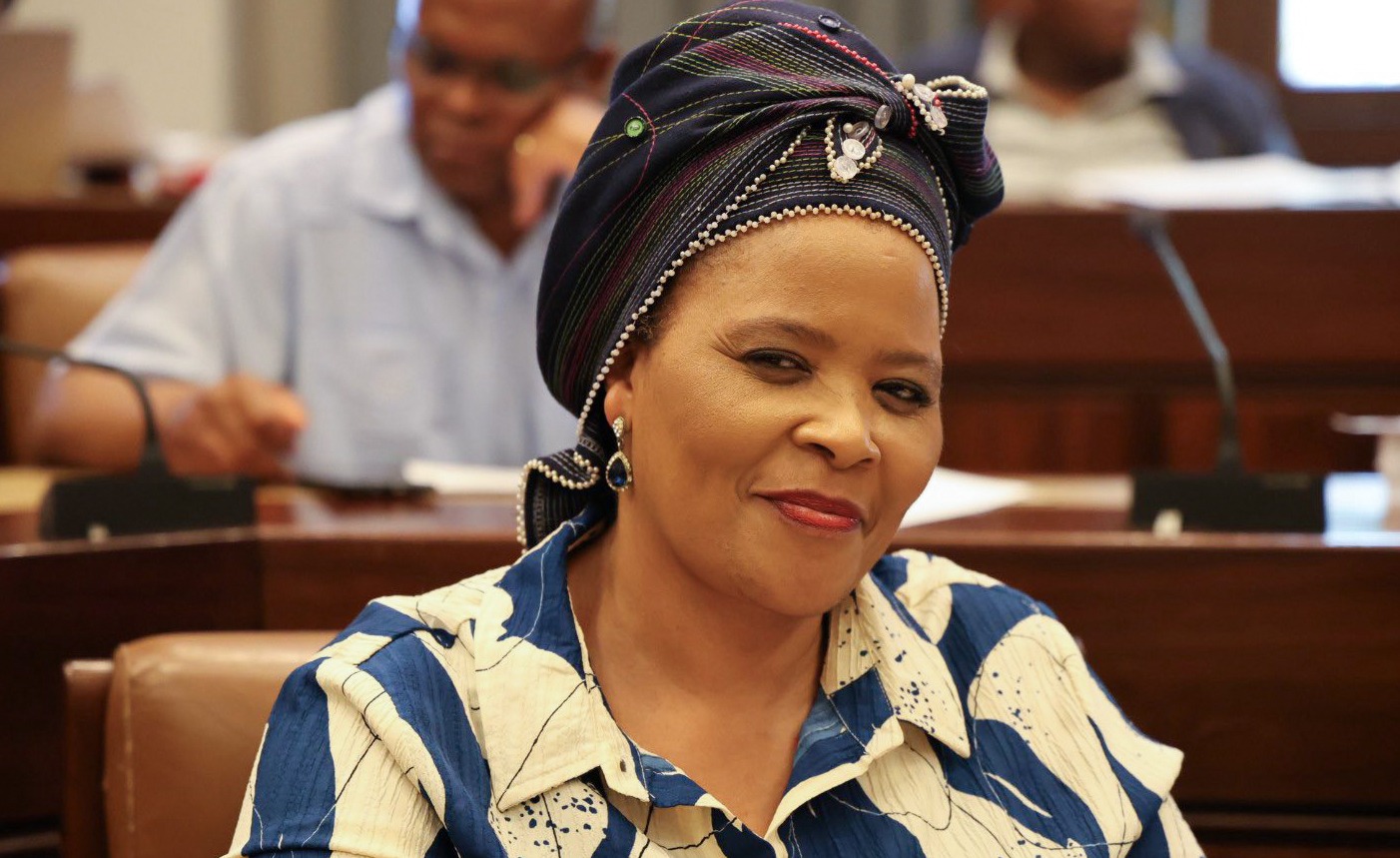
 Buyelwa Mafaya, the mayoral committee member for infrastructure and engineering in the Nelson Mandela Bay Metro. (Photo: Facebook / Nelson Mandela Bay Municipality)
 Nelson Mandela Bay’s political head for infrastructure has conceded the metro lacks the engineering capacity to stem escalating water losses, after the backlog of reported leaks surged from about 4,000 in January to more than 6,000 by mid-February.
To effectively address pervasive and chronic water leaks, the metro must prioritise efforts to bolster its engineering capabilities, said Buyelwa Mafaya.
The increase in the backlog of water leaks comes as dam levels serving the metro diminish, with the total combined potable water from four sources at 34.31% on Thursday, 19 February.
/file/attachments/orphans/WhatsApp-Image-2026-01-18-at-1330_737822.jpg "A water leak in Nelson Mandela Bay that was reported in November last year and fixed only on 6 January, with litres of clean water going down the drain. (Photo: Facebook)")
Mafaya said the municipality needs more engineers if it is to get on top of the widespread leaks that resulted in record water losses of up to 60.39% in the first half of the 2025/26 financial year.
The losses are also owing to the 4,700km of ageing underground water pipes that run across the metro and urgently need to be replaced.
Mafaya conceded that the municipality is currently responding too slowly to water leaks, with township areas bearing the brunt of the crisis.
This, she said, is because of the shortage of skilled engineers in her department to assist in programmes that will bring about long-term solutions.
Mafaya was unable to readily indicate how many engineers are currently employed in the department or how many are required to stabilise the situation.
“If we want to win the war on water leaks, we first need to have engineers who will be able to give us clear directions; for me, this would be the permanent solution,” she said.
The municipality appointed contractors to attend to leaks across the metro because of the shortage of staff, but Mafaya said the rate at which they addressed the complaints and the nature of the problems meant this approach was not sufficient.
“You fix one pipe today, a few metres away and a few days later another one bursts. Our infrastructure is decaying and very old.”
She described the water leaks issue as a “moving target”, driven largely by the ageing and deteriorating water infrastructure network.
“You fix one pipe today, a few metres away and a few days later another one bursts. Our infrastructure is decaying and very old,” Mafaya said, adding that repeated patchwork repairs failed to address the root of the water problems experienced.
The water services unit is one of the top four units in the metro with the highest overtime payments to staff. R21.8-million was spent between July and December out of a budgeted R37-million for the entire financial year.
The municipality has attributed this to the 38% vacancy rate in the water and sanitation services unit, which requires staff to monitor 16 water and wastewater treatment works 24/7 to ensure the facilities operate optimally.
/file/attachments/orphans/Loerie011copy_865322.jpg "The Loerie Dam in Nelson Mandela Bay in January 2026. (Photo: Deon Ferreira)")
And with not enough plumbers to respond to complaints, the metro takes between seven to 10 working days to respond to complaints instead of the ideal three days.
More plumbing contractors in the pipeline
To accelerate repairs and reduce water losses, municipal spokesperson Sithembiso Soyaya said the metro is in the advanced stages of appointing more plumbing contractors to support existing teams, particularly in high-loss and high-impact areas.
“The supply chain process is currently at the objections committee stage, scheduled for 18 February. Subject to finalisation, appointments are expected in approximately four weeks,” Soyaya said.
“Recruitment is under way, with advertisements already published, and additional capacity will be budgeted for annually in line with operational needs and infrastructure renewal plans.”
“The municipality acknowledges staffing pressures within the water and sanitation services, including vacant plumber and artisan posts. Recruitment is under way, with advertisements already published, and additional capacity will be budgeted for annually in line with operational needs and infrastructure renewal plans.”
Soyaya said the surge in reported water leaks reflectsintensified detection and prolonged drought-related infrastructure stress, rather than a sudden failure of the water system.
“The increase from approximately 4,000 to over 6,000 recorded leaks is consistent with the conditions anticipated in the municipality’s approved Drought Mitigation Plan, which recognises that ageing infrastructure and sustained pressure management will expose latent weaknesses in the water network. At the same time, improved municipal monitoring and higher levels of public reporting have increased the visibility of leaks that previously went undetected.”
He said urgent underground leaks are being prioritised through a risk-based approach focused on major water losses, supply interruptions and infrastructure at risk of collapse.
Repair teams are active across the city, with increased on-the-ground visibility expected as temporary capacity is deployed, he said.
Soyaya indicated that priority is given to leaks that directly affect reservoir levels, pressure zones and overall water availability.
Barriers to achieving sustainable water goals
Nelson Mandela Bay’s water woes are not unique to the metro. Water and Sanitation Minister Pemmy Majodina told the African Union (AU) on 13 February 2026 that South Africa, like many countries on the continent, continues to face significant challenges in achieving Sustainable Development Goal 6 (SDG 6) – ensuring the availability and sustainable management of water and sanitation for all by 2030.
/file/dailymaverick/wp-content/uploads/2025/03/Majodina.jpeg "Water and Sanitation Minister Pemmy Majodina addresses the 2025 Water and Sanitation Indaba in Midrand, Gauteng, on 27 March 2025. (Photo: GCIS)")
“While approximately 85% of households have access to piped water within their dwellings, the sustainability and reliability of supply have regressed due to multiple factors, including insufficient investment in water infrastructure,” she said.
Majodina said the key barriers to achieving SDG 6 include a significant funding gap in water infrastructure development; governance challenges; inadequate policies, regulations and multi-sectoral strategies; limited implementation capacity and a shortage of bankable projects; insufficient focus on climate-resilient water infrastructure; and relatively low private-sector participation in water projects.
“Inadequate investment in the water sector threatens to reverse gains made across multiple sustainable development goals and undermines the objectives of Agenda 2063. Climate change further exacerbates these challenges, increasing the risks of water scarcity, food and energy insecurity, and potential conflict.”
Business Chamber registers concern
Nelson Mandela Bay Business Chamber CEO Denise van Huyssteen said the chamber is deeply concerned that unaccounted water losses have exceeded 50%, while reported known leaks have increased to 6,770.
/file/dailymaverick/wp-content/uploads/2025/05/NMBBC-25May-0321-1.jpg "Nelson Mandela Bay Business Chamber CEO Denise van Huyssteen. (Photo: Supplied)")
Although the municipality repaired more than 500 leaks in the past week, Van Huyssteen said the scale of losses points to systemic water management challenges that require an urgent and coordinated plan of action.
“The current water management crisis is the result of declining dam levels, unaccounted water losses and high consumption levels. Without decisive corrective action to rein in these losses and improved rainfall in the weeks ahead, the likelihood of water shedding and more punitive restrictions is inevitable.”
From an investment perspective, Van Huyssteen warned that unreliable water supply poses significant risks to investment and economic growth in the metro.
“Businesses considering expansion or new investment in the metro evaluate not only cost competitiveness and market access, but also the security of essential services. Unreliable supply or escalating restrictions translates to higher operating costs through the need for additional storage, alternative sourcing, process adjustments and efficiency upgrades. There is also the risk of production inefficiencies, downtime and supply chain disruptions should water shedding be implemented.”
The chamber is considering reintroducing its Adopt A Leak programme, building on savings achieved previously. The Adopt a Leak programme saw businesses volunteer to help repair the metro’s severe backlog of water leaks.
However, Van Huyssteen stressed that business-led initiatives cannot substitute for systemic improvements to municipal infrastructure.
Mafaya said the metro is planning a strategic meeting with key stakeholders next week to map out a more permanent response to the crisis. However, she warned that any lasting solution will depend on long-term funding and political will.
“For a permanent solution we need a permanent budget. We also need to talk seriously about replacing old pipes with new ones. That is the only way we can stop this cycle.”
She welcomed President Cyril Ramaphosa’s announcement in the State of the Nation Address that he will personally chair the National Water Crisis Committee, saying it signals growing urgency at national level.
The metro is also expected to meet Majodina next week, and Mafaya said funding challenges will be raised directly with the minister.
“For us, that is something very promising,” Mafaya said.
“One of the key issues we will be raising is the fact that money is being taken back. I have just learnt that funds from this directorate have been moved to directorates that are not even service delivery directorates. That money is from the equitable share grant and meant for service delivery, which is unacceptable.” DM