



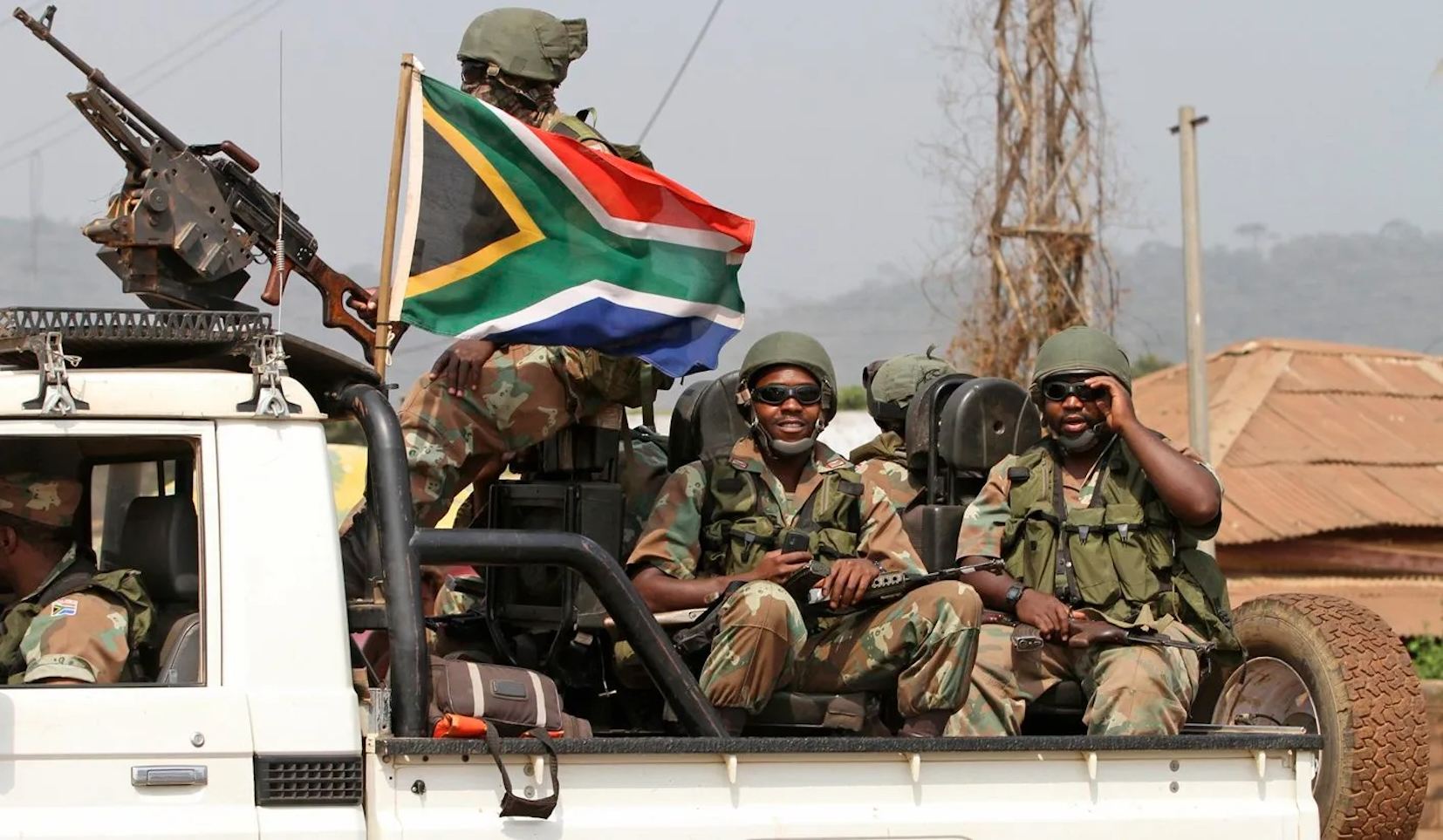
 File photo of SANDF members in the Central African Republic in October 2024. (Photo: SANDF)
 /file/dailymaverick/wp-content/uploads/2025/10/label-analysis-2.jpg)
President Cyril Ramaphosa, on Sunday, 8 February, announced the withdrawal of South African troops from the Monusco peacekeeping force in Democratic Republic of the Congo (DRC). By the end of the year, an estimated 700 soldiers will return home. That’s 27 years of peacekeeping now ending in a flash.
Then on Thursday evening, during his State of the Nation Address (Sona), Ramaphosa announced that the SA National Defence Force (SANDF) would be deployed to assist the SA Police Service (SAPS), yet again, in countering gangsterism on the Cape Flats and illegal mining in Gauteng, but without any clarity on the deployment and when, or if, it will end.
With these two acts, the South African military has overnight become a local gendarmerie, forced to pick up the pieces left by a deeply flawed police service. Based on the applause that met the announcement of the SANDF deployment, you’d have thought this was a good thing. It is not, and for three very big reasons.
The SANDF is in freefall to obsolescence
The South African military is rotting from the outside in, and this incoming operation is a terrible reminder that necrosis is very much set in.
Ramaphosa’s message signifies one major theme: the SANDF is so overstretched, underfunded and ill-led that it needs to wind down even its small remaining foreign deployment to make room for a local deployment.
South Africa’s troops face terrible living conditions, worse food and even worse support from their leaders. MPs either don’t know about this, even though they should, or they don’t care. Neither is acceptable.
Read more: ‘Residents are prisoners in their homes’: EC premier to ask Ramaphosa for military intervention
/file/attachments/orphans/AFP_20250614_62CG9QD_v1_HighRes_SafricaDrcongoUnrest_165288.jpg "SANDF soldiers gather upon arrival at Tempe Military Base in Bloemfontein on 14 June 2025, following their withdrawal from eastern Democratic Republic of the Congo, where they had been deployed as part of the Southern African Development Community Mission in the DRC. (Photo: Phill Magakoe / AFP)")
This didn’t happen overnight. It stems from almost two decades of underfunding for the responsibilities South Africa expects of its military, and a government unwilling to advocate for more. Although a defence review drafted and passed into law in 2015 laid a foundation for its recovery, the defence budget required for this did not materialise. Indeed, the military’s budget as a percentage of GDP has declined since.
Put in plain speak: The military is attempting to maintain a massively complicated organisation without enough funds to cover even the most basic requirements. To use an analogy, the SANDF has to maintain a fleet of sleek, specialised race cars but has only been given a budget for second-hand hatchbacks.
Now, after the President’s announcement, this organisation must go off-roading.
The military will not solve gangsterism
Make no mistake: the SANDF deployment will do nothing to address the root causes of gangsterism. With neither powers of arrest nor the remit to conduct criminal intelligence, members of the SANDF can do nothing to stop those involved in leading, controlling, or managing the money flows of gangs and criminal organisations. Foot soldiers can always be replaced.
To be sure, affected communities will probably sleep a little easier with soldiers on every corner. But given how little political attention the military is afforded, its presence will never be long-term. In 2019, I was quoted in a New York Times article about Operation Prosper, where the SANDF was deployed in a similar fashion to the Cape’s worst-affected gang areas.
(Operation Prosper is a permanent operation, under which any SANDF support to the SAPS is carried out. This new deployment will also be under Operation Prosper.)
The first weekend the SANDF were there, things were quieter. The moment they left, the murders resumed. Now, seven years later, having learned nothing from this farce, the military is being asked to do the same thing — with fewer resources.
The deployment of the SANDF in 2019 never worked, despite the praise of government and DA alike, and it will not work now. Like so many commissions of inquiry, their use here is a superficial Band-Aid on a development crisis left untreated.
/file/dailymaverick/wp-content/uploads/Dariusz-war-metaphors-option-2.jpg "The SANDF was deployed to assist the police to quell gang violence on the Cape Flats in 2019. (Photo: Ashraf Hendricks / GroundUp)")
It’s important to highlight the limited number of soldiers available for this role. Those who are reassigned will face diminished training time and a decline in their core military skills.
Gangs feed on weak governance and social dysfunction. The military was never designed to combat this, and it will never treat the root causes, with or without an equally problematic police force.
Read more: Sending in soldiers solves very little – as Cape Town’s track record shows
Political leaders need to get serious about the military
For as long as SANDF deployments in domestic affairs receive rousing applause across all party benches, the military will continue to be used in situations for which it is ill-designed. This is equally true for border patrols as it is for anti-gang operations. Both should be the police’s responsibility.
Trumpeting the involvement of the SANDF in domestic security may gain some quick PR wins for the President. However, the announcement of the SANDF’s withdrawal from DRC and the conclusion of almost three decades of peacekeeping operations reflect an abject failure by our political leaders to understand when and how to use the military.
Thus far, nobody appears willing to object to this abuse, including the minister of defence, who ought to be fighting this decision tooth and nail. Until those pulling the political strings of the military do so in a more intelligent, coherent manner, the SANDF’s slide into irrelevance will continue.
The military can be a force for immense public good. But until it is seen as more than a blunt instrument, the true value it can unlock in South Africa will remain nothing more than hopes and prayers. DM