



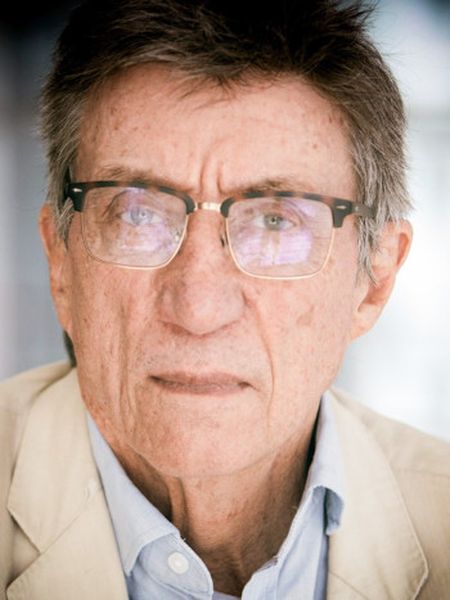
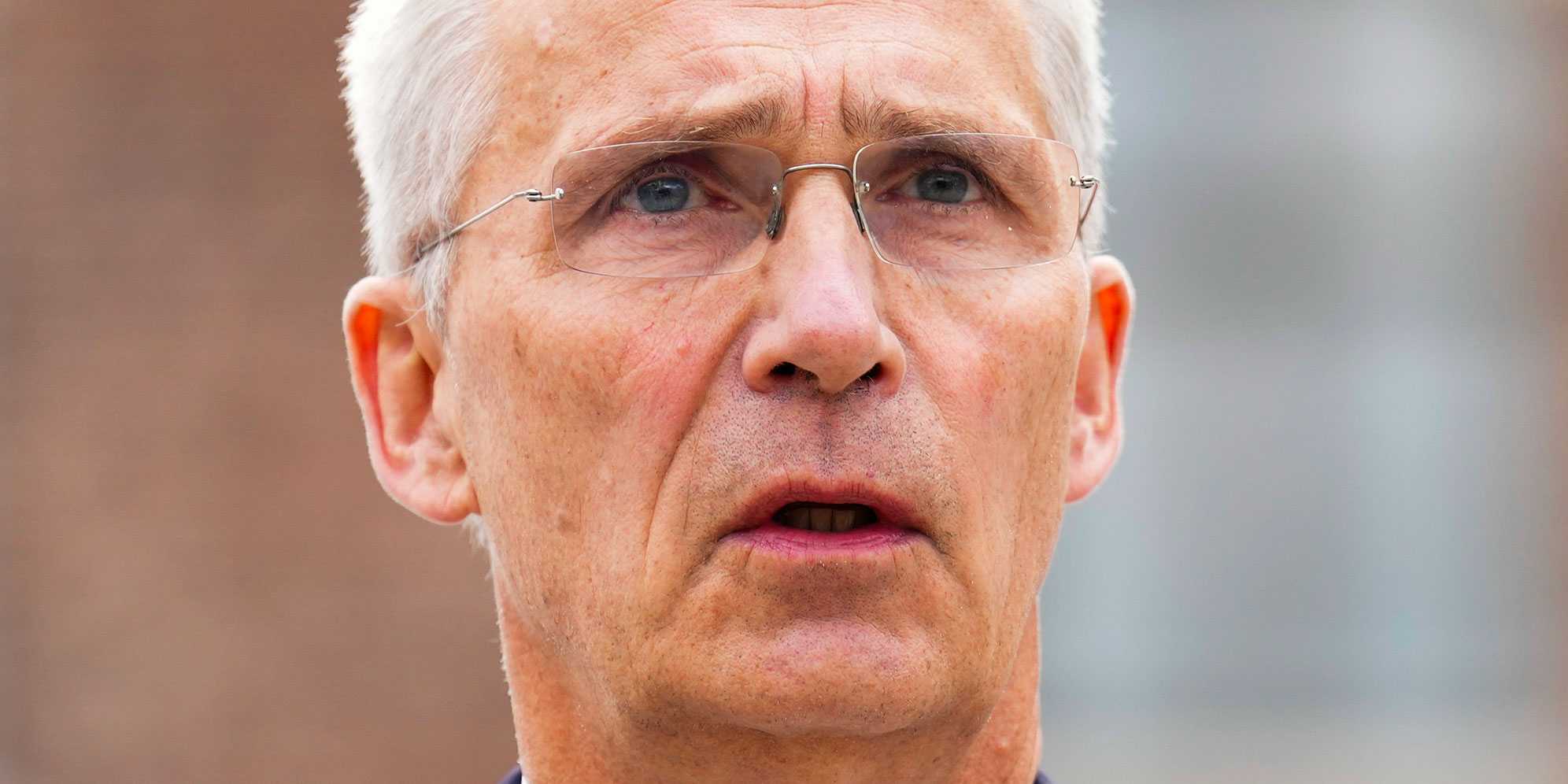
 Norway's finance minister, Jens Stoltenberg. (Photo: Fredrik Varfjell / Norway Out / EPA)
 South Africa’s final G20 meeting of finance ministers and central bank governors was a success, said Norway’s finance minister, Jens Stoltenberg.
The meeting at the Zimbali beach resort north of Durban on Thursday and Friday produced the first communique of SA’s G20 presidency. So far, the sherpas track of the G20 has only managed to issue “chairpersons’ statements” because they were unable to achieve consensus.
Norway is not a member of the G20 but was invited by President Cyril Ramaphosa to attend all the G20 meetings as a guest.
Stoltenberg, a former Norwegian prime minister and the previous secretary-general of Nato, said agreeing on a communique — despite the wide variety of countries around the table, including the European countries, the US, China and Russia, which disagreed on many issues — was good news and a recognition of South Africa’s chairing of the G20.
“And despite these differences, we have been able to agree on a communique that actually sets out some important principles and charts a way forward on issues like a global minimum tax, like how to handle countries with debt problems, and to create a better framework for addressing debt problems for indebted countries, and also language on climate market and climate financing, which helps us to move that agenda forward,” Stoltenberg told Daily Maverick.
Read more: The price of inequality — Africa’s fight for fair finance at the G20
US Treasury Secretary Scott Bessent skipped the meeting and sent a lower-ranking official, but, as Stoltenberg noted, the US was represented and endorsed the communique.
Some analysts would have liked stronger language on important issues such as debt relief, climate financing and the minimum global tax.
“But in these kinds of negotiations, it is important not to make the best the enemy of the good,” said Stoltenberg.
It was an achievement that, after many meetings which failed to agree on a communique, there was now an agreement, he said
“And the issues that are addressed, including debt, climate financing and minimum tax, are important issues, where we actually have taken some important steps.
“And I also think that … it is important that Africa has a central place in the communique, where the G20 countries commit to work more closely together, to also assess how these different development banks [like the World Bank and International Monetary Fund] are set up to support Africa.
“Debt relief and management of debt are, of course, important for many African countries.
“And we also looked into how we can facilitate more private investments, more trade with Africa.”
Debt and taxes
On a global minimum tax, the communique said the G20 countries would address concerns about the G20/OECD Pillar Two global minimum taxes “with the shared goal of finding a balanced and practical solution that is acceptable for all”.
Pillar Two sets out rules to ensure that large multinational corporations pay a minimum 15% tax on their profits in every country where they do business. The aim is to prevent such corporations from avoiding taxes by domiciling in tax havens.
The G20 members also “committed to addressing debt vulnerabilities in low- and middle-income countries in an effective, comprehensive and systematic manner”.
This included reaffirming the G20’s commitment to further strengthen the implementation of the G20 Common Framework, which enables debt relief and restructuring for highly indebted countries. So far, it has focused on Africa.
The communique noted that the Multilateral Development Banks (MDBs) — such as the World Bank and International Monetary Foundation (IMF) — were implementing the G20 MDB Roadmap and the recommendations from the Capital Adequacy Framework Report that the MDBs should more efficiently utilise their existing resources, share more risk with the private sector and utilise new instruments to increase lending capacity over the next decade.
The G20 members acknowledged the “strategic importance” of an enhanced G20 partnership with African economies, including through strengthening the G20 Compact with Africa.
Read more: Road ahead is steep but not insurmountable– SA’s G20 can still deliver for debt and development
On climate financing, the communique noted a commitment to strengthen global sustainable financing through effective coordination among MDBs, vertical climate and environment funds (like the Global Environment Facility), which provide concessional finance to developing countries, and national development banks.
The members looked forward to continued work for more effective funding of climate adaptation and addressing natural catastrophe insurance protection gaps in countries.
The communique noted the potential of high-integrity, voluntary, private-sector-led carbon markets.
The members reaffirmed the G20’s commitment to a strong, quota-based, and adequately resourced IMF at the centre of the Global Financial Safety Net and acknowledged “the importance of realignment in quota shares to better reflect members’ relative positions in the world economy while protecting the quota shares of the poorest members”.
They underscored “the need for enhancing the representation and voice of developing countries in decision-making in MDBs and other international economic and financial institutions”.
They welcomed the creation of a 25th chair on the IMF executive board “to enhance the voice and representation of sub-Saharan Africa”.
The finance ministers and central bank governors recognised the importance of the World Trade Organization (WTO) to advance trade issues, and acknowledged the agreed-upon rules in the WTO “as an integral part of the global trading system”.
They underscored the importance of the independence of central banks. SA officials particularly welcomed the agreement on this, as well as the agreements on carbon markets and the importance of multilateral institutions like the WTO, as the Trump administration has not been enthusiastic about any of these.
Historic ties
Apart from attending the G20, Stoltenberg said he had visited the nearby Albert Luthuli Museum, which honours the late ANC leader who received the Nobel Peace Prize in 1961, “from the Norwegian Nobel Peace Prize Committee.
“And that demonstrated … the long and strong bond between South Africa and Norway,” he said, which was in many ways initiated by that peace prize, which inspired the anti-apartheid and solidarity movement in Norway.
He noted that Norway had provided economic and other support to the ANC in exile, which created the foundation for the bonds between the two countries that have lasted until today.
He said that despite Norway being a strong supporter of free trade, it had imposed sanctions on South Africa during the apartheid era “because freedom is more important than free trade.
“And that’s also the reason why we are imposing sanctions on Russia, because of the illegal invasion, blatant violation of international law, invading a neighbour, Ukraine.
“And why Norway has imposed sanctions on Israel for the illegal settlements on the West Bank … and the warfare in Gaza, violating international law.
“So we don’t believe in double standards. And there’s a long line, from supporting self-determination of the people of South Africa, to supporting the people of Ukraine in their right to decide their own future, and recognising Palestine as an independent state.”
In his intervention in the G20 meeting, Stoltenberg said, “We need to find the right balance between political tools — when it comes to sanctions — and ensuring free trade and open economies.
“We are concerned about increasing tariffs. We believe that increased tariffs will reduce growth and reduce our ability to foster prosperity. So … we should not misuse the idea of political tools to impose tariffs which are not needed. We believe in free trade, it’s good for all of us.”
Road to peace
Daily Maverick asked Stoltenberg, as a former Nato secretary-general, if he saw any prospects for a peace settlement in Ukraine.
“Yes, of course,” he replied. “But the only way to get peace is to support Ukraine, because everyone wants this war to end. At the same time, we know that the quickest way to end the war is to lose the war. But that will not bring peace, that will bring occupation.
“And occupation is not peace. So if we want peace, we have to convince [Russian] President [Vladimir] Putin that he will not achieve his goals on the battlefield.
“And the only way to get there is to provide military support to Ukraine, because the stronger Ukraine is on the battlefield, the stronger they will be around the negotiating table.
“And therefore, if we want peace, we need military support to Ukraine. And it is fundamental, not least for African countries, to uphold the right of territorial integrity.
“Russia has recognised the borders of Ukraine many times, and now they have violated the same borders by blatant violation of international law. So we cannot allow double standards.
Read more: War in Ukraine
“We need to criticise Israel’s war against Gaza, and we need to be very clear on Russia’s blatant violation of international law. And peace, we can get peace tomorrow if Putin stops invading a neighbour.
“If Putin stops fighting, then we have peace. If [Ukrainian President Volodymyr] Zelensky stops fighting, then we have occupation. And occupation is not peace.” DM