



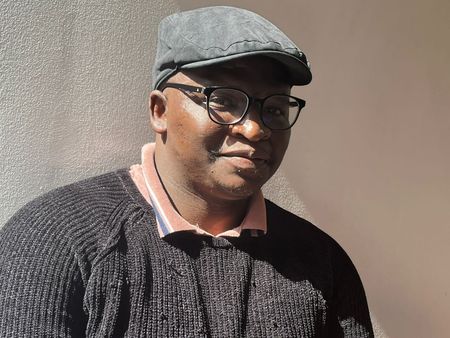
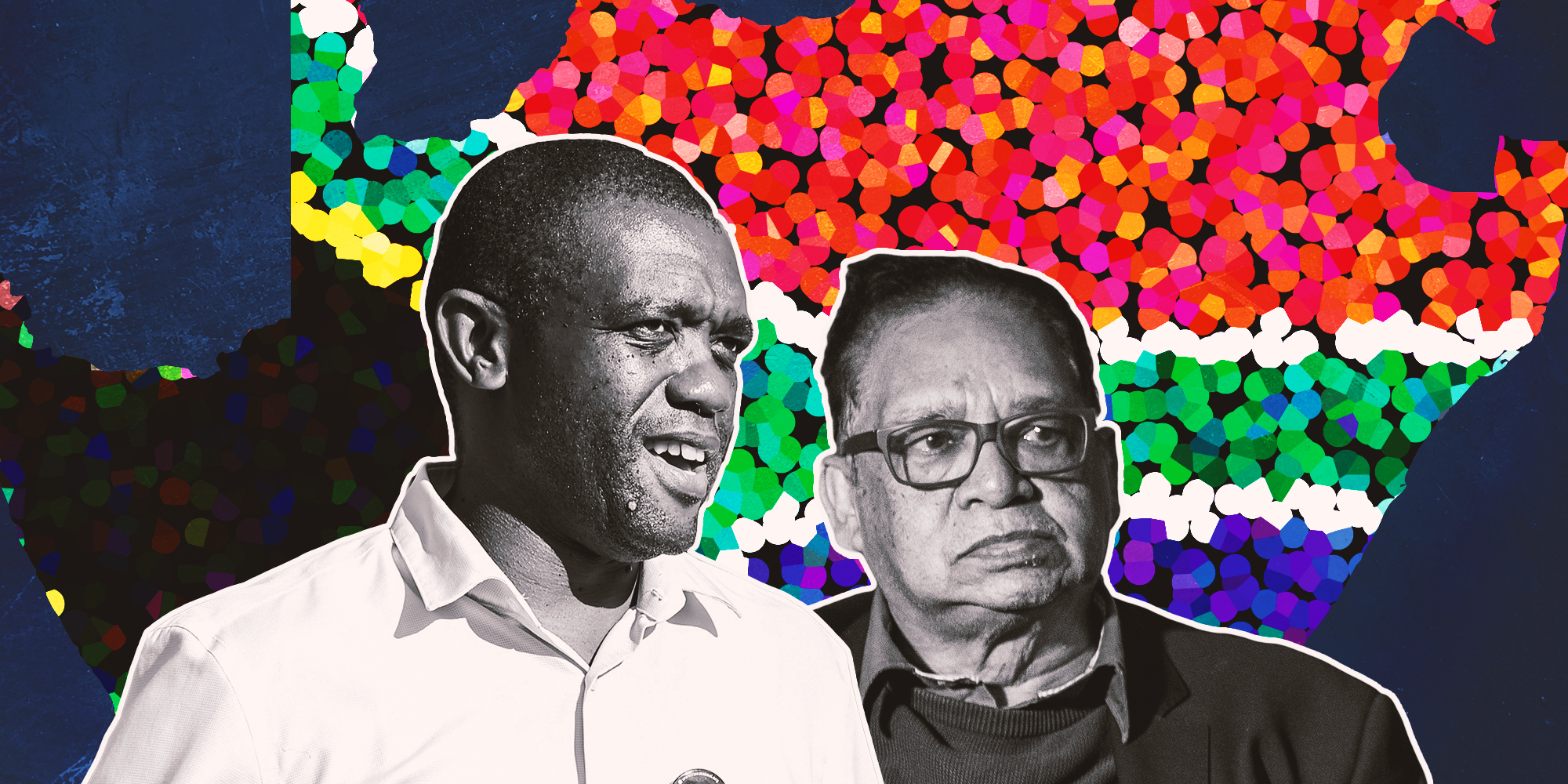
 Illustrative image, from left: RISE Mzansi leader Songezo Zibi. (Photo: Gallo Images / Darren Stewart) | Al Jama-ah leader Ganief Hendricks. (Photo: Gallo Images
/ Misha Jordaan)
Illustrative image, from left: RISE Mzansi leader Songezo Zibi. (Photo: Gallo Images / Darren Stewart) | Al Jama-ah leader Ganief Hendricks. (Photo: Gallo Images
/ Misha Jordaan) Rise Mzansi and Al Jama-ah became the latest parties to join the Government of National Unity (GNU), marking a significant milestone in the country’s political landscape as it brings the total number of parties participating in the GNU to 10 of the 18 parties in the National Assembly.
Rise Mzansi’s decision to join the GNU was made after internal party discussions, which aimed to ensure that its key manifesto issues were prioritised in the government.
Read more in Daily Maverick: All eyes on Ramaphosa to see who gets which Cabinet positions
Makashule Gana, Rise Mzansi’s chief organiser, emphasised that the party’s decision to join the GNU was not driven by a desire for Cabinet positions, but by a commitment to its policy goals.
“We will accept the responsibility of serving the people of this country in the same way that we have accepted the responsibility to be members of Parliament in service of the South African people.”
Gana also clarified that the party’s involvement in the GNU did not exempt it from its duty to hold the executive accountable.
“We did not sell that responsibility of holding government to account by signing the statement of intent. That’s not what’s on the table.”
Rise Mzansi believes the GNU can help it implement aspects of its manifesto, including addressing hunger, food insecurity and crime and delivering economic justice to marginalised South Africans.
Expanding the GNU coalition
The inclusion of Rise Mzansi and Al Jama-ah brings the number of GNU members to 10. They join the ranks of the African National Congress (ANC), Democratic Alliance (DA), Inkatha Freedom Party (IFP), Patriotic Alliance (PA), Good, the Pan Africanist Congress (PAC), Freedom Front Plus (FF+) and the United Democratic Movement (UDM).
The seventh-largest party in Parliament, the FF+, which joined the GNU on Thursday, echoed a similar sentiment to Rise Mzansi, stating that its participation in the GNU was based on influencing policy rather than seeking positions.
“We signed the agreement of intent on that basis, and we will participate in the processes such as the national dialogue to influence the policy direction,” the party’s elections head, Wouter Wessels, told Daily Maverick.
“Positions are not a condition and if offered such, our structures will consider if those positions will serve our policy ideals and electorate.”
Formed after the 29 May elections, the GNU aims to provide a collaborative platform to address South Africa’s pressing issues, such as poverty, inequality and corruption. With the addition of Rise Mzansi, Al Jama-ah and other parties, the GNU now has a more comprehensive representation and a stronger mandate to drive positive change.
The ANC welcomed the expansion, noting that the first phase of parties joining the GNU has concluded with 10 parties now on board, representing more than 70% of the vote in the 2024 elections.
“These parties have agreed to be bound by the foundational principles outlined in the Statement of Intent and to work together to pursue its objectives.”
Impact on Cabinet formations
The entry of new parties into the GNU has implications for Cabinet formations at both national and provincial levels.
President Cyril Ramaphosa was expected to announce his Cabinet on Sunday, but this did not happen as discussions are ongoing.
Read more in Daily Maverick: Cabinet announcement expected on Sunday or early next week as ANC, DA, PA table first wish lists
Sunday Times reported that the DA has been unhappy with what the ANC has offered in negotiations and is pushing for substantial representation, including key economic portfolios and the appointment of DA leader John Steenhuisen as deputy president.
The ANC has reportedly told the DA that with more parties joining the GNU, fewer Cabinet posts are available.
Gauteng Premier Panyaza Lesufi postponed announcing his new cabinet on Sunday, citing the need for more time to finalise negotiations.
“When negotiators requested an extension, I felt it was reasonable,” Lesufi said, dismissing reports of disagreements over the distribution of MEC positions.
Lesufi was elected with support from the DA and IFP. According to reports, he planned to announce a cabinet that gave the DA no MEC positions after discussions with the party deadlocked.
Opposition
The EFF remains firm in its stance against joining any government that includes what it describes as “white supremacist political parties”.
“We will continue to serve South Africa from the opposition with vigour and dedication,” the party said.
The uMkhonto Wesizwe (MK) party, which missed the first sitting of the National Assembly, is scheduled to be sworn in this week. Parliament confirmed that the Chief Justice or a designated judge will oversee the swearing-in of these members.
In a surprising and controversial development, former Western Cape Judge President John Hlophe, who was recently impeached, is set to lead the MK party in the National Assembly. DM