



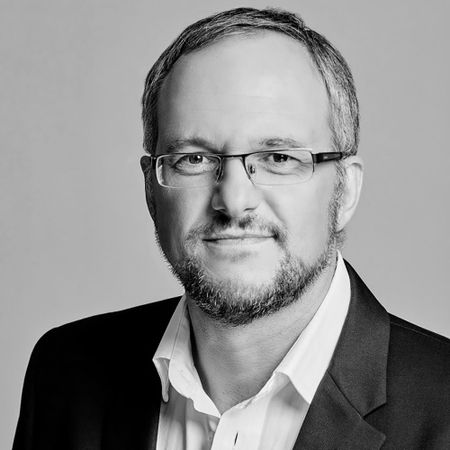
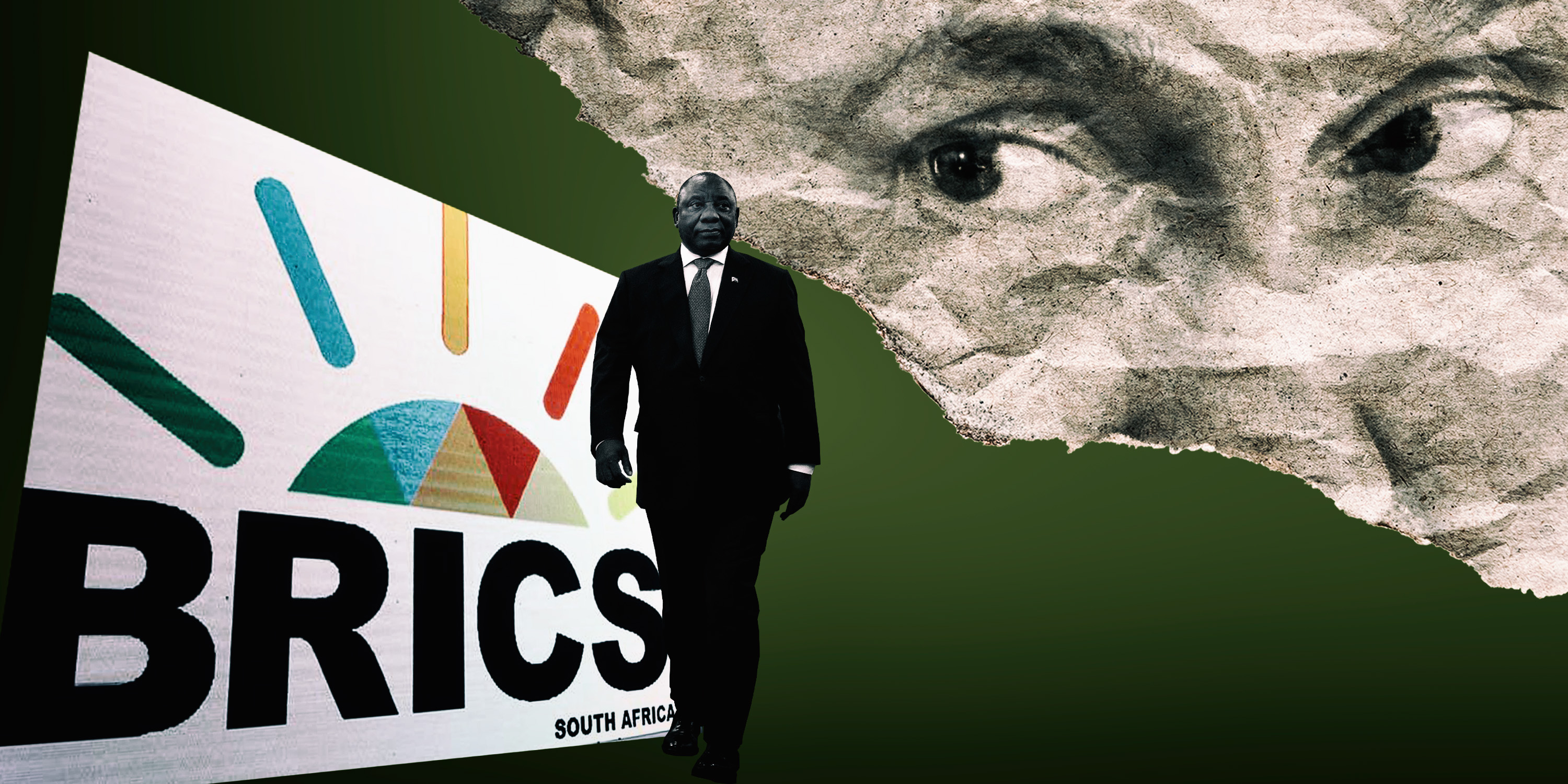
 President Cyril Ramaphosa. (Photo: EPA-EFE / Andy Wong) | Russian President Vladimir Putin. (Photo: EPA-EFE / Sergei Savostyanov / Sputnik / Kremlin Pool) | Rawpixel
The confirmation from the Presidency that Russian President Vladimir Putin will not attend the BRICS head of state summit “by mutual agreement” is great news for President Cyril Ramaphosa.
It suggests that he has the power to influence Putin at a time when very few others have this ability. It also averts a focal point for great division in our society.
But the debate about whether we are truly “non-aligned” or support Russia will continue, mainly because it is really a debate about whether we look to the West or to other countries for our future direction.
The real reasons behind Putin’s decision to not attend the BRICS Summit will probably never be explicitly stated. Certainly, he has many domestic reasons not to leave Russia, not least of which was the apparent mutiny by Yevgeny Prigozhin and his Wagner mercenaries a few weeks ago.
As previously stated, in the real world, Putin was always unlikely to leave his own country and region at this particular time, even if such a chance to show his authority on the global stage was difficult to pass up.
Perhaps the most important consequence of this decision is what will now be averted. There is plenty of evidence that the issue had deepened the dividing lines in our society.
A focal point for discord
If Putin were to have come, people protesting for and against him could easily have clashed. The DA had demanded that he be arrested (and went to court to demand that this happen), while EFF leader Julius Malema had promised, in his typically confident style, that Putin “will attend all his meetings and also address them. We will take him back to the airport when he is done.”
This focal point for discord will now be avoided.
Second, Ramaphosa will now avoid having to decide between the realities of arresting the head of state of a nuclear-armed superpower and the rule of law.
He said in his affidavit in the DA’s court case that Russia had made it clear that arresting Putin would be a “declaration of war”. Russia, however, disputes this, their spokesperson saying that Russia had never told SA’s government that arresting Putin would mean war, but that it was clear what arresting Putin would mean — some things do not need to be said explicitly.
At the same time, as International Relations and Cooperation Minister Naledi Pandor had stated, the government had a legal opinion that said Putin would have to be arrested if he came here.
Third, Ramaphosa’s stature may now be enhanced. He, and the ANC, are likely to argue that the resolution of the issue shows he carries sway on the world stage. He was able to convince Putin to agree not to come, despite previous indications from Russian officials that Putin would attend the summit in person.
Also, Putin’s decision may make it easier for the African leaders’ peace initiative to continue. It is unlikely that Ukrainian President Volodymyr Zelensky would have seen Ramaphosa as a neutral peacemaker if he had hosted Putin. Arresting the Russian president would probably have presented Ramaphosa with more pressing matters than bringing peace to Europe.
It is now likely that Ramaphosa’s government will find it easier to argue that the US government should keep South Africa in the Agoa trade agreement programme.
All of this could lead to Ramaphosa’s supporters claiming he has won an important victory. Even the DA leader, John Steenhuisen, felt moved to tell Newzroom Afrika on Wednesday that this was “great news for South Africa”.
It could well enhance Ramaphosa’s authority, after recent claims that he was no longer interested in governing.
The entire debate has been very illuminating about where priorities lie, and perhaps even changed some minds in the ANC.
While some in the governing party have strongly supported Russia (and often blamed “Nato’s expansion to Russia’s borders”), the importance of our economic links to the West has been underscored.
A recent interview on News24 by Deputy President Paul Mashatile was illuminating, when he told Carol Paton: “We need the West.”
That a senior ANC leader would make such a comment would have seemed unlikely a year ago, but drew almost no comment this week.
Of course, the divisions in our society that were exposed will not go away.
Instead, the focus will now move to the docking of the Russian cargo ship Lady R at the Simon’s Town Naval Base last year and claims by the US ambassador to South Africa, Reuben Brigety, that weapons were loaded on to the vessel.
An inquiry by a retired judge and two lawyers has finished hearing evidence and is now putting together a report, which will remain confidential, as will the panel’s terms of reference and the evidence it has considered.
This suggests that the Presidency believes a report can be confidential and at the same time change the views of the US government and South African citizens.
A confidential report cannot clear anyone of guilt in the court of public opinion. The DA and others will now focus on its secrecy and demand that it be made public.
Also, there is likely to be a discussion in our society about the importance of BRICS as a grouping. Putin’s decision to appear via satellite link could lead to the leaders of India, China and Brazil also deciding not to physically join. Certainly, the protocol of the event will now be complicated: will Russian Foreign Minister Sergey Lavrov (Putin’s physical replacement at the summit) be treated in the same way as Chinese President Xi Jinping?
This puts at risk the structure of the event and some of its major discussion points, such as enlarging BRICS and dedollarisation, may lose momentum.
Some in our society may well blame Ramaphosa for this, and say it is his “mutual agreement” with Putin that robbed us of the chance to host a major event.
Already the EFF has said in a statement that it “cautions all member states of BRICS that South Africa is currently led by a spineless government that will never meaningfully take forward efforts to grow the strength of the Global South and its allies”. `
And of course, the DA and those who look to the West for direction may see this as a moment to keep trying to increase their influence, to push South Africa away from BRICS.
In the shorter term, this appears to be an important victory for Ramaphosa, who has avoided one of the most difficult diplomatic choices he faced in recent times. But a policy of “non-alignment” in the Russian-Ukraine conflict is always going to be uncomfortable, as sitting on a fence is never comfortable for long.
The pressure put upon our government by domestic constituencies, the West and Russia, is likely to render South Africa’s stance difficult for a protracted period of time, almost certainly beyond the war itself. DM
Comments
Scroll down to load comments...