




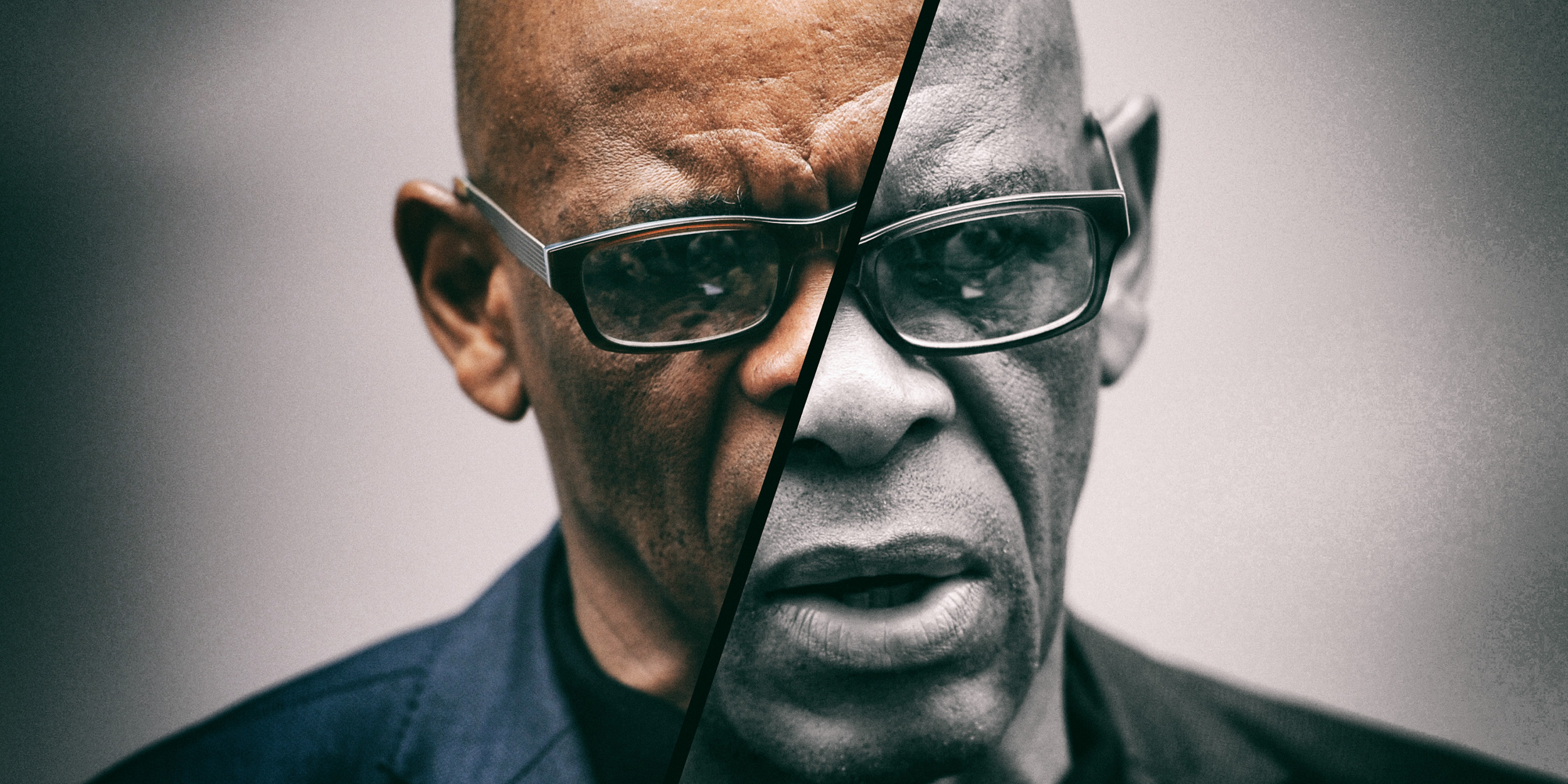
 ANC Secretary-General Ace Magashule. Magashule is clearly expecting/fearing arrest. And he is preparing for that eventuality. (Photo: Gallo Images / Netwerk24 / Felix Dlangamandla)
 The issue around whether the ANC can actually act against its leaders and members who are accused, charged or convicted of corruption is an existential one. If it cannot act against corrupt members, particularly someone in the party’s top six national officials, then it will lose the trust of those who vote for it.
At the National Executive Committee’s (NEC) latest meeting, from Sunday to Tuesday, the anti-Ace members were simply too weak to force Magashule to step down, despite the obvious reputational damage the criminal charges against the ANC’s secretary-general are causing to the party. The cost of this will be a continued weakening of the party’s central political authority, to possibly beyond a point at which a serious and respected political force can recover.
It is for this reason that the party’s delegates, at Nasrec in 2017, voted, again, that those implicated in corruption must step down. They resolved to demand that “every cadre accused of, or reported to be involved in, corrupt practices accounts to the Integrity Committee immediately or faces DC processes”. They went on to say that the ANC must “summarily suspend people who fail to give an acceptable explanation or to voluntarily step down, while they face disciplinary, investigative or prosecutorial procedures”.
That’s pretty damn clear and leaves no space for interpretation.
This was then backed up by the NEC’s recent “line in the sand” decision which resolved that those implicated in corruption must “step aside”.
Then, on Tuesday evening, President Cyril Ramaphosa’s language as he closed the NEC meeting was explicit, that “there will be no dilution on the resolution we have taken in this regard”, that: “the NEC stressed there can be no retreat from this position”.
However, the strength of his words were not backed up by the reality of the NEC’s actions.
Magashule remains in place as secretary-general.
Instead of stepping aside, he now has to proceed to the Integrity Commission.
This may well be more in keeping with the Nasrec resolution than a summary dismissal or suspension. This is because the resolution suggests that it is people “who fail to give an acceptable explanation” who must be suspended, which led to the NEC’s “step aside” decision. It may be that it is the Integrity Commission that will decide whether an explanation is “acceptable” or not.
To add to this is the timing. The NEC meeting finished on Tuesday evening. Magashule has to present himself before the Integrity Commission on Saturday, not giving him much time to prepare an explanation or a defence of any kind.
For the moment, the actual process that will occur at the commission is not clear, as it appears there is neither a prosecutor or a defender.
But it would still be hard to imagine a person who has been formally charged in court being able to say that they have done nothing wrong. Especially when there is so much evidence against him in the public domain and when there is the very real possibility that he could face more charges in the near future.
One of the crucial issues is that the Integrity Commission has simply been ignored in the past, even when it managed to act.
Deputy President David Mabuza was able to ignore its finding that he had not given an acceptable explanation of claims against him.
https://www.dailymaverick.co.za/article/2020-08-03-it-seems-nothing-can-stop-the-anc-from-dragging-the-government-and-the-country-down/
The same body, when chaired by someone with the moral authority of Andrew Mlangeni, asked Jacob Zuma to resign as president in 2017. He refused, saying that only he could save the ANC from “the West”.
In some ways, this is the toughest ever test for the commission: Ace Magashule is the highest-placed official that it would have to hear an “explanation” from. There is no reason to believe that it will be able to act.
Even then, as Ramaphosa explained on Tuesday, the decision would have to go to the National Working Committee and then the NEC of the ANC.
So it would end up back where it was this week.
Which proves again that this has always been an inherently political decision rather than a legal one.
In the past, when the ANC was divided, certain proxy issues emerged to reveal those divisions. Sometimes they were quite silly but revealing. Once, the NEC discussed whether or not leaders should eat cake during party celebrations. While this appears simply too small to even talk about, it was really a way for the NEC to rebuke the then deputy president, Kgalema Motlanthe, after a comment he made about how ANC members would eat cake through their leaders.
Here, a possible proxy issue is emerging about the venue of the ANC’s January 8th Statement due to be held on Saturday 9 January 2021. Technically, it appears to be the turn of Limpopo because the ANC provinces each have a turn to host it. But during his court appearance last month Magashule said that it would be held in Mangaung, Free State.
With just a month to go until the event, no decision has yet been announced. This may be a symbol of how difficult it is to get agreement on anything in the ANC. It is worth remembering that if this were a live event in the traditional way with thousands of supporters, it is likely that at least one leader of the ANC top six would be booed, so the venue may be crucial as to which one that would be.
There will be much discussion over the next few days about Ramaphosa’s opening remarks on Tuesday. He welcomed the fact that former presidents Thabo Mbeki and Jacob Zuma had attended the NEC meeting and suggested it may have been the first ANC NEC meeting to be attended by two former presidents and one current leader since 1936.
It is worth remembering that under ANC procedures former presidents always have the option of attending NEC meetings. The fact that they generally have not may well be down to the way their own presidential careers have ended. It was Zuma’s NEC that decided to recall Mbeki, and it was Ramaphosa’s NEC that recalled Zuma.
https://www.dailymaverick.co.za/article/2016-01-20-analysis-mbeki-protesteth-too-much-we-think/
It may well be that Zuma attended this meeting simply to show some support for Magashule. Certainly, he would have been a presence that did not go unnoticed.
Mbeki’s attendance is fascinating. While he did attend an NEC lekgotla in October, it appears he had not attended an NEC meeting since 2008. (When he was recalled, one of the complaints against him was that he did not attend NEC meetings even when he was President of South Africa.) For him to appear now suggests that he would be there to support one group, or that he desired a particular outcome.
However, the history between Mbeki and Ramaphosa was always fraught with difficulties. In 2001 Ramaphosa left frontline politics because he was accused by people close to Mbeki of being involved in a plot against Mbeki, along with Tokyo Sexwale and Mathews Phosa. He was also part of the decision by the NEC in 2008 that Mbeki must step down. This makes it unlikely that Mbeki and Ramaphosa are politically close now.
However, when he was president, Mbeki refused to allow Magashule to be appointed premier of the Free State. And it may well be his antipathy to Magashule that motivated his attendance.
He may also simply be deeply distressed about what has happened to the party that he used to lead and wants to make some kind of difference.
Whatever happens next it is clear that this drift, this obsession with internal factions within the party is going to continue to weaken its central authority during arguably the worst crisis in South Africa’s history. More and more of its members and structures will disregard Luthuli House, and party decisions will be ignored.
https://www.dailymaverick.co.za/article/2020-12-02-ancs-centre-no-longer-holds-balkanisation-appears-inevitable/
With every day of chaos, it will become more and more difficult for the party to recover its former glory. Time is ticking for Africa’s oldest and most illustrious party. DM