




Dear Mmusi,
Yesterday in his State of the City address Johannesburg Mayor Herman Mashaba said, “A Johannesburg that works is a South Africa that works.” It was a declaration of confidence in the important role that our cities must play in building the future of our nation.
Most South Africans already live in cities and in generations to come many more will find refuge here. We live in these cities because, despite the poverty, violence and insecurity many of us face daily, they offer the best opportunity to get educated, to get a job, and to access services.
With the Democratic Alliance’s coup in the major metros of Johannesburg, Cape Town, Tshwane and Nelson Mandela Bay during the local government elections last year, the responsibility for making South African cities work for all now falls on your shoulders as party leader. The manner in which your party meets this responsibility will be subject to intense scrutiny. It is a test of whether the DA is truly committed to a pro-poor, inclusive urban future for our country. Or, as your detractors charge, whether your party still serves in the interest of a wealthy, white, landholding minority.
Like cities around the world, ours are struggling to deal with urbanisation and inequality. All cities face the predation of well-located land by corporations and the super wealthy, creating property bubbles and unaffordable rentals. All face the scourge of unlawful evictions and displacement. It is no secret that our cities are segregated by race and class, due to a legacy of colonial and apartheid spatial planners.
The majority find themselves in informal settlements, backyard dwellings or townships on the city’s edge that are under-resourced and unsafe. Poor and working-class people fortunate enough to reside close to city centres find themselves unable to afford accommodation as rentals escalate.
We need city and provincial governments that are committed to reverse apartheid spatial planning and to make cities equitable, just and inclusive. So far, there are no signs of this commitment.
Your own party policy supports this vision: “The DA envisages a future in which we have overcome the spatial legacy of apartheid, where the urban poor live closer to work opportunities, where they regard their properties as the fruits of their own labour rather than gifts from the state, where amenities such as schools and clinics are readily accessible, and where communities are characterised by a mix of incomes and housing types. The planned densification of urban areas will be an aspect of all human settlements developments and public transport will be oriented towards servicing these.”
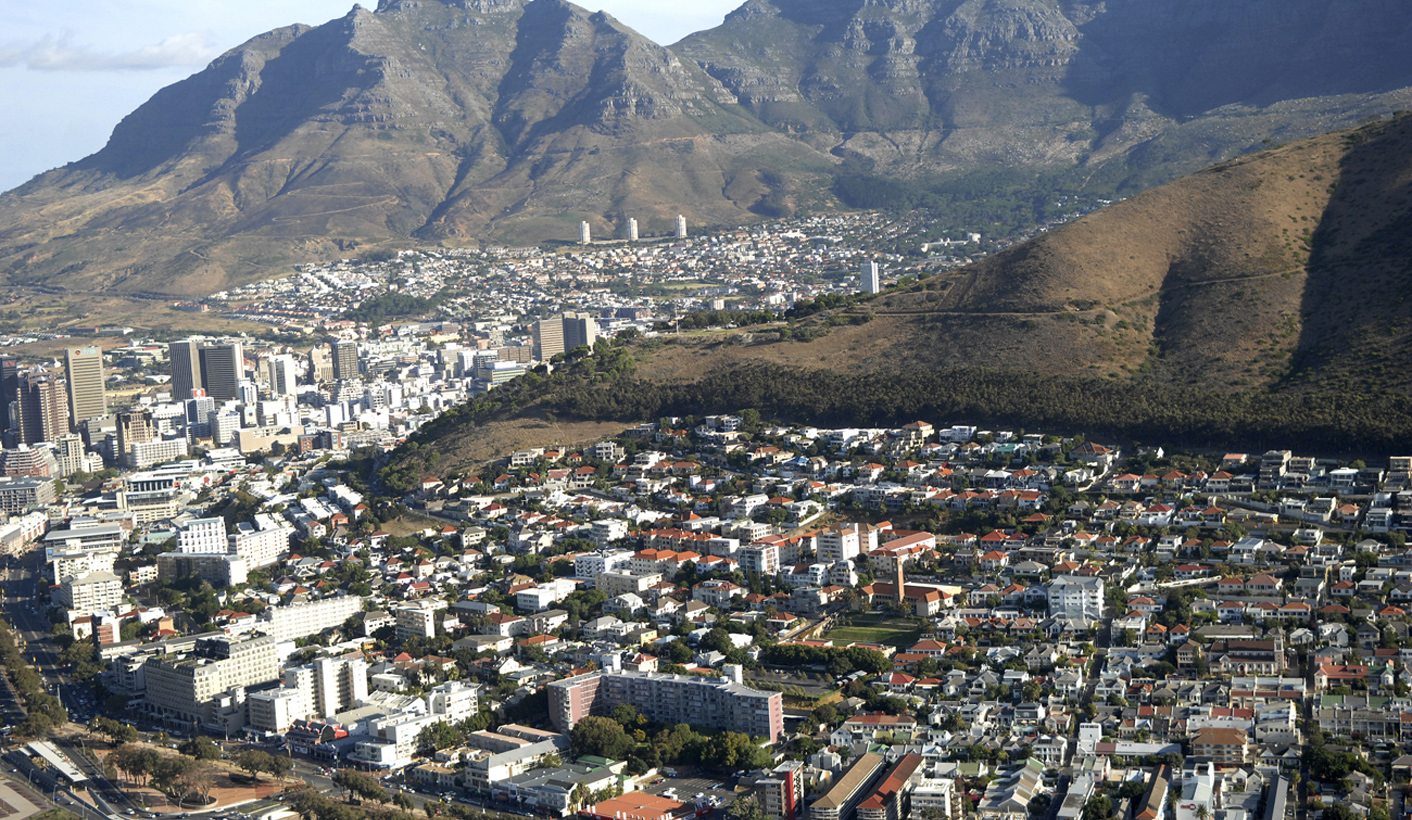
If this is truly the DA’s policy, you can no longer ignore Premier Helen Zille’s indefensible sale of the Tafelberg site in Sea Point, instead of reserving it for affordable housing. It represents the lack of transformation, state capture and a business-as-usual approach to land that deeply angers our generation. It further represents contempt for our experiences as Black, Coloured and Indian residents of this city.
The sale of Tafelberg represents the maintenance of the status quo in the sole interest of privileged white people. It demonstrates private investors’ near exclusive hold on land in and around the Cape Town inner-city. It entrenches a colonial and apartheid history of dispossession and segregation.
But the Tafelberg site is not just symbolic. It is a very real opportunity to demonstrate a commitment. National Treasury, the National Department of Human Settlements, the City of Cape Town, sector experts and the public at large, opposed the sale of the site. This should tell you everything you need to know about a premier and cabinet that have gone rogue and are out of touch. Why must poor and working-class people take their own government to court to get the transformation we need? Is this the kind of government that poor and working-class people in other cities can also now expect of the DA?
It is clear, after the 2016 local government elections, that your party’s support base is overwhelmingly urban. The current moment demands a politics committed to genuine transformation and equality, not the out-of-touch rambles of your party’s powerful old guard. If this is how your party governs in Cape Town, what hope do we have across South Africa?
The DA is one of the parties many voters may consider as an alternative to the ANC in 2019. However, because of incidents like the Tafelberg sale, many still view it as a “white party”. We don’t blame them. You have an opportunity to demonstrate to many of us exactly how the DA would govern if they were in national power.
As party leader, you need to take a principled stand when your elected governments fail to act in the interest of our cities and our people, against party policy and common sense. Where factions go rogue, a leader must act to set the record straight. Where individuals speak and act contrary to the principles of the party and the interests of the people, a leader must reinstate confidence and integrity in the party. What kind of leader do you want to be?
Our cities are young. They are powerful. And they are Black. We need governments that are mindful and seek to understand our struggle. Will you speak out?
Yours sincerely,
Reclaim the City supporters:
- Nkosikhona Swartbooi
- Kgothatso Meka
- Maxine Bezuidenhout
Photo: Cityscape of Cape Town. REUTERS/Euroluftbild.de