



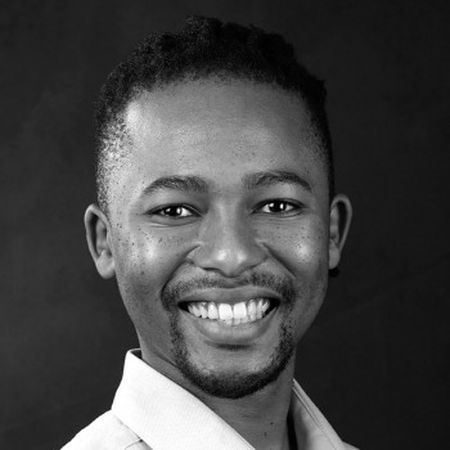
On 5 October, Ayanda Dlodlo presented her credentials to Emmanuel Macron as South Africa’s ambassador to France, taking over the post from the late Nathi Mthethwa, a former police and arts minister who held the post until his death there last year. The lazy and incorrect response is to label this under “another political appointment” and move on.
There is nothing wrong with a political ambassador. Every serious state appoints them – the Constitution gives the President the prerogative, and sometimes a political figure is the better choice than a career official.
The Trump administration runs on personal standing and proximity to power far more than on diplomatic protocol, making a political heavyweight far more influential than a traditional technocrat. South Africa’s ambassadorial deployment of figures like Roelf Meyer – a key negotiator who helped broker South Africa’s democratic transition – showcases an appointment chosen for stature rather than lifted from a retirement queue. As a white Afrikaner, his presence also pushes back against genocide allegations levelled at South Africa. That is a political appointment doing exactly what a political appointment is for.
The central issue is not a choice between career officials and political appointees, but the qualifications and rationale behind the selection. Here the governing party has a problem of its own making. Of South Africa’s 77 serving heads of mission, 48 are political appointees against 28 career diplomats and one secondment, meaning 62% of South Africa's ambassadors are political appointees.
A further 13 posts are reserved for political appointment, and the minister of international relations and cooperation told Parliament in August that there is no cap of any kind on the practice. Most of these appointees come from the ANC’s roster of former ministers and senior officials.
The problem is that the party keeps sending abroad the people who ran its departments at home, and the record of those departments does not recommend them for anything.
Dlodlo’s most senior post was state security, the portfolio that presided over the intelligence failures around the July 2021 unrest, a charge she has contested but one that sits on the record. She did also spend four years at the World Bank, which is a genuine credential. So the point is not that she will fail, it’s that the selection logic is upside down. South Africa is taking the people whose domestic delivery the country found wanting and handing them the harder, more exposed work of representing it abroad.
The ANC fell below half the national vote for the first time in 2024 and had to enter a coalition to continue governing. That outcome was, among other things, a verdict on how these cadres ran the state, through the loadshedding years, the collapsing municipalities and the hollowed-out state firms. After the electorate marks them down, the foreign ministry promotes them, to Paris, to Madrid, to Brussels, over career diplomats who have spent decades mastering a craft these appointees are only now entering for the first time.
The preference runs so deep that the state will leave a mission empty rather than hand it to a professional. South Africa’s high commission in Canberra has had no permanent head since June 2023, the longest vacancy of any post outside Africa (not counting the suspended mission in Tel Aviv). More than three years, a G20 partner, and career diplomats available in Pretoria to fill it.
Retiring heavyweight politicians
Looking at past deployments, that posting has been mostly reserved for retiring heavyweight politicians. The most plausible reading is that Canberra, long a comfortable berth for a senior politician, is being held open for one. Perhaps after the local government elections in November, or maybe after the ANC National Conference in December 2027, or even after the 2029 national election.
This is, of course, inference rather than proven fact, but what’s the counter-argument? Neither the funds nor the talent are the constraint, since the budget of the Department of International Relations and Cooperation rose to R7.227-billion this year and the talent is sitting unused.
The capitals treated as rewards are the ones that should be steadying investors while fixed investment declines and foreign money leaves the JSE.
Political appointments are not inherently bad. The argument is for ending the use of the diplomatic service as a pension fund for a governing class the voters are busy retiring. Until the ANC can tell the difference between a diplomat and a reward, its appointments abroad will keep broadcasting the very reputation that is costing it at home. DM
Comments
Scroll down to load comments...