



Exactly one month from today South Africans will head to the ballot box yet again. This time, the decision is not about who sits in Pretoria or in the legislatures of our provinces, but who governs the cities and towns that we call home.
In many ways, this election has more consequences for our day-to-day realities than any other. This is an election that will decide whether your street is filled with potholes – or isn’t; whether clean water comes out of your taps – or doesn’t; whether your rubbish is collected weekly – or whether it isn’t.
Your choice matters in an election. But in November, you will make the choice that directly shapes the reality in which you live for the next five years. Local government is the deciding factor when it comes to most of the services we are provided daily. Of all the spheres of government, the municipal level is the one with the most power to immediately improve daily life.
I will not pretend to be neutral in this conversation: obviously, I am a political figure, and obviously, there is a party, of which I am a member, that I would prefer to claim victory in these elections.
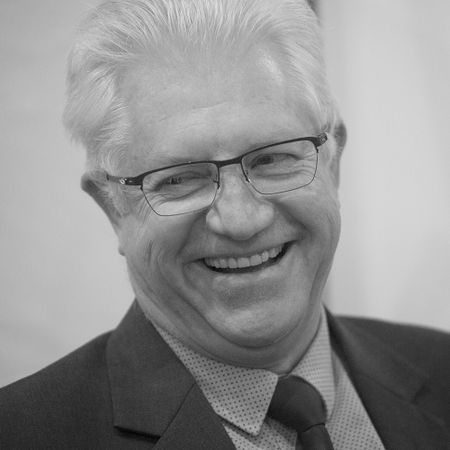
But this time I am not a candidate. What I am is someone who cares deeply about our country and our shared future. I am also the leader of a provincial government, with an immense interest in ensuring that whatever local governments that emerge from these elections are capable and willing to work with us to keep delivering excellent services across the Western Cape.
The difference is in the doing
The difference between a local government that works and one that doesn’t is marked. In some towns, stability and good governance are the order of the day. That means clean audits, well-spent public money, carefully maintained roads, safe and reliable water and clean streets with working lights.
These are the places where we can work together with municipalities to do incredible things. Just this week, I was in the Hessequa municipality to open a solar power plant that will largely make the town of Riversdale independent of the national energy grid – a first for South Africa. It will also make energy cheaper for residents and create a better investment and job creation environment.
But in many cases, we can leave one of these functional municipalities, travel less than 100km and find ourselves in a town where chaos reigns. The stories we hear from these places are as shocking as they are well documented: rivers of sewage, mountains of refuse, shattered roads, bankrupt treasuries.
In many cases, these are also the towns that tend to reject offers of help or expertise to fix their many problems – perhaps out of a sense of political embarrassment; perhaps because such measures would bring closer scrutiny on municipal spending.
Just look at the town of Knysna. It has lurched from one crisis to another. The town is on the brink of a foreseeable and complete breakdown of service delivery. The Western Cape government has offered support through many interventions and even funded some of the critical work with provincial funds.
We tried to place the town under administration, but this was rejected by the National Council of Provinces for petty political reasons, saying that all was under control.
Well, the exact opposite is the case and things have only been getting worse. Following a spate of political killings, the Knysna mayor, municipal manager and chief financial officer were arrested on Thursday and will make their first court appearance tomorrow, facing serious charges of corruption. Knysna residents will now have the chance to save their town from the abyss.
On the same day as these arrests, Ratings Afrika held its annual awards ceremony following its latest Municipal Financial Sustainability Index (MSFI).
The five top-rated municipalities in South Africa recognised at these awards were Drakenstein, Hessequa, Overstrand, Saldanha Bay and Swartland. In addition, the MSFI classifies Cape Town as the only financially stable metro in our country. All Western Cape municipalities, and all governed by stable leadership that work in the best interests of their residents.
There are more parties on the ballot at this election than perhaps ever before, but the choice we face is starkly binary: will we vote for governments that pull our municipalities back from the brink, or will we vote to continue down the path of chaos and corruption? Mistakes last five years and much damage can be done in that time. It also takes far longer to fix than to break.
This is not my time or place to ask for your vote, but I encourage everyone to participate in our hard-earned democracy. Vote for people you believe are truly capable of governing selflessly; vote for people focused less on populist grandstanding and more on delivery; vote for people not based on what they say, but what they do. Vote for governments that work, for you. DM
Comments
Scroll down to load comments...