



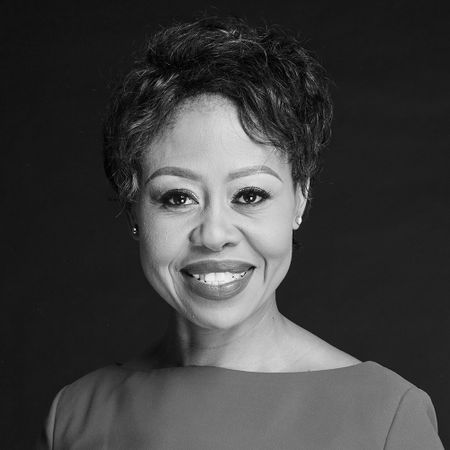
Mteto Nyati has been reappointed chairperson of Eskom for another three years. This has been warmly welcomed, with Electricity Minister Kgosientsho Ramokgopa backing continuity and affirming that “the improvement in the utility’s performance reflects the work of its board, management and employees”. Previously, Ramokgopa remarked: “If it ain’t broke, why fix it?”
Eskom CEO Dan Marokane also seems elated at the extension, and referenced the chairperson’s standing across government, labour, investors and business. But it is anyone’s guess how Business Leadership South Africa (BLSA) and some of the energy experts who have led the recent charge against Nyati really feel. Their sustained criticism went beyond a legitimate debate about the pace and architecture of unbundling. They framed his caution as obstructionism and implicitly questioned whether he was acting in the national interest. It was acerbic and unprofessional.
We can all agree that Eskom’s problems are not yet fixed. Municipal debt is staggering. The transmission grid requires enormous investment. The electricity market is being fundamentally redesigned. There are difficult questions about affordability, Eskom’s debt, ageing infrastructure and the pace and architecture of unbundling.
But perhaps that is precisely why Nyati’s reappointment should be seen as more than a routine administrative extension.
Three years ago, Eskom was an institution synonymous with national failure. In 2022/23 it recorded a net loss after tax of R23.9-billion. Its energy availability factor had collapsed to 56.03%. South Africa endured 280 days of load shedding.
Today Eskom has recorded two consecutive profitable years. In the 2026 financial year it reported profit after tax of R30.3-billion. Plant performance has improved substantially. Diesel dependence has fallen dramatically. And South Africa marked almost 500 consecutive days without load shedding.
Something must have happened.
We should be intellectually curious about why we find it so difficult to say that leadership had something to do with it. Obviously, the turnaround does not belong to Nyati and Marokane alone. It belongs to thousands of engineers, technicians, artisans, plant managers and Eskom employees. It belongs partly to interventions that predate them. The government’s R254-billion debt-relief package announced in 2023 and enabled by the Eskom Debt Relief Act was an indispensable part of the recovery. Operation Vulindlela, private generation and rooftop solar also played a pivotal role. Organised business contributed expertise, while lower demand has also helped.
Serious analysis should accommodate all of these things.
For years, when Eskom deteriorated under André de Ruyter, we were repeatedly and often correctly reminded of the context he inherited: corruption, sabotage, criminal syndicates, political interference, ageing plants and years of inadequate maintenance.
Yet when Eskom improves under a Black chairperson, a Black chief executive and a predominantly Black executive leadership, suddenly context becomes not mitigation but explanation. The improvement is because of solar. Because of business. Because demand is down. Because of government intervention. Because of reforms already under way. Blah blah blah. And almost on cue, hit pieces from Business Tech, fixating on the CEO’s remuneration, suddenly surface.
South Africa has developed a peculiar evidentiary test for Black competence. Failure tends to come with names attached but success somehow belongs to everyone.
We should name that tendency because it extends far beyond Eskom. Black leadership frequently enters the public imagination carrying a presumption of deficiency. Competence must be demonstrated repeatedly, and even when demonstrated, somebody else is often waiting nearby to claim authorship.
For example, earlier this year, the Financial Times told the story of the “sudden embrace” of business and the contribution of organised business to South Africa’s reform programme, Operation Vulindlela. Business deserves its credit. But Operation Vulindlela was created by the Presidency and National Treasury in 2020. The intensive partnership with organised business came later. Chronology is important because it determines authorship and agency.
Jarring rebuke
Back to Nyati. He should not be protected from scrutiny simply because Eskom is performing better. His stance on unbundling has brought him into open disagreement with BLSA and even the Presidency. BLSA’s Busisiwe Mavuso publicly questioned whether Eskom’s leadership was genuinely committed to reform. There was something jarring about the Presidency publicly rebuking Nyati in a country where Black executives are routinely subjected to a level of suspicion and second-guessing. The infantilisation of a highly esteemed chairperson, by the Presidency, was awful. Nyati was not some recalcitrant child to be brought into line; he was the chair of a board exercising its fiduciary responsibility and raising legitimate questions about debt, lenders and the sequencing of a major restructuring.
Disagreements on these issues are expected but the public dressing-down played uncomfortably into an old racial trope.
Nyati’s argument has been that Eskom supports an independent transmission system operator, but that transferring assets worth about R110-billion cannot be divorced from Eskom’s debt, lender agreements and financial sustainability. The government itself says the restructuring must safeguard Eskom’s financial position.
A board that interrogates the consequences of restructuring is not necessarily obstructing reform or “defying the President”. It may be doing precisely what a board is supposed to do.
Eskom has lived through extraordinary leadership churn. Chairs, boards and executives have come and gone while the institution deteriorated. Nyati has now completed a full three-year chairpersonship through one of the most consequential periods in Eskom’s history and has been entrusted with another three years.
There should be no victory lap. Eskom’s recovery remains unfinished and its next phase may prove harder than the first. We should not become so invested in a particular story about how Eskom was saved that we fail to recognise the people and institutions that did the work. Nyati’s reappointment offers an opportunity to correct that record – and more importantly, to allow those entrusted with rebuilding Eskom the space to exercise judgement, question orthodoxy and finish what they started. DM
Comments
Scroll down to load comments...