



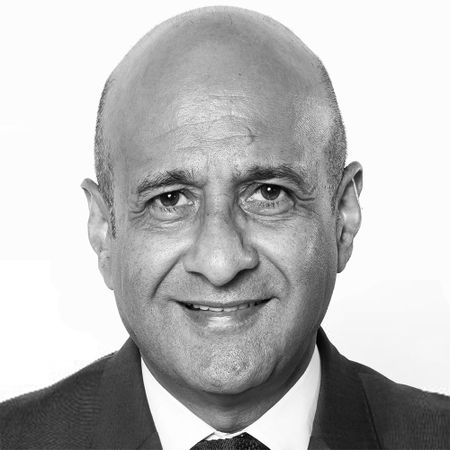
The underlying facts are, for now, allegations rather than findings. The Reserve Bank’s Financial Surveillance Department suspects Kastelo, the fintech company Mark Burke co-founded with his brother Nicholas in 2018, of using ordinary South Africans’ foreign exchange allowances – allowances capped by law precisely because the state wants to manage capital flight – to move roughly R4-billion offshore for the company’s own benefit.
The Gauteng Division of the High Court in Johannesburg has not ruled on whether that happened. It has ruled only that the SA Reserve Bank (Sarb) had a reasonable basis to suspect it and to freeze the company’s accounts while it investigates – an investigation that, by some estimates, could run for another two-and-a-half years. That distinction matters, and it is worth stating plainly before anything else: nobody, this column included, should get ahead of a process that is explicitly designed to establish what actually happened.
What is not still pending, however, is the DA’s own conduct over the past week, and it is that conduct, not the underlying Sarb investigation, that deserves scrutiny right now.
The party’s first instinct was full-throated defence. Federal chairperson Ashor Sarupen took the position that there was “no finding of wrongdoing” that would justify treating Burke as though one existed. This may be a fair legal point, but a curious one to lead with for a company whose founder and chairperson sat, at the time, on Parliament’s Standing Committee on Appropriations and as an alternate on the Standing Committee on Finance, the very structures meant to hold institutions like the Reserve Bank’s regulatory targets to account.
Party leader Geordin Hill-Lewis went further, telling the Sunday Times the party respected the independence of the Reserve Bank and the courts and would let the process run its course, while simultaneously stating, as fact, that Burke was no longer involved in Kastelo’s operations.
Explanation
Within days, Burke had stepped back from both committees. Sarupen’s explanation to Daily Maverick was that the original defence had been built on a misreading, and that early coverage seemed to attribute the alleged conduct to Burke personally, and once that was clarified, Burke “voluntarily” withdrew from the finance cluster to avoid the appearance of conflict.
Perhaps. But the sequence is hard to separate from the pressure that preceded it. The ANC and EFF had by then both called publicly for Burke’s removal from those committees. The reversal followed that pressure, not the other way round, whatever language is used to describe it now.
There is a reason “the lady’s not for turning” has outlived the Margaret Thatcher’s speech it came from. It named something real about political credibility: reversing course is rarely fatal on its own, but reversing course while insisting you haven’t is close to always fatal, because it converts a single bad news cycle into an ongoing one about honesty rather than judgement.
The DA appears to be doing exactly that. It executed the U-turn – Burke is off the committees – but has not treated it as one. Burke continues to give interviews restating the original defence almost verbatim: that he acted ethically and lawfully throughout, that no finding of wrongdoing exists against him or the company, and pointedly, that coverage of the affair, Business Day’s in particular, has been one sided. Party colleagues have gone on air citing that same defence as though it remains the party’s settled position, when the underlying facts on the ground – Burke’s committee status chief among them – have since moved.
This is the “worst of both worlds” version of a political reversal. A party that holds its line with full conviction at least offers a coherent position to test against events. A party that steps back cleanly, states plainly that it was responding to legitimate conflict-of-interest concerns, and stops commenting, at least clears the decks for the process to run without interference.
The DA has done neither. It has reversed the substance while continuing to run the original defence in public, which leaves the impression, fairly or not, of a party trying to have the political benefit of contrition and the reputational benefit of denial simultaneously.
This is no longer a hypothetical pattern. It played out in full, on the record, in Burke’s own interview with Alec Hogg on BizNews, aired on 21 August – two days after the committee step-back, not before it. That timing matters. This was not the party’s pre-reversal position being recirculated after events had moved on; it was Burke’s first extended public comment after the reversal, in a format entirely of his choosing, with a sympathetic and well-prepared interviewer.
Some of it was a legitimate and detailed technical defence, and fairness requires saying so: Burke walked through Kastelo’s licensing history, the Financial Sector Conduct Authority and Reserve Bank approval processes it says it obtained, the client consent mechanisms it built (including recorded video confirmations), and a granular account of how the arbitrage model is supposed to return value to SA rather than export it permanently.
Whether that defence holds will be for the investigation and, if it comes to it, the courts to determine, but it is a substantive account, not merely a deflection, and it deserves to be represented as such.
Counter-punch
What undercuts the DA’s stated position is everything built around that defence. In the same conversation, Burke described the surrounding coverage as a “witch hunt”, said the ANC would not succeed in its “smear campaign”, and accused the ANC of having “stolen public funds repeatedly” – an accusation entirely unrelated to the Sarb investigation into his own company, deployed as a counter-punch.
He also gave an account of the committee withdrawal that does not match the party’s own explanation. Sarupen told Daily Maverick the step-back was voluntary, carefully considered, and utterly consistent with a pattern of recusals stretching back to when Burke first took the finance portfolio.
Burke, on air, described the same sequence differently: the party, he said, “did do a bit of a flip-flop” before arriving at the decision. Both cannot be the tidy, principled process the DA’s messaging has since presented. One of them is the honest account.
The deeper irony is the one embedded in the party’s own stated position. The DA’s official line – voiced by both Sarupen and Hill-Lewis – is that due process must be allowed to run, that no findings exist yet, and that judgment should be withheld until the Reserve Bank and, ultimately, the courts have done their work. That is a defensible, even admirable, institutional position for a party to take about one of its own.
But it is not what is actually happening. Due process, by definition, is a process the institution under scrutiny does not attempt to narrate while it unfolds. Burke himself used the phrase during the BizNews interview, insisting that investigators “must continue to do their work without pressure or interference” in the same breath as naming the cause of “the media storm” as a political party he says feels threatened by scrutiny.
That is not staying out of the process. That is offering the public a competing verdict. A smear campaign, not legitimate investigation, while asking it to withhold judgement on the underlying facts.
What the DA is doing more broadly, through Burke’s continued media appearances, the party’s contesting of press framing, and colleagues rehearsing the defence on air, is running a live, parallel public case while asking the public and the press to hold theirs. You cannot simultaneously ask people to wait for the outcome and keep supplying them with your preferred version of what that outcome should be.
Sustained discipline
If the DA genuinely believes due process should be respected, the disciplined version of that position is straightforward, and it is not what we are seeing: state once, clearly, why Burke stepped back; decline further comment on the substance until the Reserve Bank’s investigation concludes; and let the silence do the work that repeated defensive engagement cannot. Instead, the party that built its brand on institutional discipline is demonstrating, in real time, that it finds sustained discipline harder to execute than to demand of others.
None of this settles whether Kastelo circumvented exchange controls or ran a defensible, if aggressive, arbitrage model inside a dated regulatory regime. That is genuinely still an open question, and one only the investigation and the courts can answer.
But it does settle something narrower and, for now, more immediately answerable: whether the DA has handled its own response to the affair with the discipline it asks of others.
On the evidence of the last week, it has not. DM
Comments
Scroll down to load comments...