




The date 14 August 2026 should be remembered as a historic day for environmental justice in South Africa.
The Constitutional Court has finally closed the door on Shell and Impact Africa’s attempt to pursue oil and gas exploration off the Wild Coast. After years of resistance, protest, litigation and community organising, the country’s highest court has affirmed something that communities have been saying from the beginning — Our oceans are not sacrificial zones and our communities cannot be treated as obstacles to corporate profit.
This is not merely a legal victory. It is a victory for the people.
For years, the Wild Coast communities have had to fight to defend something that should never have been placed in jeopardy in the first place. Their right to determine what happens to the land and ocean upon which their lives, livelihoods, cultures and spiritual practices depend.
How Shell vs West Coast started
The story began long before Shell’s seismic survey plans became national news. In 2014, an exploration right was granted to Impact Africa. Shell later acquired a 50% interest. In 2021, communities were confronted with plans for seismic surveys along the Wild Coast – surveys involving powerful sound waves fired into the ocean floor in search of oil and gas deposits.
Communities and environmental organisations challenged the exploration right, arguing that they had not been meaningfully consulted and that critical issues, including livelihoods, cultural and spiritual rights, marine ecosystems and climate change, had not been properly considered.
In 2022, the Makhanda High Court set aside the exploration right after finding that it had been unlawfully granted. But the struggle did not end there.
The Supreme Court of Appeal subsequently upheld the finding that the exploration right was unlawful yet gave Shell another opportunity to pursue a renewal process. This effectively left communities facing the prospect that an unlawful process could be given another life.
On 14 August, the Constitutional Court rejected that approach.
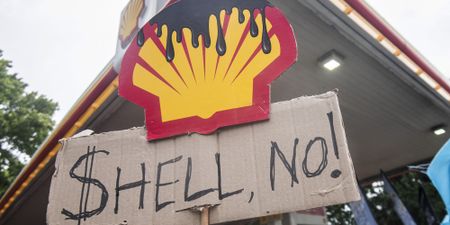
The court has made clear that the original failures cannot simply be repaired after the fact through a later consultation process. The exploration right and subsequent renewals have been set aside, meaning Shell and Impact Africa no longer have the right to explore for oil and gas off the Wild Coast.
Who decides South Africa’s future?
But perhaps the most important part of this judgment extends beyond Shell.
It is about who gets to decide South Africa’s future.
For decades, communities across South Africa have experienced development as something done to them rather than with them. Mining projects, fossil fuel infrastructure, industrial developments and other extractive activities are often presented as opportunities for jobs and economic growth, while the communities living closest to these projects are left to carry the environmental, social and health costs.
The Constitutional Court has now sent an important message. Economic development cannot be used as a blank cheque to override constitutional rights.
Meaningful public participation is not a box to tick at the end of a corporate application. It is not a public meeting where communities are informed about decisions that have effectively already been made. And it certainly cannot be retroactively manufactured after an unlawful decision has already been taken.
Participation must mean that communities have a genuine opportunity to influence decisions that affect their lives.
This matters profoundly for the Wild Coast.
Ocean is a living ecosystem that needs protection
For coastal communities, the ocean is not simply an economic asset sitting on a balance sheet. It provides food and livelihoods. It carries histories and traditions. It is connected to culture, spirituality and identity. It is a living ecosystem upon which present and future generations depend.
The Constitutional Court recognised this connection, affirming that environmental protection cannot be separated from the protection of dignity, culture and livelihoods.
That is an important development for environmental justice in South Africa. It also matters in the context of the climate crisis.
South Africa cannot continue to speak about a just transition while simultaneously opening new frontiers for fossil fuel extraction. We cannot tell communities that they must adapt to climate change while allowing corporations to deepen the very fossil fuel dependence that is driving the crisis.
Fossil fuel development: the choice is ours
The Constitutional Court’s reference to the International Court of Justice’s 2025 advisory opinion on climate change is particularly significant. The judgment places decisions about fossil fuel development within a broader legal and constitutional context: governments have responsibilities to protect people and the environment from climate harm, and decisions affecting our future must be informed by science, international commitments and the consequences for present and future generations.
The Wild Coast therefore represents something much bigger than one company, one exploration right or one court case. It represents a battle over the kind of development South Africa chooses.
Do we continue with a model where multinational corporations arrive with billions of rands behind them and communities are expected to accept whatever is presented as “development”?
Or do we build an economy where communities have meaningful power over decisions affecting their land, oceans, livelihoods and futures?
The 14 August judgment gives us a clear answer. People come before profit. But we should also be honest about what this victory does and does not mean.
Lessons from the Wild Coast
Shell has been stopped from proceeding with this particular exploration right off the Wild Coast. The ruling does not mean that the fossil fuel industry has suddenly abandoned South Africa. Oil and gas companies continue to pursue opportunities along our coastline, while the government continues to promote gas and offshore exploration as part of the country’s energy strategy.
That means the struggle continues. The lesson from the Wild Coast is that communities must not wait until the seismic vessels arrive before organising. Communities must be involved from the beginning of decision-making processes. The government must respect constitutional rights before licences are granted, not after communities have been forced to spend years in court trying to undo unlawful decisions.
And civil society must continue to stand alongside communities and not speak over them. The greatest victory today is not simply that Shell has been stopped. It is that communities have demonstrated their power.
People who were told that multinational corporations were too powerful to challenge stood their ground. Fishers, traditional and community leaders, environmental organisations, lawyers and activists built a movement capable of taking one of the world’s largest fossil fuel companies all the way to the Constitutional Court and winning. That should inspire every community currently fighting an extractive project.
The Wild Coast has reminded us that justice does not always arrive quickly. Sometimes it takes years of organising, protest, legal action and persistence. Sometimes communities must repeatedly knock on the doors of institutions that were supposed to protect them in the first place.
But when communities organise, when movements build solidarity, and when the law is used as a tool for justice rather than merely a shield for power, victories are possible.
Today, the Wild Coast has won. The ocean has won. Community rights have won.
And for everyone fighting for climate justice, this victory carries a simple message.
No climate justice without community rights. No development without meaningful participation. And no amount of corporate money should ever be powerful enough to buy its way around the Constitution.
Today belongs to the communities of the Wild Coast. Tomorrow, the struggle continues.
Amandla! DM
Comments
Scroll down to load comments...