



/file/dailymaverick/wp-content/uploads/2025/09/label-Opinion.jpg)
When Minister in the Presidency Khumbudzo Ntshavheni attended Russia’s International Security Forum in Moscow in May, official statements emphasised familiar themes: “multipolar cooperation”, “African solutions to African problems”, and strengthened Global South partnerships. The language reflected a broader diplomatic shift away from Western dominance and toward alternative alliances, yet absent from public readouts was any indication that a growing and sensitive issue was addressed: the recruitment of African nationals into Russia’s war in Ukraine.
This absence raises important questions. Whether strategic or inadvertent, it highlights a widening gap between official narratives of partnership and emerging concerns about the experiences of African citizens within these relationships.
Evidence and emerging patterns
In May 2026, Ukraine’s Ministry of Foreign Affairs launched StopRussianRecruiters.org, a platform documenting what it describes as recruitment networks linked to the Russian military. The platform compiles casualty data, testimonies and investigative material. As it is produced by a party to an ongoing conflict, its claims require scrutiny. However, some of its findings align with reporting across African and international media.
According to data published on the platform, at least 485 African nationals recruited into Russian forces have been confirmed dead, including 10 South Africans. Independent outlets, including The Continent and France24, have also reported on recruitment pathways that appear to blur the line between labour migration and military involvement.
These reports suggest that some African nationals, often students, job seekers, or migrants, may have been drawn into recruitment pipelines through offers of employment, training, or other opportunities abroad. In some cases, contracts and expectations reportedly shift upon arrival, raising questions about consent and transparency. These pathways often involve intermediaries, informal brokers and misleading contracts that shift terms upon arrival.
Migration researchers and civil society organisations have increasingly warned of what they describe as a convergence between irregular migration systems and military demand. A southern African organisation working on migration and labour rights noted that “economic vulnerability is being exploited in ways that appear to blur the boundary between employment and coercion”.
A South African case
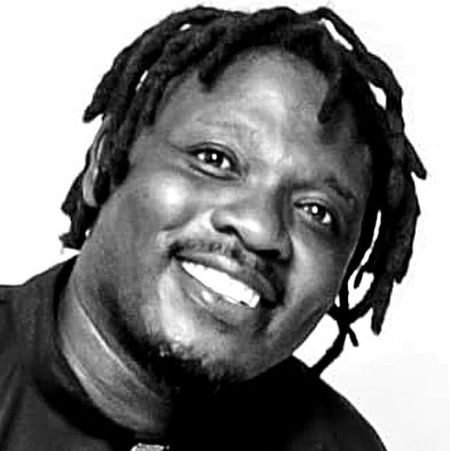
The case of 44-year-old South African national Sihle Makhaye has brought these concerns into sharper focus. Reportedly, Makhaye travelled to Russia after being promised employment as a bodyguard. He later died in custody following health complications, and his body was repatriated to South Africa in June.
While full details of his case remain unclear, it has become emblematic of broader anxieties surrounding recruitment practices and the risks faced by African nationals abroad. Families and observers have raised questions about the conditions under which individuals are recruited, the nature of contracts they enter and the protections available to them.
Regional responses
Across the continent, responses to these developments have varied. According to police reports and court proceedings, in Zimbabwe, authorities have arrested and charged multiple individuals in cases linked to trafficking networks. Both local actors and foreign intermediaries were involved, pointing to the transnational nature of these networks.
Elsewhere, including in Kenya, media reports have raised concerns about the oversight of labour migration programmes and the potential for abuse within recruitment systems. Officials have denied any involvement in facilitating military recruitment, but the issue has prompted broader debate about governance, accountability and the protection of citizens seeking opportunities abroad. Taken together, these cases indicate that the issue is not confined to a single country. Rather, it reflects wider structural vulnerabilities linked to unemployment, migration, and the global demand for labour.
Russia’s position
In response to questions, the Russian Embassy in South Africa emphasised that Russia’s engagement with African countries is based on “sovereign equality, mutual respect and non-interference.” Spokesperson Kirill Kalinin stated that cooperation spans sectors such as trade, energy, infrastructure, and security and is conducted in accordance with international law.
He further highlighted discussions at the Moscow Security Forum, where Russian officials underscored the importance of Global South cooperation and reaffirmed support for African sovereignty and development.
Russia has not publicly acknowledged any systematic recruitment of African nationals into its armed forces, consistently framing its security cooperation as state-to-state engagement rather than individual recruitment. The embassy’s response did not directly address specific allegations related to recruitment, instead pointing to broader diplomatic engagements, including a recent phone call between presidents Vladimir Putin and Cyril Ramaphosa.
This position reflects a wider diplomatic approach in which general principles of cooperation are foregrounded, while specific controversies remain less clearly addressed.
The weight of history
Russia’s contemporary engagement in Africa cannot be understood without reference to its historical role. The Soviet Union provided support to liberation movements across the continent, offering military assistance, education and diplomatic backing during anti-colonial struggles. This legacy continues to shape perceptions of Russia as a partner distinct from Western powers.
As analysts have noted, this historical memory retains significant influence. It informs how current engagements are interpreted and contributes to a degree of goodwill that persists in many African contexts. At the same time, contemporary relationships appear increasingly shaped by strategic and economic considerations. Security cooperation, resource agreements, and geopolitical positioning now play a central role in Russia’s presence on the continent.
The challenge for policymakers and observers is to assess these relationships on their current terms, while recognising the enduring influence of historical narratives.
South Africa’s position
South Africa occupies a distinctive place within this landscape. As a member of BRICS and a prominent diplomatic actor, Pretoria has consistently articulated a foreign policy grounded in non-alignment, sovereignty, and multilateral engagement. Participation in forums such as the Moscow Security Forum reflects this positioning. However, it also raises questions about how South Africa navigates complex partnerships when sensitive issues arise.
If concerns about recruitment were not raised during the forum, it may suggest limitations in agenda-setting or a reluctance to engage publicly on contentious matters. If they were raised, the absence of public communication points to a broader issue of transparency. Requests for clarification from the minister’s office were ongoing at the time of publication.
Foreign policy analysts caution that silence in such contexts can carry implications. As one scholar noted, the credibility of non-alignment depends not only on maintaining diverse partnerships, but also on the willingness to address issues that affect citizens directly.
Beyond diplomacy
The implications of recruitment extend beyond foreign policy. The movement of individuals into foreign conflict zones under unclear or contested conditions raises concerns about labour governance, migration systems and national security. Experts warn that returning individuals may face challenges related to trauma, reintegration, and social stability.
These dynamics highlight the intersection between global conflict and local vulnerability. They also underscore the importance of regulatory frameworks that can protect citizens engaging in cross-border employment. At a broader level, the issue reflects the pressures facing African states in a rapidly evolving geopolitical environment. As external powers compete for influence, the terms of engagement increasingly shape outcomes for citizens.
A question of accountability
Africa today is not a passive arena in global politics. It is an active site of negotiation, partnership and contestation. This creates opportunities and risks. Engagement with external partners, whether Russia, China, the United States, or others, remains essential. However, such engagement requires clarity, oversight, and accountability.
This includes ensuring that labour migration systems are transparent, that recruitment practices are regulated, and that citizens are protected from exploitation. It also requires governments to communicate openly about the issues that arise within these partnerships. As former President Thabo Mbeki observed, “Sovereignty is not a slogan; it is a practice.” That practice is measured not only in diplomatic positioning but in the concrete protection of citizens.
The critical test
The question at the heart of this issue is not simply whether Russia presents itself as a partner to Africa. It is whether the realities of that partnership align with the safety, dignity and agency of African citizens. As reports of recruitment and related concerns continue to emerge, African governments face a critical test: how to balance strategic relationships with their responsibility to protect their people.
Russia has not acknowledged any systematic recruitment of African nationals into its armed forces. In some cases, individuals may also voluntarily seek opportunities abroad, complicating the line between coercion and consent. In this context, silence is not necessarily neutrality. It is part of the broader political landscape in which decisions are made, priorities are set, and accountability is defined.
The challenge is not whether African states engage external partners, but how. The credibility of those partnerships will increasingly be measured not in diplomatic language, but whether they protect citizens from harm, ensure transparency in recruitment systems and align geopolitical strategy with public accountability. DM