



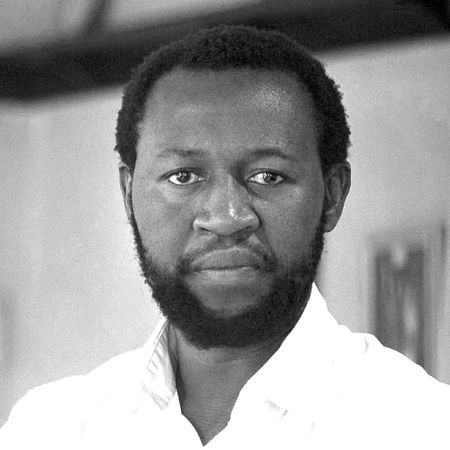
The independent-minded Chinese economist Gao Shanwen, who courageously challenged the reliability of China’s official Gross Domestic Product data, and who argued that the United States deserved much more credit for the Asian dragon’s economic miracle, has died at the age of 55.
Gao died on 7 July after a year of cancer treatment, according to the Chinese state-run Shanghai Securities News.
Gao last year outraged the Chinese Communist Party leadership when he, said in Washington, DC, at an event hosted by the Peterson Institute for International Economics, that China’s official post-Covid-19 GDP numbers might not be accurate.
GDP is the total monetary value of all finished goods and services produced within a country’s borders during a specific period. It serves as the primary measure to determine the size and wealth of an economy.
Speaking in Washington, he said the Chinese economy was probably expanding only at an average pace of around 2%, lower than the officially reported figure of close to 5%.
“We do not know the true number of China’s real growth figure,” Gao, then chief economist at SDIC Securities, said.
“I think it might be more reasonable to expect a growth rate between 3% to 4% in the years to come, for the next three to five years,” Gao said. “But we know, and I think, the official number will always be around 5%.”
If China’s official GDP is indeed inflated, consumption and growth forecasts based on these figures could be misleading.
Disciplined and disappeared
The Chinese Communist Party ordered an investigation into Gao and disciplined him after the remarks. This was not the first investigation and reprimand of Gao because of his critical reviews of the Chinese government’s management of the economy, politics and society. Gao disappeared from public view following his questioning of the Chinese government’s official growth data. Gao had also previously disappeared from public view under unexplained circumstances – as is often the case in the country with critics of Chinese President Xi Jinping.
There have been longstanding doubts over the veracity of China’s GDP data. Government officials set growth targets in successive Five-Year Plans that govern the country’s economic planning. However, officials are often under pressure not to miss their targets, which often creates an upward bias in their reporting.
Before becoming premier, the late Li Keqiang had also questioned the reliability of Chinese GDP. He was reported to have said to look instead at three direct indicators of economic activity: cargo volume on railways, electricity consumption and bank loans.
Awkward questions
Gao, in the 2025 Washington, DC speech, also questioned Beijing’s ability to boost its economy as threats loom from a property meltdown, burgeoning debt, deflation, declining domestic consumer demand and trade tariffs from the US and other developed countries. The Chinese authorities have loosened monetary policy, increased the budget deficit and issued more debt to boost consumption and maintain stable economic growth.
Gao had also previously sparked intense national debate in China over critical comments on the country’s continued long-term economic sustainability, the dangers of massive social fragmentation and future political instability, given a prolonged slowdown in the country’s economic growth levels.
In 2024, he described China’s post-pandemic society as being “full of vibrant old people, lifeless young people and despairing middle-aged people”. The Chinese Communist Party has stayed in power for so long, compared with other communist parties, through an unspoken social contract, in which the CCP delivers high levels of economic growth and with it mass prosperity for large numbers of Chinese, in return for citizens foregoing individual political rights.
State capitalism
Unlike other ruling communist parties, such as that of the former Soviet Union – and except the Vietnamese Communist Party – the Chinese Communist Party has pursued state capitalism.
This has been centred in a market economy, providing property rights for businesses and land ownership, allowing the private sector to drive industrialisation, with the state governing the market by coordinating industrial expansion, infrastructure expansion, technology development, setting economic growth targets, all in partnership with the private sector.
Chinese society is highly competitive, with individuals competing on merit to join the public service, and provincial and local governments competing with one another to deliver the best public services and products, and also private companies competing cut-throat with one another and with international companies in the domestic markets; private domestic companies competing with state companies; and Chinese private and state companies vigorously seeking global markets.
Industrialisation has focused on manufacturing, with the centrepiece of Chinese industrialisation being for the country to become the world’s factory. China’s industrialisation has invited international companies with the technology, management skills and consumers to set up in China, to assemble their products in China – and China copying the know-how, technology and management skills of these companies.
Education and accountability
Globally competitive education is a central plank of China’s economic strategy to raise individual and country prosperity, with Stem (science, technology, engineering, and mathematics) education at the heart of the country’s industrialisation strategy. China also manages its diverse 55 ethnic groups by aggressively emphasising a collective, common Chinese identity, rather than individual ethnic community identities.
The Chinese government fosters accountability, which is essential for the successful functioning of any government, economy, or political system, and for a peaceful society, through rule-based governance. Everyone in society must follow the rules, behave responsibly and accountably, ensure low levels of corruption, and have a merit-based public sector and a merit-based private-sector entrepreneurship system.
China has suppressed public criticisms of the CCP, proscribed the internet and, in enforcing a collective Chinese national identity, punished any attempts by citizens to assert individual or regional ethnic identities.
If Gao is right that China’s GDP averaged only around 2% in the past two to three years, even though the official number is “close to 5%”, it will be very difficult for the Chinese government to maintain the social contract of providing mass individual prosperity in return for the foregoing of individual democratic rights and freedoms.
The Chinese Communist Party, under the leadership of Xi Jinping, has, as a post-Covid-19 lockdown economic recovery strategy, been trying to change the direction of the Chinese economy by transforming from an export-manufacturing one, which depends on global consumers, to a domestic consumption-led economy.
Domestic consumption slump
Gao, also in late 2024, openly challenged official data about China’s GDP growth, arguing that it may have been inflated by 10 percentage points between 2021 and 2023. In 2024, at an investor conference in Shenzhen, he described young Chinese as “lifeless” because of their high unemployment crisis. He said China’s inability to create jobs for the young was among the reasons for lower economic growth rates.
A lower economic growth rate will mean that China’s high youth unemployment rate will continue and even worsen. His Shenzhen speech went viral. The Chinese government quickly took the speech off the internet.
In his Shenzhen investor conference, he said China’s youth was “turning off the lights and eating noodles”, rather than contributing their disposable income to the economy.
“The GDP growth rate has been overestimated by three percentage points each year, and by 10 percentage points cumulatively, which corresponds to the loss of 47 million employed people in urban areas,” Gao told the Shenzhen investor conference, according to a copy of the speech posted by the China Digital Times website.
Gao observed that Chinese regions with younger populations had disproportionately suffered from poorer economic performance since the end of Covid-19 lockdowns, while regions with older populations recorded faster growth.
“For the elderly … there will be no impact on their income, and they can continue to enjoy their twilight years and dance in public places,” Gao said. “For young people, income expectations have been significantly revised downward, the certainty of income growth has been significantly revised downward,” he said. “They can’t find jobs, or the jobs they find are significantly different from their expectations.”
Unwelcome criticism
A pivotal aspect of the Chinese government’s post-Covid-19 economic reforms is to get young people to help drive a consumption-led growth recovery of the economy. Gao’s criticisms were interpreted by the Chinese government as pointing out that the country’s attempt to refocus on consumption-led growth had failed so far.
Gao’s Shenzhen speech was widely distributed and discussed on Chinese platform WeChat. The Chinese government promptly removed it from WeChat and other online platforms, posting the warning: “This content is no longer available due to complaints of violations.”
In 2018, Gao also angered the Chinese Communist Party leaders and unleashed a national debate in China, when he said that China’s extraordinary economic rise since the late 1960s was tied to the fact that China interlinked its economy to that of the United States. He warned that the moment China took an aggressive trade policy with the US, China’s economy would be hammered, and China’s youth would suffer the most, as the Chinese economy would not be able to deliver higher economic growth and employment to the youth amid a trade war with the US.
Gao also warned in his 2018 speech that China, as a nation, was “mentally unprepared” for trade and political battles with the US. He cautioned the Chinese Communist Party leadership not to do anything to harm China’s relationship with the US, saying it would plunge the Chinese economy into long-term stagnation, which would trap China’s youth into long-term unemployment.
This speech was also quickly removed from social media by the Chinese government. His Chinese critics slammed him for saying this, claiming he wanted China to “surrender” to the US in a trade war.
Long-standing doubts
There have been long-standing doubts abroad over the veracity of China’s GDP data. China’s central government sets economic growth targets in Five-Year Plans that govern the country’s long-term economic planning.
Meeting the growth targets is the central performance metric used by the Chinese government to measure the performance of China’s party, political and state officials, and regional and local governments.
Individual promotion, and budget allocations to state entities, regions and local governments are based on their meeting these economic growth targets. This means that officials are under pressure not to miss targets, which often creates an upward bias in their reporting.
Before becoming China’s premier in 2013, the late economist Li Keqiang had also questioned the reliability of Chinese GDP. An economic pragmatist, Li won the Sun Yefang Economics Prize for his doctoral studies at Peking University.
As premier, from 2013 to 2023, Li prioritised structural economic reform and debt reduction, termed “Likonomics”, which was aimed at reducing China’s dependency on debt-fuelled growth and steering the economy towards self-sustainability.
Gao began his career as an economist at the People’s Bank of China in 1995. He left the state to join the Everbright Securities Research Institute as chief economist in 2003, before moving on to Essence Securities in 2007, and stayed there after the company rebranded itself as SDIC Securities in late 2023. He left the firm in November 2025.
Because of his criticisms of the Chinese government’s economic policies, his securities industry registration was cancelled at the end of 2025, according to a Securities Association of China record.
Gao leaves a legacy of courageously challenging the Chinese authorities, providing policy alternatives and views, in a society where conformity to the Chinese Communist Party line is resolutely enforced. After the announcement of his death, there was an outpouring of praise on online platforms. One user wrote on Weibo, the Chinese online platform: “The one who dared to speak out and tell the truth is gone.” DM
Comments
Scroll down to load comments...