



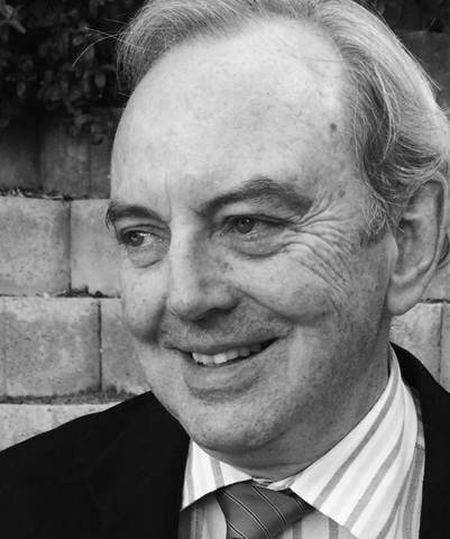
Daily Maverick’s “Lowly Newspaperman” and staunch Orlando Pirates supporter, Mondli Makhanya,has penned a thoughtful piece comparing the political fortunes of Sir Keir Starmer and President Cyril Ramaphosa.
Of course, there are many differences between the brief and messy premiership of Starmer and the long period at the top, as either deputy president or president, that Ramaphosa has endured or enjoyed.
The constitutional doctrine of collective Cabinet responsibility makes Ramaphosa co-responsible for the excesses of State Capture in the Zuma era, when Ramaphosa served as chair of the national cadre deployment committee of the ANC.
He has been in the hot seat since 2018 as the third two-term president of SA. It is still an open question as to whether Ramaphosa will see out his second term or, like Thabo Mbeki and Jacob Zuma before him, be shown the door after the ANC elective conference next year. The prospects of impeachment and a successful vote of no confidence in him are also factors in the mix for Ramaphosa that Starmer did not have to contend with before his ignominious resignation after only two years in office.
The nub of the criticism raised by Makhanya comes from this reference:
“Cyril Ramaphosa addressed the nation and said that he wanted ‘to make it clear’ that he would not resign because to do so would be ‘to abdicate the responsibility that I assumed when I became the president of the republic’. To resign now ‘would be to give in to those who seek to reverse the renewal of our society, the rebuilding of our institutions and the prosecution of corruption’.”
The underwhelming attempts by Ramaphosa at the renewal of society, rebuilding of public institutions and, above all, the prosecution of the corrupt are all matters of public record. Yet he persists, at this late stage, in setting them up as his national goals, just as he did when the CR17 campaign triumphed over the Zuma candidate at Nasrec (after DD Mabuza and some of his Mpumalanga delegates swapped allegiance to the chagrin of the Zuma faction),
Instead of renewal, we have stagnation, especially on the all-important economic front; educational, medical/public hospital and municipal institutions remain dysfunctional or in ruins, while prosecuting the corrupt leaves much to be desired in the wake of the findings of the Zondo Commission.
Puny efforts have seen one former senior ANC politician jailed (Vincent Smith) and another facing a stuttering prosecution (Zizi Kodwa); the rest, nearly 100 of them, sail on in the calm waters of impunity, some even retaining Cabinet positions.
Renewal, rebuilding, and the necessary prosecutions of the corrupt as envisaged are all worthy goals. Their achievement has proved elusive as the country stumbles from inquiry to inquiry, consultative body to consultative body, all without achieving any discernible forward progress on the correctly identified core issues.
The issue of dealing effectively with the corrupt in our midst is the most significant and urgent unaddressed issue of the yet-to-be-resolved issues raised by him at the beginning of his first term as President.
Salvaging some honour
Whether he lasts until the ANC elective conference in 2027 or all the way to the end of his second term in 2029, there is still time for Ramaphosa to redeem himself and salvage some honour from his two terms at the helm of the nation. Here’s how:
On renewal, Ramaphosa could do a lot worse than paying proper and close attention to the proposals made by the SA Institute of Race Relations on the economic, educational and healthcare fronts.
On rebuilding institutions of state, the damage wrought by indiscriminate cadre deployment can be reversed by abandoning that toxic practice, one which even extended to the cheeky practice of “recommending” ANC favourites for judicial appointments, as Ramaphosa himself revealed to the Zondo commission during his evidence in that forum.
It is on the anti-corruption front that there is low-hanging fruit that is ripe and ready to be plucked. There will be more after the Madlanga Commission reports finally on 31 August.
The President needs to consider the binding nature of the decisions of our apex court in the Glenister litigation, acknowledge that his government is bound to implement those findings and set about implementing them properly.
The key findings to consider are these:
In Glenister II, the court framed the fight against corruption as a fundamental human rights issue. It ruled that for a state to respect, protect, promote, and fulfil the Bill of Rights, it must maintain a clean administration — something entirely incompatible with the rise of State Capture and tenderpreneurism. The court also pointed to the international treaty obligations of SA which require the establishment of independent anti-corruption machinery of state.
The take-home message in Glenister II (paragraph 200) is that “our law demands a body outside executive control to deal effectively with corruption”.
No such body exists in SA yet.
In Glenister III, the court observed that:
“Corruption is rife in this country, and stringent measures are required to contain this malady before it graduates into something terminal. We are in one accord that South Africa needs an agency dedicated to the containment and eventual eradication of the scourge of corruption. We also agree that the entity must enjoy adequate structural and operational independence to deliver effectively and efficiently on its core mandate.”
The inadequacies in the structural and operational independence of the anti-corruption machinery of state are vividly and repeatedly evident in the various commissions of inquiry that have done their work in recent years. Implementation of their recommendations has been both patchy and incomplete. Failed and stalled prosecutions of the corrupt litter the legal landscape in SA.
Former Chief Justice Raymond Zondo has warned that: “The levels of corruption in our country have reached completely unacceptable proportions, and unless something very drastic and effective is done soon, we will have no country worth calling our home.”
Help is at hand.
Anti-corruption commission
Glynnis Breytenbach, chief whip of the DA, introduced two Bills in Parliament in November 2024. They address the thorny issues around countering the corrupt in a constitutionally compliant way. The President has the prestige and the power to get behind these Bills, which envisage the establishment and enablement of a new Chapter Nine anti-corruption commission (NOT another commission of inquiry and certainly not Idac — the Independent Directorate Against Corruption) which ticks all the boxes created by the courts in terms that are binding on the state.
Accelerating their progress through the legislative process could serve to salvage the prestige of the Ramaphosa presidency, if only the political will to do so can be generated. The bickering between SAPS and Idac leaders will also end if the single agency approach the courts require is embraced.
If not, the lack of constitutionality of the Idac unit within the National Prosecuting Authority can be litigated. The President was politely warned of the unconstitutionality of Idac before he signed the Bill that made it law. He was not dissuaded from signing, under pressure from the 2024 elections then pending.
At this stage the President faces the stark choice of supporting the Breytenbach Bills or of condemning the country to a future in which the ongoing eruption of corruption with impunity engulfs the nation in a wave of toxic lava.
The evidence before the Madlanga Commission reveals the toxicity in the current institutional arrangements meant to capacitate the criminal justice system to deal effectively with corruption. The deliberate persistence in a multi-agency approach (frowned on by the courts) and the failure to implement the Glenister rulings properly will render the negative comparisons with the failed Starmer premiership that the Lowly Newspaperman makes valid. DM
Comments
Scroll down to load comments...