



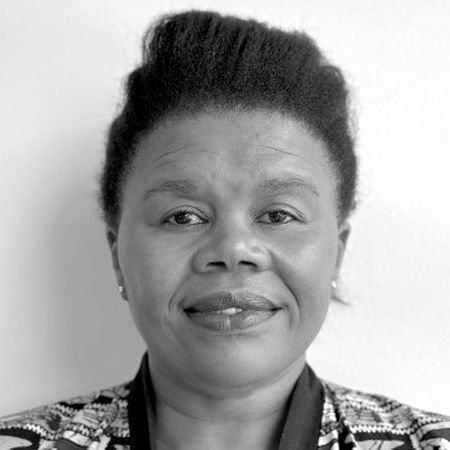
When I sit in rooms with young South Africans, watching them map out futures, I find myself returning to the moment my own map was drawn.
On April 27th, 1994, I stood on the streets of Gugulethu, Khayelitsha and Crossroads and felt, without reservation, that history had turned. I was a student, a voter educator and a marshal helping direct people to polling stations. Brenda Fassie’s Black President blasted from taxi speakers. The adults around me carried themselves differently. The impossible had happened.
The sense that anything was possible was in the air.
We believed deeply in the promise of the liberation Struggle. Not as a slogan, but as a future under construction. We believed that the people would govern. That the doors of learning and culture would be opened. That the wealth of the country would be shared. That dignity would expand and poverty would retreat.
Looking back, I realise that what we inherited was not simply democracy. We inherited a way of imagining. The generation of liberation did not only give us rights. It gave us a dream large enough to hold a country. It also gave us examples of courage.
When I think about that generation, I do not think only of famous leaders or historic speeches. I think of people who possessed not only fierce intellects but moral courage. People willing to lose positions, comfort and influence for principle. People who understood that freedom was not merely something to win but something to practise.
Recently I found myself returning to stories like Pregs Govender’s account of voting against the Arms Deal while serving as an ANC Member of Parliament. What moved me was not the policy debate itself. It was the act of conscience. The willingness to stand against the grain of one’s own organisation when principle demanded it. To risk the comfort of belonging for the demands of integrity.
Courage
That kind of courage formed many of us. It taught us that loyalty without principle is dangerous. That democracy requires dissent. That power must be accountable, even when it wears the colours we love.
Those are the shoulders on which many of us stood in 1994.
This is why I have become increasingly uneasy with the way we sometimes speak about inheritance. There is a tendency to speak as if young people inherit only failure. Corrupt politicians. Broken institutions. Unfulfilled promises. A state captured by self-interest.
Those inheritances are real, but they are not the whole story. Young people also inherit traditions of courage, solidarity, dissent. Of moral imagination.
They inherit the women who organised under impossible conditions. The activists who refused to be silent when silence was rewarded. The trade unionists, church leaders, community organisers and ordinary citizens who insisted that a more just society was possible long before evidence supported that belief.
They inherit not only victories, but examples. Every liberation generation both opens possibilities and creates new boundaries. It often takes young people to show us where those boundaries are.
In 2015, Chumani Maxwele walked up to a statue of Cecil John Rhodes at the University of Cape Town and threw human excrement at it. For many South Africans, the act was offensive. I was among those who believed this to be a moment of political clarity.
What followed, Rhodes Must Fall, Fees Must Fall and a wider challenge to inherited assumptions, was not simply a dispute about statues. It was another generation pushing against the walls of the settlement it had inherited.
The Fallists were not rejecting freedom. They were questioning its boundaries.
Unburdened by the need to defend those old compromises, they looked directly at what had been left in place and asked the question older South Africans had trained themselves to avoid: Why is this still here?
They could ask why economic exclusion remained so entrenched. Why knowledge systems remained so hierarchical. Why institutions continued to reproduce old patterns of power. Why so much of the future still seemed organised around compromises made before they were born.
Every generation mistakes its settlement for common sense. Young people expose it as a settlement. That is what the students of 1976 did to apartheid. It is what the Fallists did to the democratic transition. And it is what the young leaders I have shared spaces with and listened to are doing again, in different ways, in this moment.
That refusal matters. Especially now.
Remaking the rules
Almost everywhere that matters, older people are making and remaking the rules that govern the world. They lead governments, run corporations and dominate international institutions. They negotiate wars and peace agreements, and shape economic systems. They decide how societies respond to climate change, artificial intelligence, debt, migration and democracy itself. Yet it is younger generations who will live longest with the consequences.
This is not simply a conflict between youth and age. Many older people continue to fight courageously for justice, democracy and human dignity. Many young people reproduce the very systems they claim to oppose. The real tension is about power. Who gets to make the rules? And who has to live with them? Something about this arrangement feels deeply out of balance.
Like many children of democracy, I inherited more than a country. I inherited a story about the world. We believed democracy was expanding. We believed international law mattered. We believed the horrors of the twentieth century had taught humanity enduring lessons.
What we inherited was not certainty. It was the belief that a larger future was possible. Today many young people inherit a different story.
Around the world, they inherit climate instability, deepening inequality, democratic erosion and wars that seem incapable of ending. They inherit institutions that have lost their moral authority and can no longer serve the purpose they were designed for. A future shaped by decisions they did not make and over which they often have little influence.
And then there is Gaza, a reminder that the inheritance of disillusionment is not abstract, but lived. Future generations will ask how so much suffering unfolded in full view of the world, despite countless appeals to law, morality and international norms.
For many people, the horror is not only the violence itself. It is the growing recognition that institutions we believed would act have proved unable, or unwilling, to do so.
For South Africans, this lands with a particular gravity. We know what international solidarity can achieve. We know what it means when the world decides that an injustice is intolerable. We also know what it means when powerful nations invoke principles selectively.
Many of us grew up believing that apartheid had taught the world something. Not enough to prevent future injustice, but enough that certain lessons no longer required defending.
Disorientation
That is part of why the disorientation runs so deep. Not because terrible things are happening. Terrible things have always happened. But because many of the assumptions that shaped our understanding of the world no longer seem to hold.
The mistake was not hope. It was believing that history had settled its argument. It had not – history never settles its argument. Every generation inherits unfinished work. For today’s youth, this unravelling is not a distant news cycle; it is the moral landscape they are inheriting. And yet, despite all of this, despair was not what I encountered.
It is imagination. Not the motivational language of possibility that fills conference stages and leadership retreats. Something harder, and increasingly hard to master.
The willingness to look directly at a fractured world and still insist that it can be remade. To imagine larger circles of belonging in a time increasingly defined by exclusion. To hold together critique and hope without collapsing into either cynicism or fantasy.
I recognised something in that posture. It felt familiar. Not because these young leaders are repeating the dreams of previous generations – they are asking different questions, confronting different realities and imagining different futures.
What felt familiar was the willingness to imagine beyond the limits of the present. The belief that things do not have to remain as they are.
They come from all corners of South Africa. Young, passionate, and not waiting for anyone’s permission. They are growing food in communities that the state has stopped reaching, feeding neighbours and rebuilding rural economies that older generations had written off. They are contesting the digital systems that track and shape their lives, and demanding accountability for a changing climate.
They are taking menstruation, something girls were taught to manage privately as a personal burden, and making it a political question, pushing it into Parliament, into school policy, into the realm of public accountability.
They are still fighting to decolonise universities as ongoing work, challenging religious institutions on the harms they perpetuate, and fiercely advocating for an inclusive society that refuses to treat disability as an afterthought.
They are entering politics and toppling statues – not always literally, but in every space where inherited power has assumed its own permanence.
They are not waiting to be given the future. They are making it. But inheritance is never automatic. Not everything that survives is worth preserving. Not every dream expands. Some shrink.
Misdirected anger
One recent example is in schools around Kraaifontein, where young people have been mobilising to chase the children of foreign nationals from their classrooms. This must be condemned clearly – yet it cannot be understood in isolation. They are inhabiting an architecture of scapegoating built by older, more cynical hands, their anger misdirected by a broken world.
The young organiser building community gardens and the young person turning on a foreign classmate are both inheritors. The difference is not youth, but what they have inherited and who helped shape that inheritance.
Young people are not inherently progressive. History has never promised that. The far right recruits young people. Exclusionary movements recruit young people. Vigilante politics recruits young people. The irreverence, the refusal, the willingness to act, are not aligned to any particular direction. It goes where it is formed to go.
Every generation inherits a world as well as an explanation of that world.
The students of 1976 inherited apartheid, and Black Consciousness helped them understand and resist it. My generation inherited democracy and the liberation Struggle gave us a language of possibility. The Fallists inherited a democratic settlement and found a language for naming what was betrayed. Today’s generation is inheriting a world in transition. The question is what language, what values and what examples we are placing in their hands.
That question matters because dreams do not survive on their own. They require institutions, movements, communities and relationships capable of carrying them forward. And when those institutions weaken, when leaders disappoint and when the promises that once held us together begin to age, something important is tested.
What survives?
What survives when certainty disappears? What survives when institutions fail, when leaders disappoint, when history refuses to behave as we expected?
Courage, solidarity, moral imagination
The answer is never simply policy. It is courage. Solidarity. Moral imagination. The fierce insistence that a larger future remains possible. That is what those spaces gave me. Not certainty or optimism, but possibility.
And perhaps that is the real inheritance. Not a finished dream but the capacity to keep enlarging it. The thought occupying me this Youth Month is not whether young people are our future. They are already shaping the present. The question is what we are building alongside them.
Whether we are building a world where the circle of belonging expands or shrinks. Whether we are creating conditions where injustice is challenged or resentment simply redirected. Whether we are making a future worth dreaming beyond, or one that has already surrendered to its own limits.
That is not a question for young people to answer alone. It is ours. DM
Comments
Scroll down to load comments...