



/file/dailymaverick/wp-content/uploads/2025/09/label-Opinion.jpg)
The youth of 1976 understood something revolutionary: when you educate a child, you do not simply change one life. You change a family, a community and, ultimately, you transform a nation.
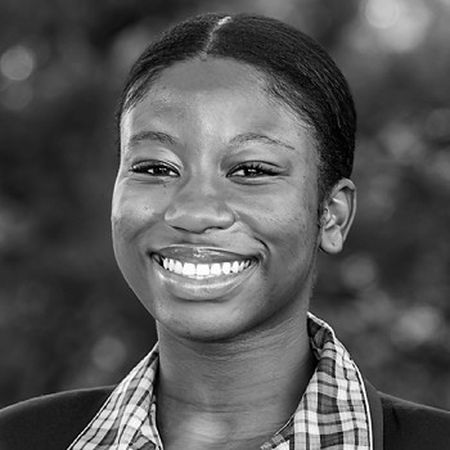
And with that mindset, they managed to revolutionise an entire nation by enacting change in the South African education system and I, Oyintanda Msimanga, stand as a testament to the transformation they brought about.
I am young, black and currently in school, a blessing in itself, and I wear my school’s full-colours academic blazer, a masterpiece in itself.
I recognise that every one of these things I mentioned is a testament to a struggle that began long before I was born, but I and a large majority of young South Africans prove that the struggle was not in vain.
South Africa’s youth look back at the activism that occurred on 16 June and revel in the courage that lived in the young people of 1976. I myself am encouraged and inspired by the bravery that lived within those students. Many teenagers like myself draw strength from them and ask one very critical question: “How can I be a revolutionary like those who came before me?”
As a member of the Johannesburg Junior Council, I often hear people speak about activism as though it only belongs to those who stand behind microphones, lead marches, make headlines and finally risk their lives. While those forms of activism are the most potent and the ones that make the history books, they are not the only forms of activism.
There is no single way to be an activist.
The Johannesburg Junior Council is a nonprofit organisation that comprises 17-year-olds who have one vision: to see an even better South Africa. Through education, sport, art, culture and outreach, we ensure that underprivileged children in Johannesburg have the opportunity to have a childhood. By reading books to them, playing sports with them, or even giving them an opportunity to jump on jumping castles, we are able to bring joy to many children.
In essence, activism is not always loud, it does not always take to the streets, and it does not always demand to be seen.
Sometimes activism is donating books to a school that lacks resources.
Sometimes it is volunteering at a women’s shelter on a Saturday morning.
Or sometimes it is collecting sanitary products to end period poverty that prevents young girls from attending school.
Every act of service sends a message: “I see you. You matter. Your future matters.”
Today’s youth often underestimate the power of recognising another person’s humanity. Yet for many who have been overlooked or left behind by society, being seen, valued and supported can change the trajectory of their life. Let me encourage the youth with a piece of advice: sometimes a helping hand can achieve what 1,000 speeches cannot.
Nelson Mandela said: “For to be free is not merely to cast off one’s chains, but to live in a way that respects and enhances the freedom of others.”
If you want to enact change, start with yourself, then the people next to you then broaden your horizons. You do not have to be in a council to make a difference.
The most critical component of being an agent of change is education. You cannot change the injustices of society if you are unaware of those very same injustices and their causes. So, I encourage each and everyone of you to educate yourself. Have an insatiable hunger for knowledge that has the power to overcome every obstacle presented to you.
Malcolm X said: “Education is the passport to the future, for tomorrow belongs to those who prepare for it today.” So I motivate all the young minds listening, including myself, to study until we drop because we have the power to mould our futures.
On 11 June, Mr Seth Mazibuko, a veteran activist who was part of the protests in Soweto in 1976, came to speak at my school and he told us that on this day, and on this very soil, he fought for his education by throwing stones to preserve his life, not knowing what would come next.
Mr Mazibuko, as the youth, we are now gathering those very same stones you used to defend our dignity, and we are coming together to build a bridge that will close the gap between struggle and peace, privilege and deprivation, oppression and emancipation, and, most importantly, life and death. DM
This speech was given at the 1976@50 Youth Day march in Soweto on 16 June 2026. Commemorating the 50th anniversary of the uprising, the march retraced the original students’ route, from the corner of Moema and Vilakazi streets to Orlando Stadium.