



I remember it as if it were yesterday: that grey winter’s day, 16 June 1976, when all hell broke loose in Soweto. I was only 16 years old and in matric (I started school at age five). Most of our school at the time consisted of temporary wooden structures, which we nicknamed “dovecotes.” We hated them. In summer, Wellington became “Hell-ington.” In winter, those classrooms felt like freezers.
We were in the middle of the June matric examinations. At night, it was eerily quiet. Not a single learner was in sight. They were either engaged in secret meetings, studying in hiding, or evading the police who patrolled the streets at night. Woe betide you if you were out after dark – you would most probably spend a night in a cell without your parents knowing.
It was a struggle to get through the nights. Some worried about the exams; others wondered when the police would knock on the door. I tried to study, but your mind was elsewhere. As if he had a premonition, the principal decided that we should write the exams immediately. When the first bomb exploded in Soweto (literally), we were already at home.
For the rest of the day, we sat glued to the radio (we had no television yet). One news bulletin after another announced it: Schools disrupted. Schools burning. The country was on fire. Hector Pietersen had been shot dead. News of the youth uprising in Soweto spread like wildfire. The police were overwhelmed trying to maintain “law and order”. But how do you stop a river in flood?
Irreversibly changed
Eventually, the unrest reached us at Bergrivier High School during the September exams. That day, we were scheduled to write biology. A few classmates were missing. We looked around nervously. They never arrived. We began writing. You could cut the tension with a knife.
Suddenly, the ominous silence was shattered by a deafening explosion. Screams followed. The chaos afterward is somewhat blurred. Children and teachers rushed out of classrooms. Outside, we were shocked to a standstill by a sea of flames. Somewhere a siren wailed. Police vehicles and armed officers were already on the scene. I instinctively searched for my younger brother and sister. When we got home, our parents were already there. The news had spread quickly.
The next day presented a heartbreaking sight. Most of the school lay in ruins. According to documents in the possession of this author, 12 learners aged between 18 and 19 and three youths were charged with public violence on 9 September 1976. Another nine learners and eight youths were charged on 10 September. The judge in the Cape Town high court ruled there was no conclusive evidence, as the learners contradicted each other. All were acquitted, except for one youth who was found guilty of public violence and sentenced to six lashes.
Nothing came of the exams. The school closed and only reopened five weeks later. Many matric learners of 1976 could only write their exams the following year. It speaks volumes that, with few exceptions, we all passed matric; some even achieved university exemption. Thanks to scholarships (both state and private), most of us could continue studying.
I wanted to study Afrikaans at Stellenbosch, but was told I could only study at the University of the Western Cape (which we affectionately called the “University of the Working Class”). Others studied at teacher training colleges in Bellville, Cape Town, Oudtshoorn and Kimberley. By the time of this writing, 12 of the 49 classmates have already passed away – one as recently as February.
We are currently planning for our 50th reunion…
Hope for a better future
Our participation in the liberation struggle was born out of hope for a better future. Most of us were very poor. We received our last hiding in matric – for studying at home for exams! It was part of our upbringing. Career choices were limited: you could become a teacher, policeman, or nurse.
Each year, students commemorated the day. Eventually, it spread to schools. Ultimately, tertiary institutions and coloured and black schools arranged for exams to be completed before 16 June. In this way, the youth created what became National Youth Day, celebrated annually since 1994.
The youth uprisings of 1976 irreversibly changed South Africa’s future.
Fifty years later, we look back on successful careers as teachers, principals, ministers, leaders in social and diplomatic services, nursing, correctional services and the business world. Drakenstein’s current mayor is a member of our class. Two became professors (one at UWC and one at Stellenbosch). Each contributed to reshaping South Africa into a democracy in 1994.
Struggle in Afrikaans
Much hope has since been lost. Today, we know that 16 June 1976 was not so much about Afrikaans, but about discrimination in the workplace, the Group Areas Act, and many other apartheid laws. Afrikaans was merely the final straw for a people suffering in many other ways.
When we began, as young students, to give expression to June 1976, the struggle was fought in Afrikaans with leaders such as Cecil Esau and Russel Bothma. In the book Ons Kom van Ver (We come from afar), the late Basil Kivedo – former MK soldier, lecturer and DA mayor – puts it beautifully.
“I protested in pure Afrikaans; I was arrested by the security police in Afrikaans, detained in Afrikaans, tortured in Afrikaans, but I fought back in Afrikaans. On 16 June 1976, I protested in solidarity with learners in that same Afrikaans called the ‘language of the oppressor.’ ”
Yet, the stigma attached to Afrikaans as the scapegoat caused many to turn their backs on it.
Now that Afrikaans has been liberated, the question is: what are we doing to promote its place as a language of instruction? How many Afrikaans speakers still send their children to Afrikaans schools?
Reconciliation
How do adults today inspire young people to celebrate Youth Day in a spirit of reconciliation and nation-building? Three aspects are important to make Youth Day meaningful:
First, those of us who experienced 16 June 1976 first-hand must teach our children about the consequences of neglecting one another’s mother tongues.
What I want for Afrikaans, I must also want for other languages. Youth must realise that multilingualism will become increasingly important. For meaningful interaction, we must sometimes leave our comfort zones and communicate in other languages. That’s why I studied isiXhosa at university. Youth Day is also a metaphor for how languages can unite our once-divided country.
Second, 16 June symbolises not only our freedom but also that Afrikaans – once stigmatised – has itself been liberated from its tainted past. We must thank Nelson Mandela for that.
My former lecturer and later Madiba’s Secretary-General, Prof Jakes Gerwel, once said Mandela was very proud of his Afrikaans and spoke it better than most other indigenous languages. Mandela loved writers such as Langenhoven and Leipoldt and was a devoted reader of Afrikaans newspapers. He believed:
“If you speak to a man in a language he understands, you speak to his mind. If you speak to him in his own language, you speak to his heart.”
Third, 16 June is a symbol of reconciliation. Few would have blamed Mandela had he sought revenge when he had the power to do so – but he chose reconciliation. His reading of Ingrid Jonker’s poem Die Kind (The Child) at his first State of the Nation Address was his way of saying Afrikaans and its community had a place in a democratic South Africa.
Therefore, we must celebrate Youth Day so that all young people feel included, without guilt for a past they were not part of. Only when we stop punishing the youth for the sins of their fathers will they connect with 16 June.
Rethinking education
As in 1976, the youth of 2026 face a crisis. Youth unemployment is expected to rise. Students are forced to abandon their studies because parents can no longer afford fees. The chances of passing matric, studying further, and finding work are diminishing. With shrinking prospects, the class of 2026 has the enormous task of finding solutions. Start with yourself. Young people are skilled in technology, computers, mobile phones and artificial intelligence. Use these to create a new normal – one that ensures a just, peaceful and safe South Africa.
We must all rethink education because education as we know it will change. Questions like “Who is responsible for education?” remind us that it takes a whole village to raise a child. Government alone can no longer shoulder the burden. The will may be there, but the funds are not. We can no longer wait for government to fix schools. It will require a united effort between the state, private sector and communities. Fact is: There is a school near each of us that needs our help.
Election 2026
South Africa is preparing for municipal elections on 4 November. Service delivery is poor in many municipalities, and people live in difficult conditions. According to the latest Auditor-General’s report, only 13% of municipalities received clean audits. Living conditions have not improved as promised by “A better life for all”.
As in 1976, the youth hold the key. In 1976, we could not vote. Fifty years later, things have changed. Thanks to the sacrifices of the youth of 1976, today’s youth can vote and make a difference.
However, there is concern that young people appear apathetic during elections. It is therefore the duty of those of us who lacked voting rights in 1976 to remind them that their parents fought for the right to vote. This cannot be taken lightly – it requires a new kind of sacrifice.
It is vital that the youth make their voices heard. They are the leaders of tomorrow who will make crucial decisions. For this reason, the Electoral Commission is placing strong emphasis on youth participation, with a campaign specifically aimed at them.
To them, and to the rest of South Africa, I say: “Rise up, show up, and vote.” DM
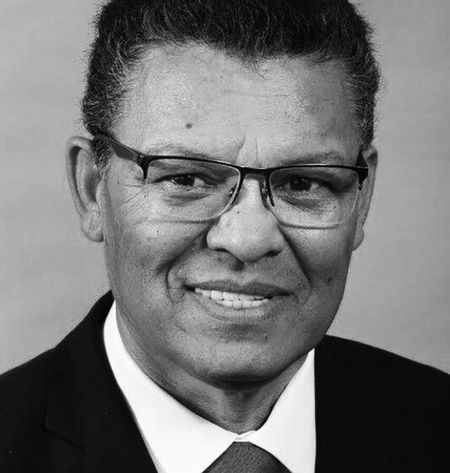
In 1976, Michael le Cordeur was a matric pupil at Bergrivier High School, Wellington, and participated in the struggle against apartheid.
Comments
Scroll down to load comments...