



South Africa has not achieved higher levels of economic growth because the ANC-led government has, in the past years, not leveraged the country’s diversity, with many ANC leaders wrongly believing the country’s diversity is an obstacle to economic growth, development and nation-building. Our diversity is an opportunity.
A country is fortunate to be able to draw on the vast networks, social capital and knowledge of diverse communities.
Equally, in a diverse society, democracy and inclusive nationhood cannot be built by one group, the ANC, alone. Economic development, democracy building and inclusive nationhood have to be diversity-driven.
Countries have historical endowments, which can be leveraged to transform them into economically prosperous, healthy democracies and socially peaceful societies. Singapore, for example, the most economically successful independence movement-led government, leveraged its diversity of communities that had historical roots from China to India, and its city-port geography, along one of the world’s great sea trade routes.
As a country colonised, unlike that of most other African countries, but as part of the 1600s “New World” colonisation wave, like the US, Cuba and Brazil, diversity is the key historical endowment that differentiates South Africa, with the country’s combination of African, European, Jewish, Malaysian and mixed roots.
Indigenous peoples inhabited these countries before this New World-type colonialism, which brought settlers from colonial countries. In many cases, colonialism also brought subjected peoples from other parts of the world, whether as slaves or subjects. These societies, over time, became ethnically, culturally and pigmentationally mixed.
Even the indigenous communities that were present before colonialism had often mixed to one degree or another. The apartheid project was largely based on preventing any further intermixing of colours, languages and communities.
All this means that traditional African-type colonisation analyses, within South Africa or from the rest of Africa, lead to totally misplaced solutions based on such discourses. The South African Communist Party’s thesis on colonialism of a special type is a more accurate description of South Africa.
Ethnic exclusion
The tragedy of South Africa is that many wrong-headedly believe that one ethnic group, one colour, one ideology or one party can, on their own, uplift the country’s economy, build its democracy and bring social peace. Economic growth, development, and social peace will not come from one group controlling South Africa at all levels, at the exclusion of others who are different from the dominant group.
In fact, one of the reasons South Africa is facing multiple crises – economic, democratic, racial division and social instability – is because of the mistaken idea that one group can successfully run the country, deploy only their people to government and force through their policies, to the exclusion of other communities, outlooks and perspectives.
The ANC has been running South Africa, without success, for 30 years as the majority party. A dominant party, like the ANC, can only successfully run a diverse society such as South Africa if it is extraordinarily inclusive, involving all colours, ethnic groups and ideologies in all aspects of the state, and in public and democratic institutions, involving business, civil society and professional groups of all colours, ethnic groups and ideologies in partnership with the state, economy, and society. The ANC has not done so.
The National Party government tried to have one colour group control South Africa, but that racist experiment failed, because it was not sustainable; economic growth, development and societal peace were temporary. The inevitable explosion was only postponed.
The ANC had a promising start at the beginning of the post-apartheid dispensation in 1994, when it had mobilised a wide anti-apartheid front, “a broad church”, including the old Mass Democratic Movement, which included the United Democratic Front, trade unions, civil society, progressive business organisations and religious bodies of all ethnic groups, colours and ideologies, that were opposed to apartheid and wanted to build a new nonracial democracy, inclusive economy and quality democracy.
The Convention for a Democratic South Africa (Codesa) prudently agreed on a government in 1994 that would include the National Party, the former party of apartheid, in the first post-apartheid national government. This was to allay the fears of white supporters of the National Party that they would be marginalised in the new nonracial democratic dispensation.
Then President Nelson Mandela, certainly one of the wisest, most far-sighted and inner-centred post-colonial African leaders, with extraordinary maturity, included the National Party, as well as non-ANC black liberation movements and black Bantustan allies of the National Party in his Government of National Unity.
Mandela deeply understood that South Africa’s economic prosperity, democratic inclusion, social stability and inclusive nationhood could only be achieved by involving the talents, ideas and energies of the widest number of South Africans of all colours, ethnic groups and political formations – including colours, ethnic groups and political formations that were opposed to the ANC – in a national governing partnership.
Mandela’s heirs
However, Mandela’s heirs changed direction and decided that the ANC would govern South Africa alone, with only its anti-apartheid allies, associated civil society groups and trade unions. This meant that the ANC increasingly excluded white and black political parties, business and groups that were in pre-democracy associated with the apartheid government in governing the country. Liberal white and Afrikaans business was now derisively labelled as “white monopoly capital” or “Stellenbosch mafia”.
Over time, from the Thabo Mbeki presidency onwards, the ANC began to exclude individuals, whether black or white, and civil society organisations that were traditionally aligned to the anti-apartheid Mass Democratic Movement, but who disagreed with the dominant ANC leadership ideologies, ideas and management of the country.
South Africa was then run by only one ANC cohort, with one set of ideologies, a small club of connected individuals who were continuously recycled to different positions in Cabinet, the public service, democratic oversight institutions and state-owned entities, who would get repeated black economic empowerment state procurement contracts and repeated private sector BEE deals. A narrow band of policies, ideologies and ideas were continuously pushed – and those providing alternatives were simply ignored, dismissed as anti-transformation or racist, or slandered.
The post-Mandela ANC, in many instances, made government policy not in the widest or best interests of South Africa, but in the narrow interests of the ANC.
Among the central reasons for South Africa’s low growth for over a decade now, is the fact that the country has been run by a small group of ANC leaders who prioritise the ANC and its interests, rather than South Africa’s interests. ANC leaders wrongly believe that the ANC’s party interests are the same as South Africa’s national interests.
This recycling of a small group of connected ANC individuals from one Cabinet position to another, the leadership of one government department, SOE and democratic institution to another, has not only deprived the public service, SOEs and democratic institutions of a vast pool of non-ANC South African talent, ideas and energy. It has recycled corrupt and incompetent cadres and failed policies over and over again. This is one of the main reasons for systemic corruption, incompetence and state and infrastructure failure.
Many state institutions look like Bantustans – the executives and boards are often staffed by people from the ANC only, and often from only one colour, ethnic group or people from one region. Not surprisingly, South Africans who feel excluded do not see the state as theirs.
Rule by a small club
No economic growth, consolidation of democracy and inclusive nationhood is possible when a small club exclusively runs South Africa, one of the world’s most diverse societies. It has also undermined economic growth, caused disillusionment in democracy, and pushed marginalised communities to seek safety in their “own” ethnic and colour laagers. Others emigrate as they feel that they and their children have little future in South Africa.
This is one of the reasons for the rise, and success, of ethnic or colour-based political parties, such as the Patriotic Alliance; or white Afrikaner right-wing groups carving out a separate, self-sufficient, life for their own communities, as they feel left out by the ANC.
Of course, the weaponisation of our differences by opportunistic politicians who use the pain of black communities who suffered under apartheid, and the race and ethnic card for self-enrichment or to cover up corruption, or to whip up votes to secure a meal ticket to Parliament, has further undermined modern South Africa’s cardinal founding principle of “unity in diversity”. The more ethnically and politically polarised a society, the worse its economic, development and peace performance.
The fostering of diversity-led economic growth, diversity-led democracy building, and diversity-led nation building, when formerly disadvantaged communities still suffer from the legacy of apartheid – deep-seated intergenerational trauma, broken familyhood, lack of generational assets ranging from financial holdings and property to education and skills, and persistent everyday racism – present a unique challenge.
It demands mature, inner-centred, imaginative and honest leaders, who have the widest interests of all South Africa at heart. Pragmatism must be a central tenet of governing. Pragmatic governance prioritises tackling immediate national and local crises, adopts policies based on whether they bring results, measures success by evidence-based results, changes course when policies fail and makes decisions based on reasonable evidence and common sense.
In fact, without pragmatism as a national approach to governing South Africa, it would be impossible to foster diversity-led growth, democracy and inclusive nationhood.
Diversity-led economic growth, diversity-led democracy and diversity-led nation-building must be built on solidarity for the vulnerable across ethnicity, colour and political affiliation.
This means that social justice must underpin governing. Transformation policies will therefore have to focus on genuinely uplifting not only the poor, but the widest number of people at the same time, whatever their race, colour or political affiliation – rather than a small elite, whether white or black or both.
There has to be one overarching set of societal rules that communities of all ideologies, colours and cultures follow – the Constitution. There cannot be competing cultural, political, or ideologically based governance systems.
Because a democratic state is so central to building diversity-led economic growth, healthy democracy and inclusive nation-building, whether all communities perceive the state to be legitimate will hinge on whether it delivers for all communities. DM
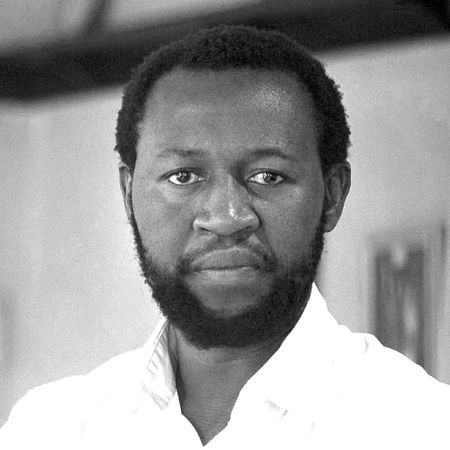
This is an extract from Professor William Gumede’s talk at the FW De Klerk Foundation’s Inclusive Economy Conference.
Comments
Scroll down to load comments...