



Graduation week is an annual highlight on campus. For me, it will always remain one of the most meaningful moments of my career. What makes it so personal are the stories by students, who walk across the stage. Having worked at the university for more than 30 years, I could fill a book with these stories.
The student who walked from campus to Zwide after his final November exam during a taxi strike. The student whose father sold vegetables in Humansdorp every weekend to support his family. And then there was the student who lived in a shack next to a shebeen, where studying was almost impossible. He later became a beneficiary of an international company’s redirected Christmas party budget. Today he is a senior developer at a global firm.
And this year was no different.
The student who paused his studies due to lack of funds, only to return in 2025 after raising enough to complete his degree – scraping through his final year with no stable accommodation, until a small departmental bursary made it possible to finish.
The student who arrived on campus in 2016 from Mpumalanga after a 16-hour bus journey, unsure whether the bursary that brought her here was even legitimate. Due to personal challenges, she lost that bursary along the way, left, returned, and – through sheer tenacity, the support of an alumnus and a local nonprofit organisation – she graduated with a BSc in computer science 10 years later.
Acquiring that degree was so important to her, since she saw it as a gateway to finding decent work and improving her socioeconomic conditions.
These are all stories of resilience. They are worth celebrating.
But they are not the whole story. Because for some students, the moment of triumph is incomplete. One student walked across the stage to receive his BSc degree. Backstage, he was handed the familiar holder, which symbolises years of effort and achievement. But inside there was no degree certificate.
The holder was empty.
Not because he had failed. Not because he had not met the academic requirements. But because he owed money to the university.
He is not alone.
Many students across the country complete their qualifications through extraordinary personal sacrifice. They are often supported by a single family member, or by selling sweets and fruit to fellow students just to survive.
Basic subsistence can mean going hungry, living in shocking conditions, not travelling home during recess, not being able to afford medical care, and doing without essentials like prescribed glasses. Never mind the emotional and psychological toll. Through all of this, they persist.
Yet the debt remains.
The result is a growing group of graduates who have done everything required of them academically, but who cannot access the formal recognition of their achievement. On LinkedIn, an online platform for professionals, the profiles of graduates often appear as: “Completion letter. Certificate pending.” Institutions such as Nelson Mandela University provide these letters in good faith, but many employers do not accept them, given how easily they can be forged.
An empty holder signifies deferred dignity. It reflects a system that certifies knowledge but withholds recognition, creating a class of “almost graduates” in the labour market. And for others, the story ends even earlier. Their challenges become too great, and they never make it onto the stage at all.
There is an uncomfortable question at the heart of this: should students have been allowed onto campus without secure funding in the first place? Some would argue that this is a systemic failure of higher education.
The reality is more complex.
Universities cannot operate without income. In 2025, South African universities collectively faced student debt of about R9.3-billion, with the issue of impaired debt, which can never be recovered. The financial sustainability of institutions is itself under pressure. It has been for years, meaning that in some cases additional staff cannot be employed, while there are no government funds to construct new buildings, with overcrowded lecture halls.
But statistics are cold comfort when you sit across from a student who has done everything right and still cannot hold their certificate in their hands.
That is why, in Nelson Mandela University’s Department of Computing Sciences, we have approached this challenge not only as a financial issue, but as a human one. Since 2016 we have coordinated a bursary project that provides more than tuition: it includes academic support, safe accommodation, access to healthcare and counselling where needed. What began with the Banking Sector Education and Training Authority (Bankseta) as our first sponsor has grown into a network of corporate partners, contributing more than R80-million over 10 years.
There is the growing number of alumni and private individuals who choose to “pay it forward”. Bankseta, too, has expanded its role this year, committing millions towards student debt relief across multiple institutions.
These interventions make a real difference. They fill holders. But the need remains far greater than the current response.
My plea is therefore a practical one. If you can contribute – whether as a company or an individual – there are few investments with greater long-term impact than the education of a young person. This support can take many forms: funding a place at a functional school, sponsoring artisan training, contributing to student hunger projects, providing bursaries or helping to clear historic debt.
Each intervention changes the trajectory of a life and the generations that follow.
South Africa’s youth unemployment rate is more than 60%. Yet among graduates with a bachelor’s degree the rate is significantly lower, at 10.3%. That difference is not just statistical: it is generational. It speaks to stability, opportunity and the possibility of breaking cycles of poverty.
Graduation should be a moment of closure, an acknowledgement of what has been achieved, and the springboard to a new chapter.
For too many it remains unfinished business.
May the students with stories who walk across our stages continue to inspire us – but may they also move us to act.
May many more holders be filled.
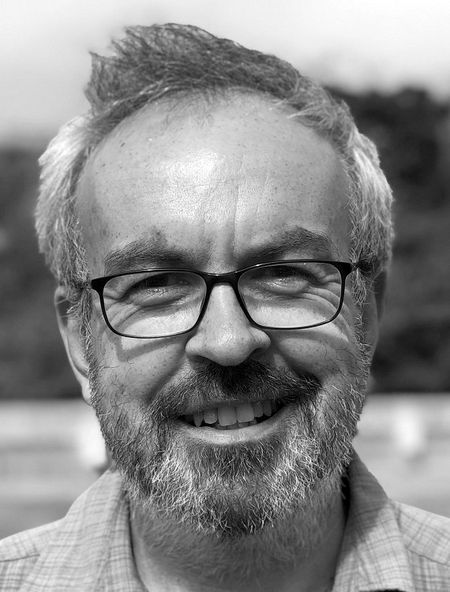
Professor Jean Greyling writes in own capacity.